

Super Afro Soul: the music of Orlando Julius, titan of Nigerian music

Audio By Vocalize
Highlife crooner
and Afrobeat singer Orlando Julius Aremu Olusanya Ekemode died,
according to his wife Latoya Aduke, in his sleep on 15 April 2022.
A
titan of Nigerian highlife had passed on at 79.
With
a career spanning almost six decades Orlando Julius stamped his foot on the
sands of history, promoting his talents and laundering
his country’s image across the globe.
Orlando
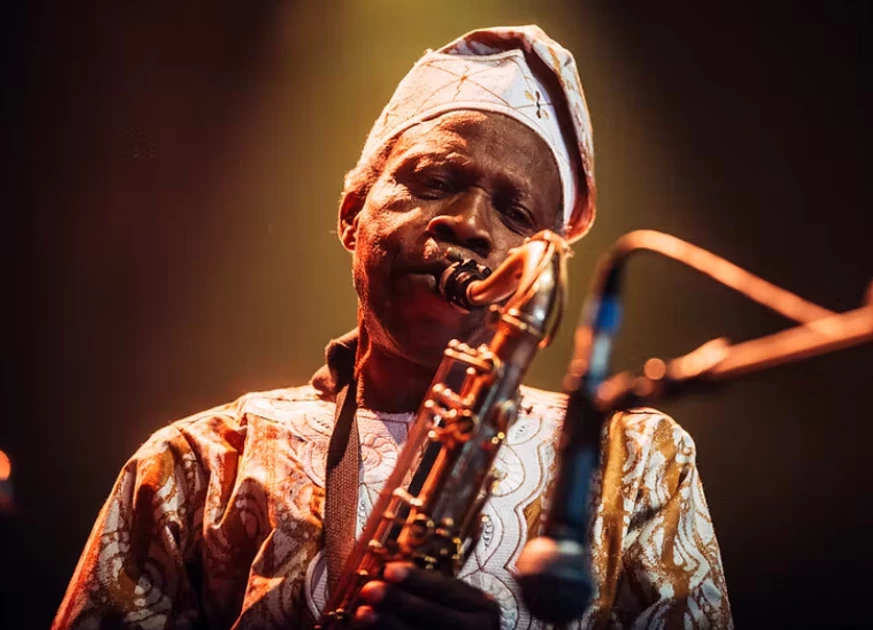
Julius played the saxophone with dexterity, and ultimately became a pioneering
force behind Afrobeat music: a genre which was later adopted and promoted by
the famous Fela Anikulapo Kuti.
Highlife
music originated from Ghana in the early 1800s as multiple African musical
fusions mixed with Western jazz melodies. It is mostly characterised by jazzy
horns and multiple guitars.
However,
Afrobeat is a hybrid of highlife music that developed in the 1960s and 1970s.
It combines elements of West African styles such as fuji and highlife with
American jazz, soul and funk.
Orlando’s
prowess lay in his ability to combine his native Yoruba drums with the guitar
and saxophone to produce a mixture of African rhythms and soul. This
combination was to become the popular Afrobeat genre which he took to Europe
and the US.
His
early years
Orlando
was born in Ikole Ekiti, a town in the South West of Nigeria in 1943. He was
educated at St. Peter’s Anglican school in the same town. He also played for
the school band in addition to receiving musical lessons from his mother.
Following the death of his father in 1957, Orlando dropped out of school and
moved to Ibadan to pursue his career in music.
He
worked in a bakery while also playing drums and flutes with juju and konkoma (or konkomba) bands. Juju
music is a style of Yoruba popular traditional percussion. The name originated
from the Yoruba word ‘juju’ meaning throwing something or something being
thrown. Konkoma (or konkomba) derives from the Gur people in the northern part
of Ghana.
He
went on to play at the now defunct political party Action Group’s secretariat
in Ibadan. Here he connected with a Brazilian guitarist, Romero Lubambo, who invited him to play in
Ondo. By 1960, Orlando was invited by a Nigerian highlife musician Eddy Okonta
to join the band Highlife. With Okonta he learned to play saxophone
professionally and became a highlife-cum-Afrobeat singer.
Career
and legacy
He
thus experimented variously with horns, guitar and American R&B to form a
unique genre. He later left Okonta to form his own band and his first hit with Jagua Nana, a 1965 song in which a woman is
compared with a Jaguar.
In
the following year, 1966, Orlando released one of his biggest albums, Super Afro Soul, which further launched him as
a committed singer and composer.
In
the 1970s, Orlando moved to the US where he later formed a band with Hugh Masekela. Masekela was a South African
trumpeter, singer and composer who was known for his jazz compositions and for
writing popular anti-apartheid songs. They jointly produced two albums which
they toured extensively with.
Orlando
later returned to Nigeria in 1984 to continue his career in his homeland.
Before returning to Nigeria, he had a stint with film by taking a role in
Roots: The Second Generation, a US TV series about slavery. He also attended a
film school in Oakland. But he never lost track of music as he continued to
perform gigs and even opening for iconic US trumpeter and vocalist Louis Armstrong.
Back
in Nigeria
At
the same time he had been working on albums on Nigerian labels and once back
home, Orlando formed an 18-member band comprising all Nigerian stars and
produced the Dance Afrobeat album. The band went on
tour of the US with Lijadu Sisters.
In
2000, Orlando reproduced Super Afro Soul from 1966. He followed this up with
Orlando Julius and the Afro Sounders and then Voodoo Funk in 2011. He went on
tour of London in 2014 where he also collaborated with musical group The Heliocentrics to record more songs and
new versions of his old tracks.
Orlando
used music to promote and preserve his Yoruba culture. He entertained diverse
ideologies from the outset of his career together with his African American
wife. He was committed to advising his audience to live worthily by embracing
the values of peace, love, justice and liberty.
He
released Jaiyede Afro in 2014 which charted number 13 on Billboard World Album
in the same year. In 2019, Orlando moved to Ijebu-Jesa, Osun State, Nigeria
with his wife where he was honoured with a chieftaincy title of Gbeluniyi by
Oba Moses Ogunsoye, the royal father of the town.
[The
writer, Sola Balogun, is a Lecturer, Theatre and
Media Arts, Federal University, Oye Ekiti]
Leave a Comment