

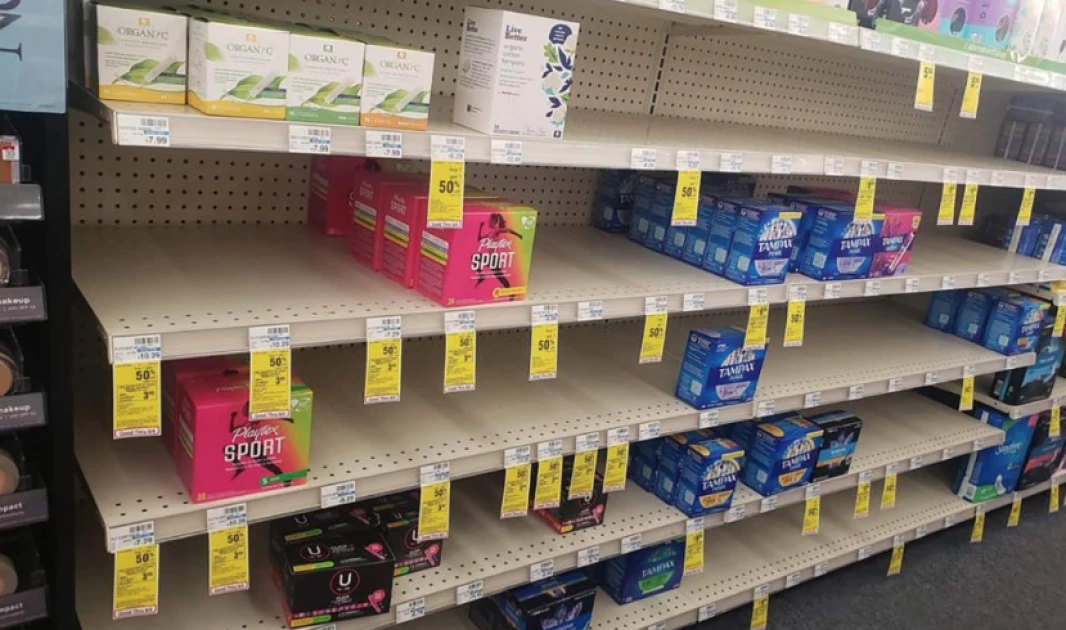
A tampon shortage is the latest nightmare for women

Audio By Vocalize
Supply chain problems and inflation have hit virtually
all consumer goods, but women who menstruate are now facing an
added strain as a shortage of period products hits the United States.
Top retailers and manufacturers acknowledged
the shortages this week, confirming complaints that have been circulating on
social media for months. The issue garnered national attention this week
after an article in Time called the dearth of tampons and pads
the shortage "no one is talking about."
"I haven't seen any products in stores
for months," one user posted on Reddit. "I've been ordering my
tampons on Amazon and have been getting price gouged."
Tampon prices are up significantly — nearly
10% from a year ago, according to Bloomberg. But an Amazon spokesperson denied
rumors of price gouging, saying its policies "help ensure sellers are
pricing their products competitively," and that the company actively
monitors pricing and removes offers that violate its fair pricing policy.
The shortages appear to stem from supply
constraints around key materials like cotton and plastic, which are also used
in personal protective equipment, and have been in high demand from the start
of the pandemic. The war in Ukraine has further crimped supply because Russia
and Ukraine are both major exporters of fertilizer, which is used to grow
cotton. A drought in
Texas hasn't helped, either.
Shortages of raw materials and supply chain bottlenecks aren't unique to period
products, but much like the US infant formula shortage, there's an unrelenting
and urgent biological demand for them that can't be easily
substituted. People who menstruate can't simply wait for the shelves to be
restocked.
"Getting raw and packed materials to the
places we need to get them to continues to be costly and highly volatile,"
said Andre Schulten, Procter & Gamble's chief financial officer, on a
recent earnings call.
When Time asked Procter & Gamble, which
owns the popular Tampax and Always brands, about the shortage, a company
spokesperson blamed increased demand linked to an ad campaign featuring the
comedian Amy Schumer.
Since the ads launched in July 2020,
"retail sales growth has exploded," the spokesperson told Time.
Of course, putting the blame on Schumer's ads
doesn't account for why other brands also are hard to come by. A P&G
representative told CNN Business Thursday that the Tampax team is
"producing tampons 24/7 to meet the increased demand."
"We understand it is frustrating for
consumers when they can't find what they need," the P&G spokeperson
said in an email. "We can assure you this is a temporary situation."
As headlines about the Schumer comment
circulated this week, the comedian, who's spoken publicly about her
hysterectomy last year, responded with a quip on social media.
"Whoa, I don't even have a uterus,"
she wrote on Instagram Thursday beneath a screenshot of a headline reading:
"Why Amy Schumer is getting blamed for the national tampon shortage."
Schumer's representatives didn't respond to a
request for comment.
Both Walgreens and CVS said they are aware of
tampon and other period product shortages in some areas and that they are
working with their suppliers to ensure they can restock as soon as possible.
The tampon shortage shares uneasy parallels
with the infant formula shortage, primarily in the unhelpful responses
offered by men who aren't directly affected by them. In both cases, women say
they are being bombarded with comments — some genuinely offering help, others dripping
with indignation over women's supposed biological failings.
"If we could imagine a world where men
had to breastfeed their babies ... the formula shortage there would not be so
dire," wrote journalist Elizabeth Spiers in an opinion essay for The New York Times. "In that alternative
reality...formula would not be stigmatized because it's a choice men would want
to have available to them."
Leave a Comment