

PROFILE: From genes to gin - The double life of scientist Anup Devani
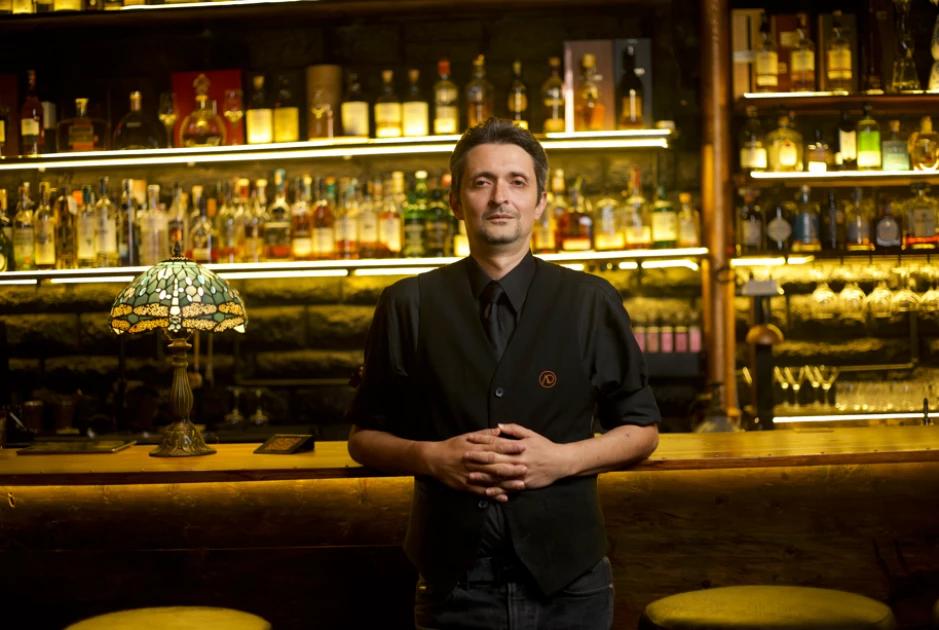
The Revolver bar co-founder and Creative Director Anup Devani. [Photo Credit: Tapiwa Chitaukire - @captaintenacious]

Audio By Vocalize
A few years ago, Anup Devani went
out for a night on the tiles with friends in Nairobi. The club they chose that
night was everything Nairobi nightlife prides itself on being; loud, sweaty,
chaotic, with elbows and perfume and basslines thudding straight through your
ribcage. He hated it.
“I could still hear the bass
pumping in my ear the following morning,” he says. “My voice was hoarse from
just shouting over the music in order to have a conversation. I realized at
that point that that was not the kind of place I like to go to.”
When his wife and sister-in-law
launched ATE
restaurant on Kyuna Crescent, they were left with an unused space, a former
garage that looked destined for storage. Devani’s wife spent months nudging,
cajoling, and convincing him that if he wanted a bar where conversations didn’t
require shouting, he should simply build it. Eventually, she wore him down, and
out of that garage, the Revolver bar was born.
Devani isn’t your typical bar
owner. By day, he is a clinical geneticist; the sort of man who can spend a
morning unravelling DNA codes and mapping mutations - and then, when evening
falls, slip off his lab coat and trade test tubes for tumblers.
From that garage-sized sanctuary,
Devani has somehow managed to fire a shot heard around the world. Revolver has been listed, twice,
among the World’s 50 Best Bars. It also sits pretty among the
Top 10 best bars in Africa and the Middle East, combined.
For most, that would be success
enough to sip on for a lifetime. But for Devani - who shrugs off accolades as
though they were barflies at closing time - it is simply another milestone on a
road he refuses to stop walking.
Describing himself both as “pig-headed”
– which is to say stubborn - and as “an absolutely ridiculous person,” Devani
spoke to Citizen
Digital’s IAN OMONDI over a cocktail, in between pensive cigarette
puffs. Besides being the co-founder of Revolver, he also serves as its Creative
Director; meaning he’s the guy that comes up with all the cocktail menu ideas.
Why run a bar
with only 36 seats? Do the profits make sense?
People are willing
to pay for good things. Of course, we’d make a lot more money if we filled the
place up and let a few more people stand around, but the quality about it would
deteriorate. So, it’s just a choice you make between the atmosphere and the
output, because you can’t really get both.
People who want to
throw their money around and want to be seen still like to go to crowded
places, but we have a more personal touch. We sit people at the bar and talk to
them individually about their drinks; like what kind of specifications they
have, if there’s a particular way they like their drinks, and if they would
like to discover something brand new.
How do you actually
go about designing a cocktail?
Inspiration,
obviously. For example, we do seasonal menus which last between six and nine
months at a time. Our current one, which is Season Three, is called Provenance,
which just implies where things come from.
Let me just read
out to you the concept from the current menu so you can understand it: “Every
cocktail tells a story. In our third chapter, we trace ingredients back to
their origins; the people, places and history that shaped them. From forgotten
techniques to modern twists, each pour carries a sense of place, purpose and
discovery.”
If you look at the
actual menu, each drink is named after a country or region. We’ve got one named
Kenya, for example, that has a lot of Coastal ingredients for this iteration
The next time I want to do something from around Mt. Kenya, with a lot of the
cool stuff that are found around there.
Why the name ‘Revolver’?
What does it mean?
The gun thing is
pretty obvious, but it’s actually Spanish. ‘Revolver’ means to ‘come back
again,’ or to ‘mix/stir.’ Both meanings make sense because we want people to
want to come back here, and we also mix and stir things here all the time.
If someone flew
in from London, Tokyo, or New York and sat at your bar, what drink would you
insist they try?
What we try to do
is push the idea of premium cocktail culture; which is to say don’t drink a
lot, but enjoy every sip. We’re very keen that people don’t do shots here, and
so we charge a pretty serious premium on those. We’ve had people say “your
shots are too expensive,” and there’s a reason for it; I’m not trying to take
your money, I’m trying to keep your money in your pocket.
For people coming
in from abroad, I like to start them off with our Old Fashioned. The reason is
we used to have a lot of Americans from the U.S Embassy coming through here,
they were the first discoverers of this place. By the time that first batch
left, we had a lot of them saying they’ve never had an Old Fashioned anywhere
in the world as good as ours.
As far as spirits
go, there are a lot of whiskies in this bar, but it’s something that we love
talking to people about; what kind of whiskey they like, narrow it down, and
maybe give them something they haven’t had before, and while they’re drinking we’ll
be chatting with them about alternatives and whatnot. It’s not even a question
of convincing them, it’s just about giving them enough information to make
their own decision about their next drink.
How did you
convince your wife to get into this with you?
It’s actually my
wife who convinced me. The back story is that when she and I went to the U.S on
our honeymoon, I took her to a couple of bars that I’d been to previously, and
she really liked that whole intimate kind of bar rather than noise. So, when they were looking for somewhere to rent for them to put up a restaurant and finally found this place, they realized that this ex-garage area was not going
to be functionally useful to them.
So, she convinced
me to open a bar featuring that intimate setting that we both liked here. I
kept on saying No, by the way, but she finally wore me down and that’s when my
brain switched on and I turned it into my little vanity project.
You guys opened
your doors in 2019…
Yes. Three months
before we were shut down for Covid.
What kept you
still going after that?
There’s a guy that
I went to secondary school with, who I ran into while we were doing the fit
out, and it turns out that he worked for William Grant & Sons. We got to
taking and he came by for one of the soft openings and we became re-acquainted
with each other and became friends again.
As soon as Covid
hit, they had already booked a lot of people to do whiskey tastings. So we’d
make up cocktails for them to send out to all the people participating in them and
enjoy on Zoom calls. So that kept us very occupied.
There are also a
few large companies here that, as part of their corporate culture, have happy
hours once a week for all their staff. They would make orders a couple days in
advance and we would make them and put them in cool little bottle with
everybody’s name and everything and dispatch them out.
The worst we did
during Covid was take our staff salaries down to 90% of the original. We never
had to fire anybody. We were very lucky that we had good people who wanted to
keep us alive.
What is the
most Nairobi thing you have ever overheard across the bar?
I’ve realized that
many people don’t have their own reputations as such, and so they rely on the
reputations of close relatives. Like, I’ve had some people here saying; ‘Do you
know who my father is?’ That’s usually funny to me. [Laughs]
There are also the classic 'something-with-soda' guys. Like “I want a vodka and soda” or “a whiskey and
soda.” We have very premium
mixers that we stock here, and occasionally we do homemade sodas, but we don’t
stock these popular sodas. That’s also because there are a lot of whiskies that
people are very used to taking with soda that we don’t stock either.
Speaking of, which
is the most premium whiskey on your shelf?
We have one of only
six bottles of The Balvenie 40-year-old which were allocated to Africa. Two
went to Nigeria, two to South Africa, and then two are in Kenya.
The Balvenie is by
William Grant & Sons company; they literally send people out to find the
places that they want to stock, and then you have to be invited to buy it.
But when people
say “premium,” [in Nairobi] more often than not they mean in terms of price,
and not exactly quality. And, see, the thing is, there are far more expensive
whiskeys in Nairobi that I don’t stock because I just don’t agree with their
value. And there are whiskeys here that are relatively inexpensive but, in my
personal opinion, are fantastic and therefore deserve to be on my shelf.
It’s not
necessarily cheap vs expensive; it’s value proposition – is this worth the
amount of money that, a) we’re paying to buy it, and b) we’re charging people
to consume it? That’s a key philosophy for us, the value proposition has to be
both ideal for us and our customers.
People say
bartenders are half therapists, half magicians. Which would you say you lean more
towards?
I’m definitely
more on the therapy side, no question about it. If you make people feel
comfortable about the choice of drink that they make, then all of a sudden
they’re already halfway into the conversation with you. People are going
through stuff that they want to talk about, some are afraid to face their
problems the next morning. It’s kind of semi-transactional; I’ll buy a drink
from you, and you’ll listen to my woes.
Clinical
genetics and bartending are kind of a strange mix-up, No…?
Once you get past
the artistic, thought-provoking imaginative process of creating a cocktail,
then it becomes a matter of precision – just like genetics. The part of your
brain that you’re using then sort of goes away from the artistic side and into
your analytical Scientific side.
If you consider
anything that we eat or drink, at some point it’s biochemistry, and genetics
has a big part to play in that. If you understand the literal chemical basis of
what you’re putting together, you can derive a lot more flavour out of things
than somebody who doesn’t consider it in that respect.
Alcohol is an
incredibly interestingly molecule; on one side it dissolves in water, on the
other side it can dissolve fats. So, it’s one of the very few things where you
can get a fat-based flavour into a liquid that also has a high percentage of
water so that it’s not exclusively dangerous for you.
What was Anup
Devani like as a child?
I was really into
Science, but I was also relatively quiet. I got louder as time went on. I had a
really nice childhood, I enjoyed growing up in Nairobi; it just felt very
idyllic.
I never really
knew what I wanted to do, all I knew was that I liked Science. My Science
teacher in primary school is still, to date, one of the most influential role
models that ‘ve had. I never expected that I’d get into hospitality, but it’s
been a ride.
Do you have any
kids?
No. But we have
many dogs.
Nine.
Why?
Because we – my
wife and I – love dogs. When we got married in December 2016, our starter
apartment was like a two-and-a-half bedroom. We moved from that to the next
place so that we could have more space for dogs. And we moved from that place
to our current place for an even bigger garden because we got more dogs and we
wanted them to get their exercise in and run around.
What is the
most random thing about you?
I’m an absolutely
ridiculous person. My sense of humor can go all the way from cutting in
sarcastic to incredibly childish within like two seconds. I like to laugh, I
like to be happy, whenever I can.
People I’ve spoken
to over the years usually have their own perceptions about success, what’s
yours? What keeps you fulfilled?
What keeps me fulfilled
is pig-headedness; refusing to back down. This bar has been through some rough
times and, honestly, I should’ve shut it down. But there’s a part of me that
has just refused to let something this special to me die.
I don’t consider
myself successful yet. I mean, the bar pays its own bills and pays me from time
to time, but it’s not a success story yet.
What do you
want people to feel when they leave your bar?
I want them to
feel like they’ve had an experience. I want them to feel like they entered into
our imagination and found something that they love.
We tend to gently
suggest that people don’t have more than three cocktails while they’re here. We
don’t hold back on the alcohol, but we don’t want people to get completely
trashed in here.
We want them to experience
the flavours the way we created them. Because this is not the launchpad for the
rest of your night; this is your night.
Leave a Comment