

A Chinese vlogger shared videos of war-torn Ukraine. He's been labeled a national traitor
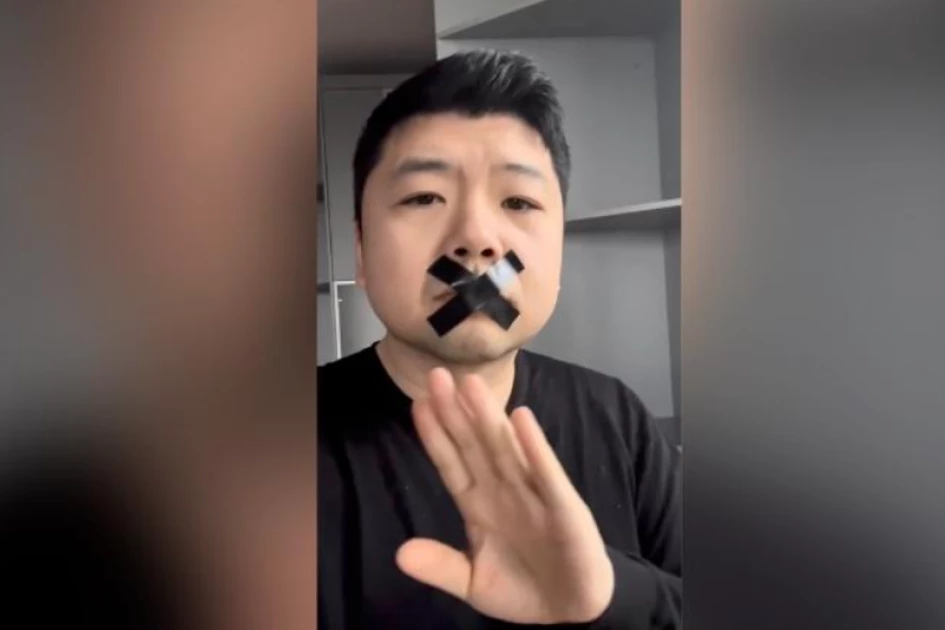
Wang Jixian, a Chinese resident in Ukraine's Odesa, in a video posted to YouTube on March 7.

Audio By Vocalize
Wang
Jixian didn't set out to become the Chinese voice of resistance in Ukraine. The
36-year-old resident of Odesa, a key target in Russia's invasion of
the country, simply wanted to show his parents he was fine.
"I'm
coming back from buying groceries," he said in a video posted to Douyin,
China's version of TikTok, on February 24, the first day of the invasion. Wang,
a programmer originally from Beijing, described buying meat and fruit in the
video, remarking that some food stores were still open.
But
his mood darkened as the days passed and the Russian assault escalated. When he
logged onto Douyin, he said he would see Chinese videos praising Russian troops
or supporting the invasion.
"I
was very angry, then I thought I would record videos for them, and I'll tell
them what the real battlefield is," he told CNN.
His
daily videos, posted across various platforms including YouTube and the Chinese
messaging app WeChat, quickly gained traction as a rare voice offering Chinese
audiences a glimpse into war-torn Ukraine -- a stark contrast from Chinese
state media, which has promoted
Russian disinformation such as unfounded claims Ukrainian
soldiers are using "Nazi" tactics.
In
one widely-watched video, Wang held up his Chinese passport and said,
"These Ukrainian guards are not Nazis, they are IT programmers, common
people, barbers -- these are the people."
But
in doing so, he had waded into the middle of a messy
controversy, with China facing international pressure as it refuses
to condemn Russia's invasion, and an outpouring of pro-Russia sentiment on
China's highly restricted and censored social media -- something Wang is hoping
to change.
In
one widely-watched video, Wang held up his Chinese passport and said,
"These Ukrainian guards are not Nazis, they are IT programmers, common
people, barbers -- these are the people."
But
in doing so, he had waded into the middle of a messy
controversy, with China facing international pressure as it refuses
to condemn Russia's invasion, and an outpouring of pro-Russia sentiment on
China's highly restricted and censored social media -- something Wang is hoping
to change.
Backlash
of critics
Wang
had studied art in college, and enjoyed dance, music and painting -- so when he
moved to Odesa four years ago for work, the city's "artistic atmosphere"
immediately appealed to him. One video on his Douyin account last year showed a
man playing piano in a colorful room filled with books and paintings.
His
videos look very different now. Several are filmed late at night, with the
sound of explosions and air raid sirens in the background. Other clips show
snapshots of daily life -- quiet streets, Ukrainian flags hung outside
buildings and painted onto walls.
"Are
those air raid alarms? Those bastards are coming again," he said in one
video. "People are doing their own business, my neighbor is out walking
his dog again. This is our Odesa."
Other
times, he's more impassioned. "Someone told me nowadays, society has the
laws of the jungle, where power comes from the barrel of a gun," he said,
referencing a famous quote by Communist leader Mao Zedong. "Where is the
sense in that?"
As
these videos began garnering attention, sometimes racking up more than 140,000
views, the number of critics rose too, with comments calling him a national
traitor.
"You
don't need this Chinese passport anymore, you have already forgotten which
country you are from," one popular comment on Douyin read. "The
official position of the country should be the position of all Chinese
people."
China
has tried to stake out a
neutral position, choosing not to condemn Russia or even call it an
invasion while frequently saying "all countries' legitimate security concerns"
should be addressed.
In
a call with US President Joe Biden on Friday, Chinese President Xi Jinping said
both countries have a responsibility for ensuring peace. But the White House
said afterward it was still concerned China could provide Russia assistance.
"I
don't understand how I 'betrayed' the country," Wang told CNN. With
limited access to news broadcasts and widespread online misinformation, he said
he doesn't understand China's or Russia's position -- all he knew was that
"every day the city is under fire, many were killed."
The
comments of anonymous online strangers don't bother him -- but they do when
it's from people he cares about, such as a Chinese Embassy staff member he knew
from his previous residence in North Macedonia.
He
said the staffer reached out to him recently, insinuating Wang was being paid
to post his videos, and asking: "Who sent you?" When Wang insisted he
wasn't doing it for money, the staffer replied: "Your current behavior is
not in line with national interests. I want to cut off relations with you,
let's block each other."
That
"really hurt my heart," Wang said.
Chinese
censors have also cracked down on his videos online, he said. While all his
videos have stayed up on YouTube, which is blocked in China except for those
with VPNs, only about 80% of his videos have been left on WeChat, and fewer
than 20% on Douyin.
He
doesn't know what rules he has broken. He got so frustrated that in one video on
March 7, he stuck black tape in an X over his mouth, silently
gesturing to the camera to convey that he was safe and still in Odesa.
After
speaking with CNN, his Chinese social media accounts were banned, leaving him
unable to contact his family back home.
He
has received "countless" messages from contacts, placing pressure on
him to stop posting, he said. But he has no intention of doing so.
"I
want to (provide) some voice for the people in Ukraine, for the heroes, for my
neighbors. Because in my eyes they are all heroes," he said. "I see
people being calm, I see people brave ... I want to remind you to see who is
dying, who has been killed."
There
are signs his message may be landing. Under his videos, hate comments are
interspersed with well wishes from viewers, urging him to stay safe and
evacuate. A handful of comments express support for Ukraine.
But
for now, Wang has no intention of leaving -- not until "Odesa is too
destroyed for humans to stay," he said. Apart from his affection for the
city, it was a matter of principle, he added: "I can't stand the act of
bullying people in front of my face."
When
he isn't filming videos, Wang provides volunteer support in repairing people's
cell phones and assisting the displaced.
"(If)
I turned back and left, it would be enough to make me regret for the rest of my
life," he said. "I have no interest or desire to leave Ukraine until
the war is ended and Ukraine has won."
Leave a Comment