

AU reaffirms push for immediate, permanent ceasefire in Sudan and Eastern DRC
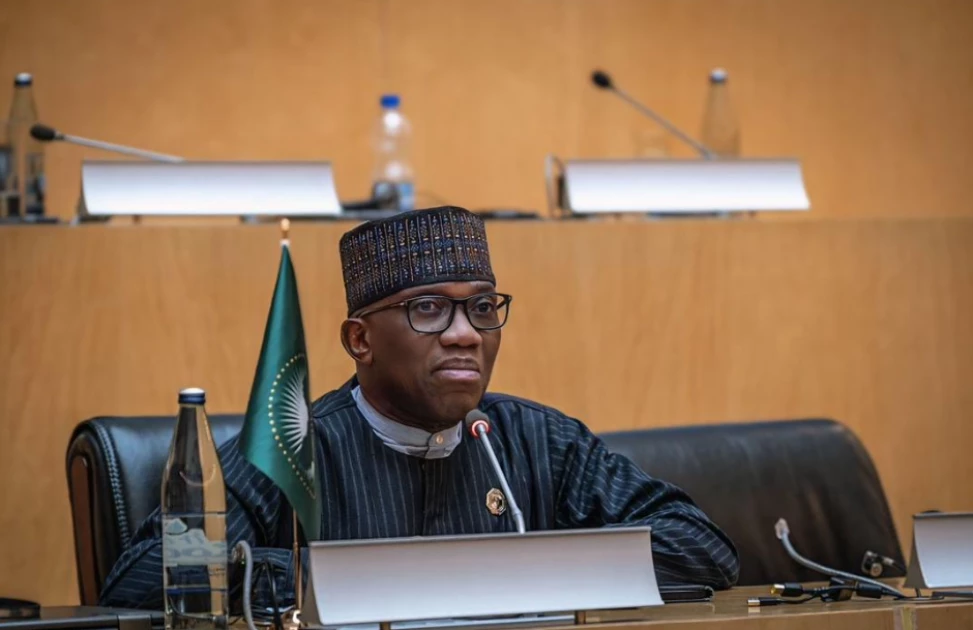
AU Commissioner for Political Affairs, Peace and Security, Ambassador Bankole Adeoye.

Audio By Vocalize
The African Union has renewed its commitment to ending conflicts in Sudan and eastern Democratic Republic of Congo, placing an immediate and permanent ceasefire at the centre of its diplomatic efforts.
Addressing journalists after the 39th Ordinary Session of the
Assembly of Heads of State and Government, the AU Commissioner for Political
Affairs, Peace and Security, Ambassador Bankole Adeoye, said African leaders
focused on concrete measures to silence the guns and strengthen the continent’s
peace and security architecture.
On eastern DRC, Ambassador Adeoye confirmed that the AU
mediator, Faure Gnassingbé, presented a detailed report on progress since his
appointment.
Mediation efforts are being reinforced by a panel of
facilitators and supported by the East African Community and the Southern
African Development Community.
The AU has aligned its engagement with diplomatic initiatives
in Doha and Washington, welcoming international support while maintaining that
African-led mediation remains central.
Ambassador Adeoye noted that eight agreements have been signed
under those processes and stressed the importance of securing a permanent
ceasefire.
He called on all armed actors, including M23, to end
hostilities that continue to inflict hardship on civilians.
He added that the AU is promoting an inclusive inter-Congolese
dialogue aimed at securing a sustainable political settlement, describing
eastern DRC as a top priority for the Union.
Turning to Sudan, Ambassador Adeoye described the crisis as
the worst humanitarian situation globally and reaffirmed the AU’s roadmap,
anchored on a permanent ceasefire, humanitarian access, coordinated
international engagement, prevention of regional spillover and inclusive
civilian political dialogue.
The AU Peace and Security Council met at ministerial level on
12 February ahead of the summit to reaffirm these principles and strengthen
coordination with the United Nations, the Intergovernmental Authority on
Development, the League of Arab States and the European Union.
He stressed that diplomatic pressure remains focused on
achieving a permanent, unconditional and inclusive ceasefire, while
preparations are being considered to support the implementation of any future
peace agreement.
Responding to questions on unconstitutional changes of
government, Ambassador Adeoye reiterated the AU’s zero-tolerance policy. Six
member states remain suspended following military takeovers.
He acknowledged the need to address governance challenges and
youth frustration, underlining that the Assembly remains a forum of
democratically elected leaders committed to constitutional order and the rule
of law.
On global governance, he renewed Africa’s call for reform of
the UN Security Council. He congratulated the Democratic Republic of Congo and
Liberia for joining the African members currently serving on the Council,
alongside Somalia.
Reaffirming Africa’s position under the Ezulwini Consensus, he
said the continent seeks permanent representation with veto powers to reflect
current geopolitical realities.
“The Security Council must reflect the world of today,” he
said, emphasising that Africa’s 54 member states in the UN deserve a stronger
and more legitimate voice in global peace and security decisions.
Ambassador Adeoye also addressed concerns about pressures on
multilateralism, stating that the AU remains committed to a rules-based
international order grounded in the UN Charter and its own Constitutive Act.
He pointed to ongoing reforms within the Peace and Security
Council, including efforts championed by William Ruto, aimed at strengthening
responsiveness and effectiveness.
As the summit concluded, he reaffirmed that silencing the guns
by 2030 remains a central objective and expressed confidence that sustained
African leadership, working in partnership with regional and international
actors, can deliver lasting peace and stability across the continent.
Leave a Comment