

Bayer lauches science for better campaign to champion for improved lives through science

Audio By Vocalize
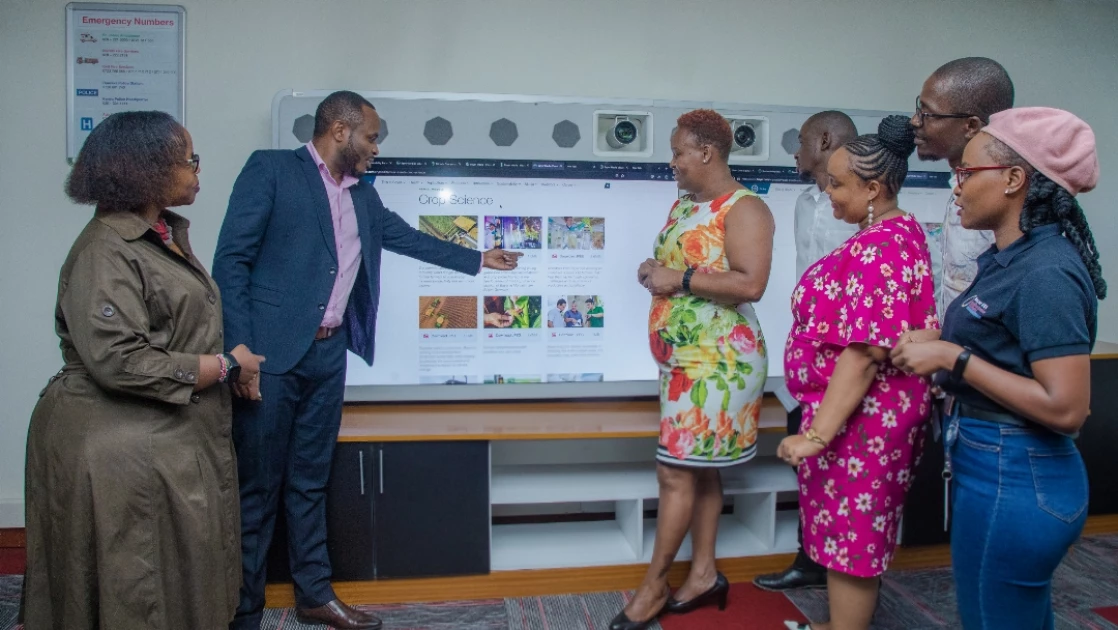
The campaign which is aligned to their brand purpose ‘science for a better life’ seeks to push the corporate brand further while also sensitizing the key stakeholders on their efforts towards improving lives, as their key focus fully shifts to Life Science.
Speaking about the campaign, Anthony Maina- the Corporate Communications lead in Africa expounded on the significance. “Science for Better campaign is a platform for us to continue creating and sustaining our visibility as a corporate brand. It is important that our brand remains top of mind and for the audiences to understand our contribution to improving lives through science on multiple fronts such as nutrition, agriculture, medicine, self-care and food security”, said Mr. Maina.
“All our efforts in research, innovations, collaborations and partnerships are directed at improving lives through science”, he added.
Anchored in their brand vision is “Health for All and Hunger for None’ maxim, a goal for a healthy and food secure world which is championed through efforts such as providing access to pharmaceuticals through the human health division and availing improved seed quality that is climate proof; as well as the training of farmers on better and more sustainable farming methods for better yield through their crop science division.
Bayer is a Life Science company- with the biggest division in Africa being crop science with a target of reaching 100 million small holder farmers globally by the year 2030, 21 million of whom will be in Africa. Currently, 10.8 million small holder farmers have been reached and impacted positively by the solutions that Bayer provides.
With the ever-changing weather patterns, the most affected in the value chain are the small holder farmers (with 50 acres of farms and below). Bayer has been actively working with small holder farmers to empower them to mitigate and adapt to the changing weather patterns using technology (digital farming) and precision farming for the commercial farmers. Bayer also offers a solution to detect weather patterns, helping to inform farmers on the right seed to plant.
To boost this, they have also employed field-based officers/ agronomists whose role is to work with farmers at the grassroot level to educate them on the alternative high yield farming practices. This is done on a daily basis to ensure that farmers remain appraised on the farming practices that will offer them the best returns and longevity.
Bayer has been on the forefront of championing the use of hybrid seeds as opposed to the conventional seed as a move to combat climate change and boost food security. This coupled with the use of proper crop protection practices such as the use of the right fertilizer has been proven to guarantee a four-fold yield for farmers.
The biggest challenge posed over the years has been the pricing for the hybrid seeds because of the new purchases at the point of planting however, for most commercial farmers the gains in terms of the produce has far reaching benefits in comparison to the price of the seeds. Farmers are opting to spend some more money for a guaranteed high yield for the use of the hybrid seeds.
Recently, the government lifted the ban on the planting of GM products, a move that Bayer says is the best solution for Kenya and entire globe towards boosting food security and adopting to climate change. Bayer remains steadfast in their belief in the providing solutions and options for farmers. Bayer has also called on all stakeholders to help farmers to debunk the GM technology enabled seeds and its importance in the mitigation and adaptation in the future. This also happens on the backdrop of a confirmation to consumers on the safety and efficacy of these GM foods.
Bayer has provided centers of excellence in Kajiado, Mwea and Siaya that provide practical learning about the use of the hybrid seed in comparison with the conventional seed and crop protection and new farming technology.
Bayer explains that there are various hybrid products such as BT cotton, soya beans however, the biggest win for the GM enabled products is maize.
With the UN’s prediction of the global population increasing to 9.8 billion by the year 2050, the only choice that remains is for the world to adopt more sustainable and weather proof farming practices, for a food secure future.
Leave a Comment