
Bobi Wine accuses security forces of assault as tensions rise ahead of Uganda’s 2026 election
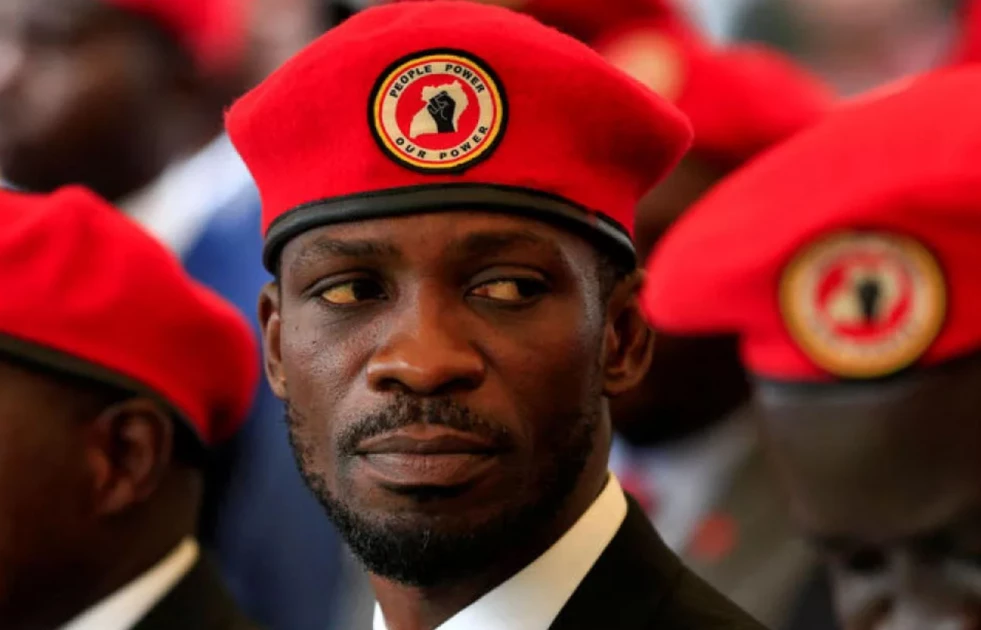
Ugandan musician turned politician, Robert Kyagulanyi, also known as Bobi Wine, attends a news conference at his home in Kasangati, Kampala, Uganda July 24, 2019. REUTERS/James Akena/File Photo

Audio By Vocalize
Wine, a musician-turned-politician seeking to unseat 81-year-old President Yoweri Museveni for a second time after his 2021 defeat, claims security agencies have intensified efforts to disrupt his rallies.
Footage captured in Gulu shows the National Unity Platform (NUP) leader being surrounded by heavily armed officers, who blocked him from accessing a venue where he had been cleared to address supporters—part of a pattern that has seen multiple opposition gatherings dispersed forcefully.
Scenes from the campaign trail also show police assaulting Wine’s supporters, including renowned music producer and activist Sir Dan Magic, a prominent figure in the candidate’s circle of artists backing his presidential bid. Dan, who has previously accused security operatives of targeting him, was again seen injured after a confrontation with officers.
Despite the blockade, Wine eventually managed to address the crowd in Gulu, using the platform to challenge the incumbent’s development record.
“Museveni says he is protecting his gains,” he told supporters. “I want to ask you, the people of Gulu—what gains do you have to protect?”
Additional footage obtained by Citizen TV shows Sir Dan Magic confronting a police officer wearing a metal helmet, who appears to threaten him. Dan references a similar assault in 2020, accusing the same officer of nearly killing him five years earlier.
Meanwhile, President Museveni continued his campaign trail in Kabartole, Fort Portal City, and Kitagwenda, touting his achievements in agriculture, infrastructure, and community development. Unlike the opposition, Museveni’s rallies proceeded under heavy protection from security agencies under his command.
The president also reignited debate over digital freedoms last week after suggesting that Uganda’s internet infrastructure should be government-owned rather than operated by private companies, arguing that public control would reduce costs and expand access.
“The internet should be owned by the government, not the private sector,” Museveni said. “The private sector makes the internet expensive. We should use the government one.”
Human rights groups and opposition leaders warn that Uganda’s civic space continues to shrink, citing the 2017 constitutional amendment that removed presidential age limits—legislation they argue effectively allows Museveni to extend his rule indefinitely. Should he secure another term in 2026, Museveni would become Africa’s longest-serving leader, marking 44 years in power—surpassing Cameroon’s Paul Biya and even eclipsing former Libyan leader Muammar Gaddafi.
Join the Discussion
Share your perspective with the Citizen Digital community.
No comments yet
This discussion is waiting for your voice. Be the first to share your thoughts!