

Celebrated author Ngũgĩ wa Thiong'o dies at 87
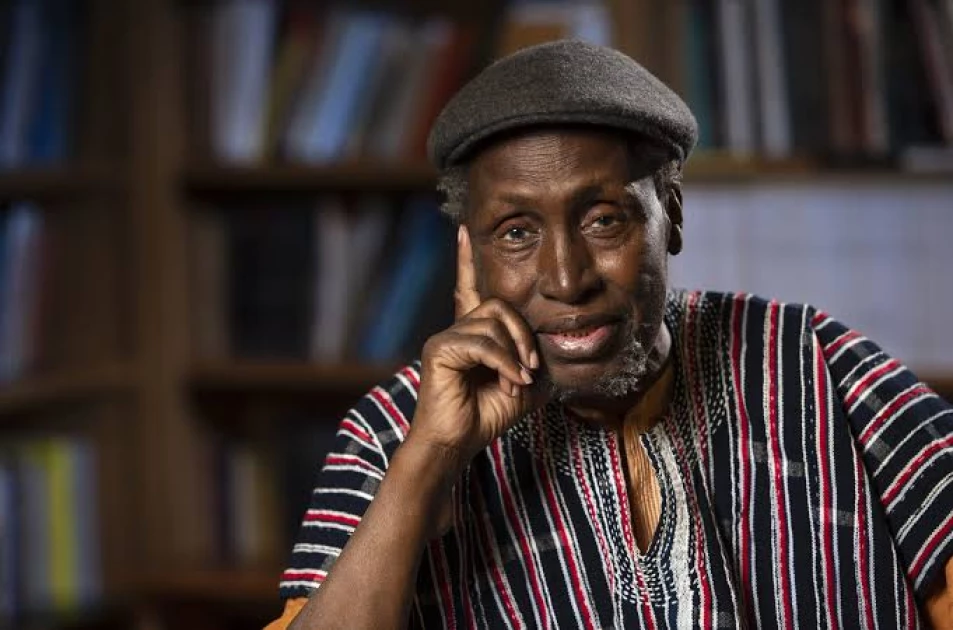
File image of the late renowned Kenyan author Ngugi Wa Thiong'o.

Audio By Vocalize
Renowned and
award-winning Kenyan author Ngũgĩ wa Thiong'o has passed away.
The family confirmed that he died Wednesday morning in the US at the age of 87.
His daughter
Wanjiku wa Ngũgĩ wrote on Facebook: "It is with a heavy heart that we
announce the passing of our dad, Ngũgĩ wa Thiong'o this Wednesday morning,
28th May 2025. He lived a full life, fought a good fight. As was his last wish,
let's celebrate his life and his work. Rîa ratha na rîa thŭa. Tŭrî aira!"
She added that the
family spokesperson Nducu Wa Ngugi will announce details of his celebration of
life soon.
Ngũgĩ wa Thiong'o
was born on January 5, 1938, in Kamiriithu near Limuru in Kiambu County. He has
been hailed as a prolific writer, academic, and political thinker.
His literary
works, including ‘Weep Not, Child’ (1964), ‘The River Between’ (1965), ‘A Grain
of Wheat’ (1967), ‘Petals of Blood’ (1977), and ‘Wizard of the Crow’ (2006),
are celebrated for their profound exploration of Kenya's colonial and
post-colonial experiences.
In 1977, his
politically charged play ‘Ngaahika Ndeenda’ (I Will Marry When I Want),
co-authored with Ngũgĩ wa Mirii, led to his detention without trial by the
Kenyan government.
During his
imprisonment, he wrote ‘Devil on the Cross’ on toilet paper, marking his first
novel penned in Gikuyu.
Following his
release, Ngũgĩ went into exile, eventually settling in the United States. He
served as a Distinguished Professor of English and Comparative Literature at
the University of California, Irvine. His academic and literary work continued
to focus on themes of language, identity, and decolonization.
Ngũgĩ’s final
published work before his death was ‘Decolonizing Language and Other
Revolutionary Ideas,’ a collection of essays and poems released this year. This
compilation spanned nearly two decades of his reflections on language,
education, and influential figures like Nelson Mandela and Chinua Achebe.
In this work,
Ngũgĩ continued his lifelong advocacy for linguistic and cultural
decolonization, emphasizing the empowering nature of knowing one's mother
tongue alongside other languages.
His last major
fictional work was ‘Kenda Muiyuru’ (The Perfect Nine), a Gikuyu epic
that was longlisted for the 2021 International Booker Prize.
Ngũgĩ wa Thiong'o
is survived by his children and grandchildren, many of whom have followed in
his footsteps as writers, academics, and activists.
Leave a Comment