
China to punish internet users for ‘liking’ posts in crackdown after zero-Covid protests

Audio By Vocalize
Internet
users in China will soon be held liable for liking posts deemed illegal or
harmful, sparking fears that the world’s second largest economy plans to
control social media like never before.
China’s
internet watchdog is stepping up its regulation of cyberspace as authorities
intensify their crackdown on
online dissent amid growing
public anger against the country’s stringent Covid
restrictions.
The new
rules come into force from Dec. 15, as part of a new set
of guidelines published by the Cyberspace Administration of
China (CAC) earlier this month. The CAC operates under the Central Cyberspace
Affairs Commission chaired by leader Xi Jinping.
The new
rules have gained attention on social media in recent days and
will take effect just weeks after an unprecedented wave of public anger started
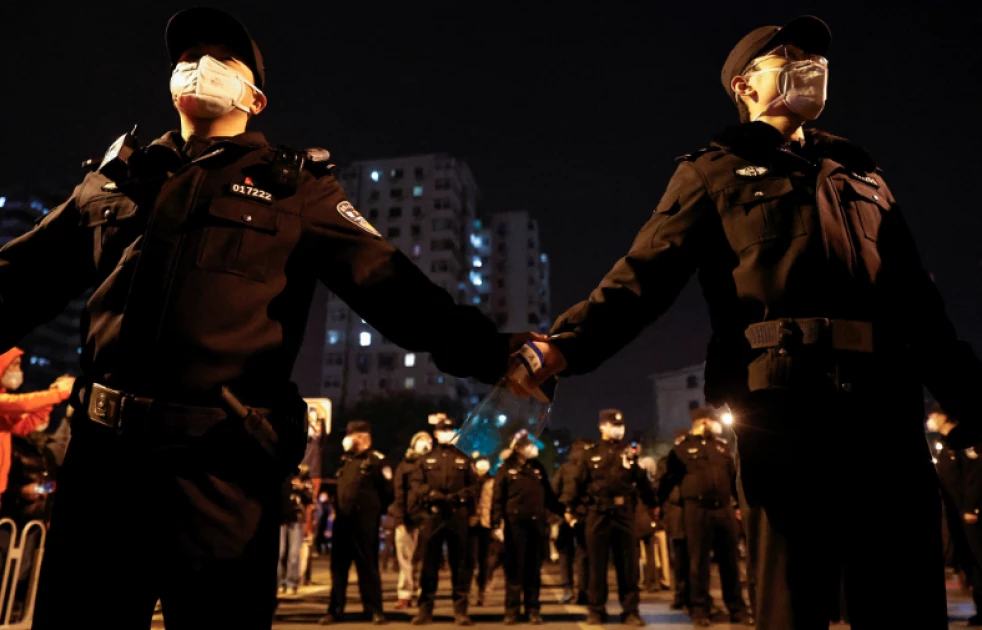
sweeping the country. From Beijing to Shanghai, thousands of demonstrators protested
in more than a dozen cities over the weekend, demanding an end
to the country’s draconian Covid restrictions and calling for political
freedoms.
Internet
users are taking screenshots of content related to the protests to preserve them
and using coded references in messages to evade censors, while the authorities
are scrambling to scrub the internet of dissent.
The
regulation is an updated version
of one previously published in 2017.
For the first time, it states that “likes” of public posts must be regulated,
along with other types of comments. Public accounts must also actively vet
every comment under their posts.
However,
the rules didn’t elaborate on what kind of content would be deemed illegal
or harmful.
“Liking
something that is illegal shows that there is popular support for the issue
being raised. Too many likes ‘can start a prairie fire,’” said David Zweig,
professor emeritus at the Hong Kong University of Science and Technology,
referring to a Chinese expression about how a single spark can start a far
larger blaze.
“The threats
to the [Chinese Communist Party] come from an ability to communicate across
cities. The authorities must have been really spooked when so many people in so
many cities came out at the same time,” he added.
Analysts
said the new regulation was a sign that authorities were stepping up their
crackdown on dissent.
“The
authorities are very concerned with the spreading protest activities, and an
important means of control is to stop the communications of the potential
protesters including reports of protest activities and appeals of joining
them,” said Joseph Cheng, a retired professor of political science at the City
University of Hong Kong.
“This
cyberspace control is an important lesson absorbed from protest activities like
the Arab
Spring,” he said, referring to protests that washed over Tunisia,
Egypt, Libya, Syria, Yemen, Bahrain and the eastern province of Saudi Arabia in
2011.
“What is
important to note is that in the wake of the [China] protests, we will likely
see more aggressive policing of Chinese cyberspace, especially if the protests
expand,” said Isaac Stone Fish, founder and CEO of Strategy Risks, a China risk
consultancy firm based in New York.
In recent
years, China has gradually intensified its censorship of social media and other
online platforms, including launching crackdowns on financial blogs and unruly fan
culture. This year, the country’s strict zero-Covid policy and Xi’s securing
of a historic third term have sparked discontent and anger among
many online users.
But under
the increasingly strict internet censorship, many voices of dissent have been
silenced.
According to
the regulation, all online sites are required to verify users’ real identities
before allowing them to submit comments or like posts. Users have to be
verified by providing their personal ID, mobile phone, or social credit
numbers.
All online
platforms must set up a “vetting and editing team” for
real-time monitoring, reporting, or deleting content. In particular, comments
on news stories must be reviewed by the sites before they can appear online.
All
platforms also need to develop a credit rating system for users based on their
comments and likes. Users with poor ratings dubbed “dishonest” will be added to
a blocklist and banned from using the platform or registering new accounts.
However,
analysts also questioned how practical it would be to carry out the newest
rules, given that public anger is widespread and strict enforcement of these
censorship requirements would consume significant resources.
“It is
almost impossible to stop the spread of protest activities as the
dissatisfaction continues to spread. The angry people can come up with all
sorts of ways to communicate and express their feelings,” Cheng said. “The
major deterrent lies in the perception that the (Communist) Party regime is
still in control and the sanctions are severe.”
Chongyi
Feng, an associate professor in China Studies at the University of Technology
Sydney, said that it is “extremely difficult” now for the Chinese public to
voice their grievances and anger.
“Cyberspace
policing by Chinese authorities is already beyond measure, but that does not
stop brave Chinese citizens from challenging the regime,” he said.
Join the Discussion
Share your perspective with the Citizen Digital community.
No comments yet
This discussion is waiting for your voice. Be the first to share your thoughts!