

China to scrap quarantine for inbound travelers in major step toward reopening

Audio By Vocalize
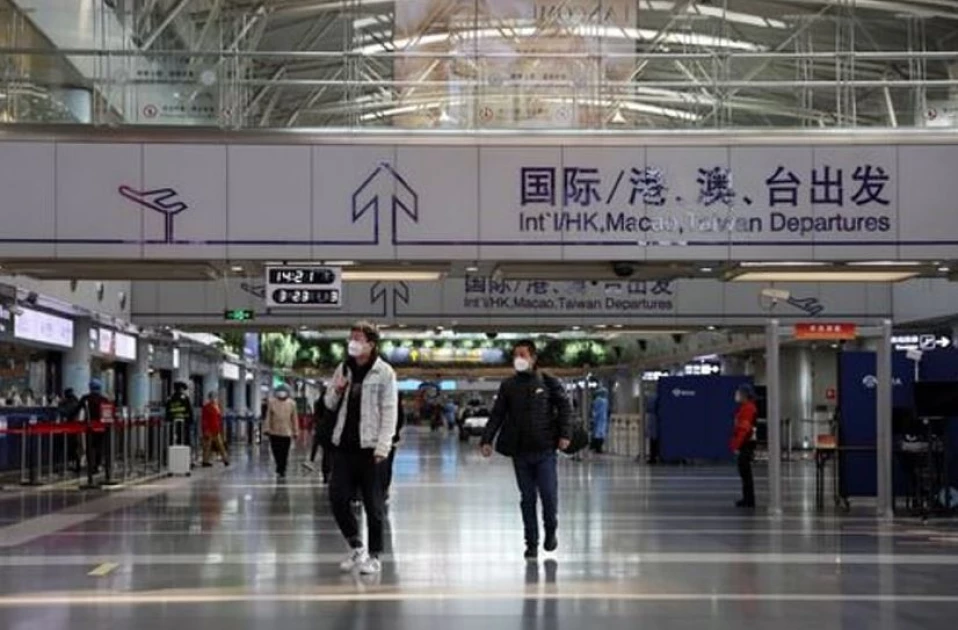
China will drop quarantine requirements for international
arrivals from January 8, in a major step toward reopening its borders that have
shut the country from the rest of the world for nearly three years.
Inbound
travelers will only be required to show a negative Covid test result obtained
within 48 hours before departure, China’s National Health Commission (NHC) said
in an announcement late on Monday. Currently, they are subject to five days
of hotel quarantine and three days of self-isolation at home.
Restrictions
on airlines over the number of international flights and passenger capacity
will also be removed, according to the announcement.
The
easing of borders is part of a broader move by China to dismantles what was
left of its long-held zero-Covid policy, which was abruptly abandoned early
this month following nationwide protests over its heavy social and economic
toll.
The
sudden policy U-turn caught the public and the country’s fragile health system
unprepared, causing widespread shortages of cold and fever medicine and leaving
hospitals scrambling to cope with an unprecedented surge of infections.
Having
rolled back lockdowns, mass testing and allowed positive patients to quarantine
at home, the government is now scrapping other remaining preventive measures,
including contact tracing.
China has sealed its borders since March 2020 to prevent
the spread of the virus, keeping itself in global isolation even as the rest of
the world reopened and moved on from the pandemic.
Foreigners
have been largely banned from entering China, apart from a limited number of
business or family visits. The NHC said it will further “optimize” arrangements
for foreigners to visit China for work, business, study or family reasons and
“provide convenience” for their visa applications.
The
scrapping of travel restrictions is also a big relief for Chinese nationals
studying or working abroad. Those who could not afford the soaring prices of
flight tickets, lengthy hotel quarantines or onerous testing requirements have
not been able to go home for three years.
Authorities
also vowed to resume outbound tourism for Chinese citizens in an orderly
manner, depending on the international Covid situation and the capacity of
various domestic services – although it offered no time line or details on
implementation.
On Chinese social media, many celebrated the long-awaited
relaxation on international travel. Ctrip, a travel booking site in China, said
searches for popular overseas tourist destinations on the platform jumped 10
times within an hour of the announcement of the new policy.
Others
lamented the suffering, loss and missed opportunities over the past years.
“How
many people who used to straddle the borders, from overseas students to workers
making a living in Africa, had to change their life plans? How many families
had been separated and barred from seeing their loved ones for one last time?
How many three years do we have in our lives? These three years have changed us
forever,” a Chinese journalist wrote on microblogging site Weibo.
China’s
top health authority made the sweeping announcement Monday as an action plan
for the downgrading of its management of Covid.
Since
2020, China has classified Covid as a Category B infectious disease but treated
it as a Category A disease, putting it on par with bubonic plague or cholera
and empowering local authorities to impose lockdowns and other restrictions.
Now, it will be treated as a Category B disease, in the same category as HIV
and bird flu.
The
commission also changed the official Chinese name of Covid from “novel
coronavirus pneumonia” to “novel coronavirus infection,” an amendment it said
is “more in line with the current characteristics and danger level of this
disease.”
“The
less-deadly Omicron variant has become the dominant strain of SARS-Cov-2, and
only a very small number of cases developed to pneumonia,” NHC said in the
statement.
China’s
top leaders have signaled recently that they would shift
focus back to growth next year and have bet on the relaxation
of pandemic restrictions to lift the economy.
China’s
current focus is to prepare sufficient medical resources, according to the NHC
statement. Big and middle size cities need to quickly transform their
“Fangcang”, makeshift centralized Covid quarantine facilities, into designated
hospitals with enough health workers staffed, NHC added.
NHC
also didn’t completely rule out the possibility for temporary and local
restriction measures going forward.
“As
we manage the outbreaks, we should pay special attention to real-time global
assessment of the outbreak’s intensity – pressure on the health system and
general situation of the society – and take appropriate lawful measures to
limit people’s group activities and movement in a flexible way to flatten the
curve,” it said in the statement, adding that lockdowns might be re-imposed at
nursing homes if the outbreak is severe.
Leave a Comment