
Coffee Millionaires: Coffee farmers celebrate a return to profitability
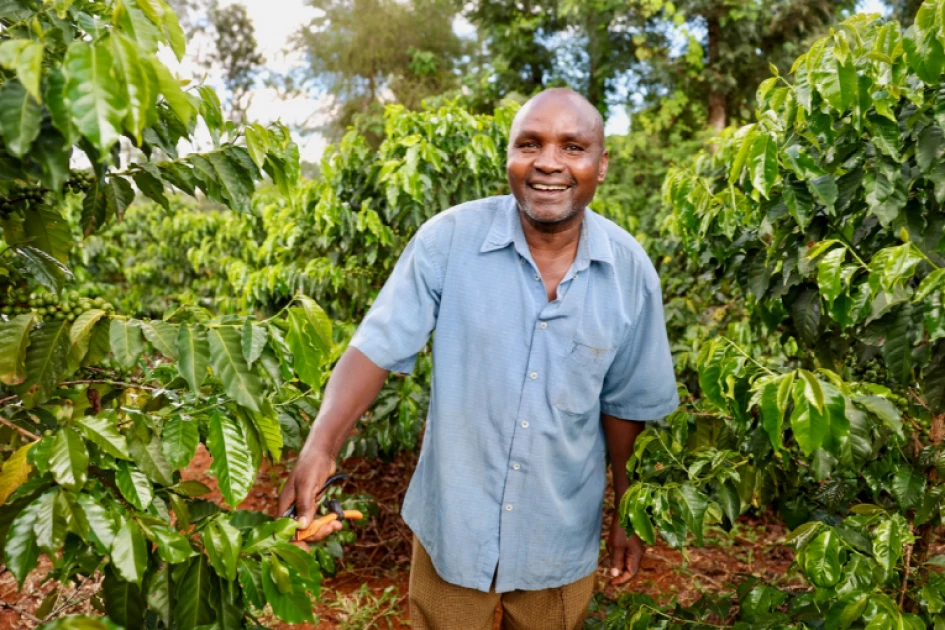
57-year-old Joseph Muthike Gichoya at one of his flourishing coffee farms in Kirinyaga County.

Audio By Vocalize
Meet Kenya’s new generation of coffee millionaires: hardworking, resilient farmers empowered by the coffee reforms to continue producing some of the world’s finest beans, and cashing in like never before. Cherry prices have surged to as high as Ksh.145 per kilogram and counting, turning coffee farming from a struggle into a lucrative venture.
Fifty-seven-year-old Joseph Muthike Gichoya, a coffee farmer from Kariro in Karumandi Ward, calls it “plucking green gold.”
"This is the coffee we are picking, and our coffee is very good, coffee is gold. The government has helped us. In five years," he says amid a hearty, cheeky laugh, "everyone here will have bought a Prado. Our coffee is dollars!"
The phrase, behind every successful day is a strong cup of coffee, has taken on a whole new meaning for Gichoya. For him, success is not just in the cup, it is in the bank. Different from the stories told over the years on the misty slopes of Mt. Kenya in Kirinyaga County to the coffee belts of Nyeri and Murang’a, tales of low prices, middlemen exploitation, and outdated practices, farmers are now telling stories of prosperity, pride, and productivity.
“A quiet revolution is underway, sweeping through our farms,” he reiterates. “I started with just 300 stems,” says Gichoya, standing between rows of neatly trimmed coffee bushes.
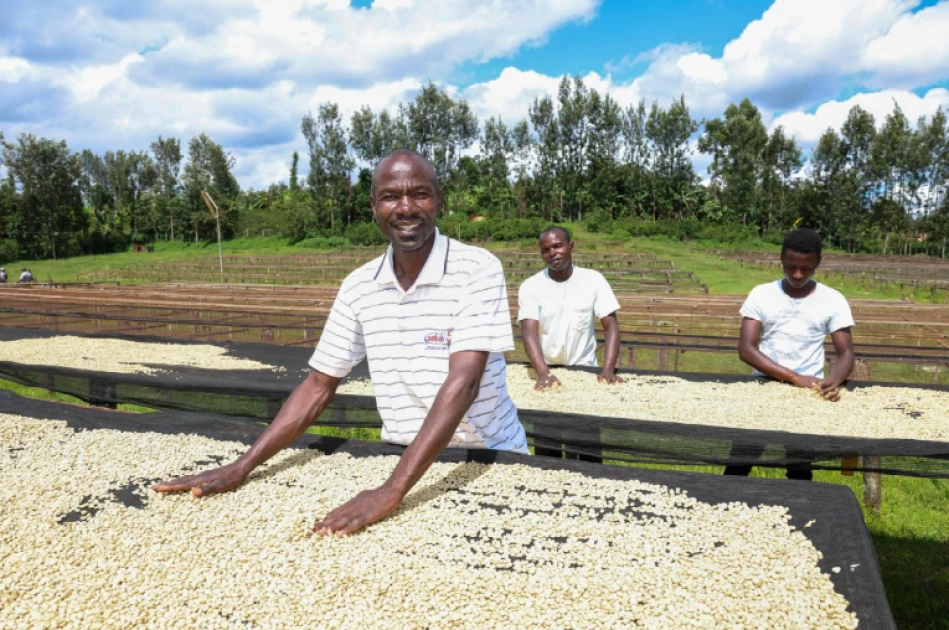
“Today, I have about 3,000 stems, and I am expanding to five acres. Last year, I harvested 18,000 kilograms and was paid Ksh.145.10 per kilo. You can do the math, I am smiling all the way to the bank.”
Like many others, Joseph attributes part of his success to shifting from the traditional SL variety, prone to disease and low yields, to newer, disease-resistant types like Ruiru 11 and Batian. That alone, he notes, was not enough:
“The government has done a good job in dealing with the cartels.”
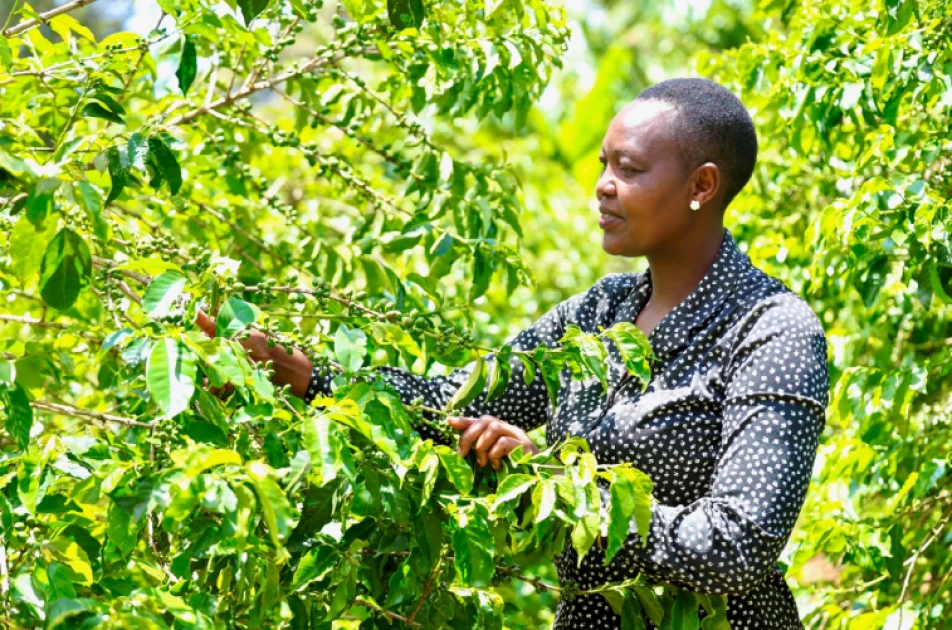
“Before, I was not interested in coffee farming. But after consulting several farmers in the business, they advised me that coffee is the only project that can give me money in a lump sum,” she shares.
For Esther Ngang’a, a farmer from Kagumo, every part of her family and household revolves around coffee. In fact, she even uses coffee stems for her live fence.
“Coffee has helped me educate my children and build this house. Even my pigs, the income from coffee allows me to buy their feed. Truly, coffee has changed my life completely.”
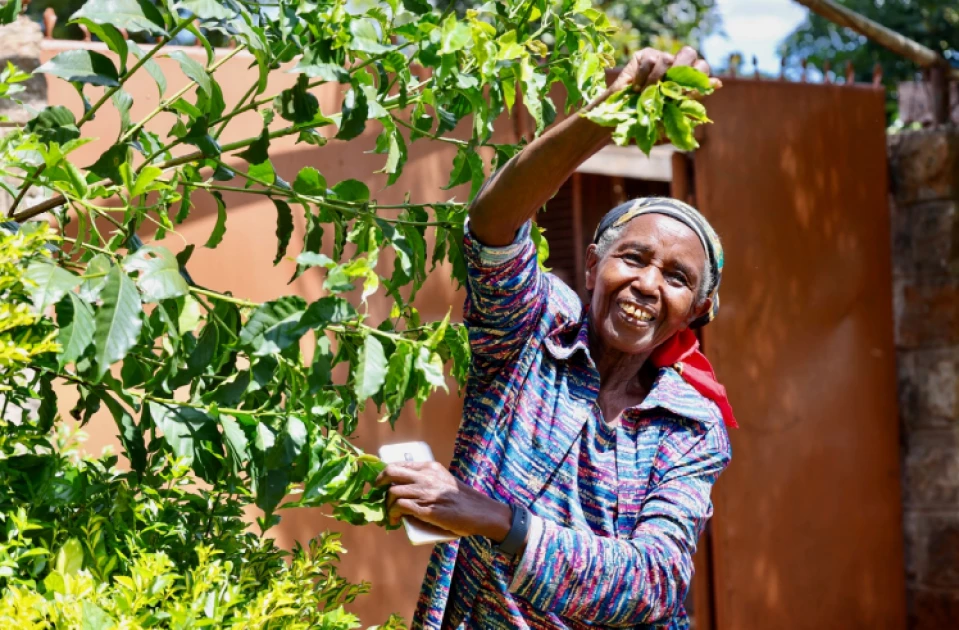
“I sell to Kagongo and Gwama factories,” Kariuki explains. “This year, we were paid around Ksh 142 per kilo. For three years now, we have consistently earned above 100 shillings, but this time we broke records, some factories hit Ksh 149.”
During the peak harvest season, Kariuki employs up to 80 local pickers, a testament not just to his success, but to the ripple effect of coffee on the rural economy. Once a story of exploitation and dashed hopes, coffee is now emerging as one of the most lucrative ventures for Kenyan farmers.
According to Silas Chomba, Manager of Baragwi Farmers’ Cooperative Society, reforms initiated in 2019 and aggressively implemented by the Kenya Kwanza administration are finally bearing fruit.
“This year, Kagongo Factory paid farmers Ksh. 128.80 per kilo, the highest ever,” says Chomba. “The government reforms opened up free markets for factories, allowing them to seek better buyers. Farmers are finally farming as a business.”

“I would encourage young people to try farming,” Kariuki urges. “It is not menial work, it is profitable, dignified, and rewarding.”
As Kenya’s coffee industry stands on the cusp of historic transformation, the message is clear. “Before, we were paid in cents,” Chomba adds with a smile. “Now we are crossing 140 shillings and hoping for 200 shillings. Coffee is back, and this time, it is here to win.”
Nicknamed President William Ruto's pet project under the Bottom-Up Economic Transformation Agenda (BETA), coffee, a priority value chain, is aimed at spurring inclusive economic growth from the grassroots.
The bold reforms rolled out by the government, including the reopening of the Nairobi Coffee Exchange (NCE) and the introduction of the Direct Settlement System, are designed to promote transparency, eliminate middlemen, and enhance farmer earnings.
Additionally, the Coffee Cherry Advance Revolving Fund, now valued at seven billion shillings, was launched to offer affordable credit to smallholder farmers with less than 20 acres under cultivation. Some call the change better prices at last. Others see it as the beginning of bigger dreams and a long-awaited taste of prosperity.
Some simply describe it as the ripple effect of long-overdue reforms. In the hills of Nyeri, Murang’a, and Kirinyaga, where the bushes bloom and the pickers rise early, coffee farmers have a name for it - green gold.
Join the Discussion
Share your perspective with the Citizen Digital community.
No comments yet
This discussion is waiting for your voice. Be the first to share your thoughts!