
CS Mbadi’s first Ksh.4.2 trillion budget faces scrutiny over debt, revenue gaps
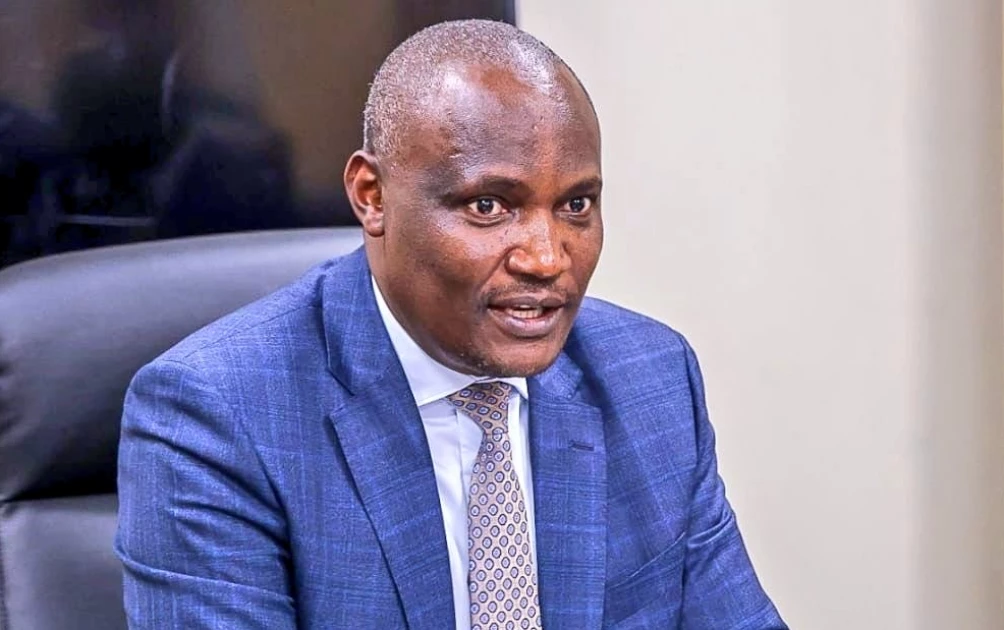
Treasury CS John Mbadi speaks during a past address. PHOTO | COURTESY

Audio By Vocalize
To finance the budget, CS Mbadi is expected to pronounce the revenue-raising measures, with a target of tax collection now set at Ksh.2.7 trillion, equivalent to 64 per cent of the funding required.
Treasury hopes to collect Ksh.560 billion in government levies and fees, in the form of Appropriations-in-Aid. That pushes the total revenue to Ksh.3.3 trillion, leaving a budget gap of nearly Ksh.900 billion.
With grants of Ksh.46.9 billion expected, the National Treasury faces a budget deficit of about Ksh.876 billion to be financed through borrowing.
And while a revenue target of Ksh.3.3 trillion may sound like a solid plan, revenue underperformance threatens its success. At a time when business and individual incomes have been shrinking, thus affecting disposable income, experts warn that this may not be tenable.
"Looking at our history in terms of collection, we have always set very ambitious revenue targets, which often lead to a growth in the deficit during the year of implementation," John Kinuthia, Senior Program Officer, Bajeti Hub noted.
CS John Mbadi exuded confidence that the grants listed in the budget estimates are almost certain.
"Munaweza fanya budget muweke grants kama ile pesa mnangojea kujenga nayo uchumi wetu na wale mnangojea wakikataa," Mercy Njeri, Nairobi resident, posed.
"We don't just wake up and assume that a grant will come. These grants are negotiated and they are just an element of the funding, and you'll find that the loans come with the grant component," CS Mbadi highlighted.
At a time when the government has, over the years, struggled to implement the fiscal budget on time, experts propose that the government should control the expenditure side of the books.
"That spending has to come down… that’s something the government can actually do. But looking at our history in terms of collection, we have always set very ambitious revenue targets, which often lead to a growth in the deficit during the year of implementation," Kinuthia pointed out.
Out of the budget deficit of Ksh.876 billion, the government intends to borrow more than two-thirds of it locally, at Ksh.592 billion, and the balance of Ksh.284 billion externally.
Experts warn that the increased appetite for local borrowing continues to crowd out the local business scene from accessing credit.
"If you look at the goals that have been put out, it is that we should borrow more externally and reduce purchasing domestically so that we free up capital for businesses," Kinuthia added.
"When the government is borrowing Ksh.1 trillion or Ksh.576 billion domestically, banks and lenders will always go to the government."
And with the Central Bank consistently lowering the cost of borrowing to single digits, experts observe that while this may look attractive to the private sector, it may as well serve the interests of the government, who now have the opportunity to borrow more locally at cheaper rates.
The gains intended for businesses end up being gains for the government, at the expense of the private sector.
Join the Discussion
Share your perspective with the Citizen Digital community.
No comments yet
This discussion is waiting for your voice. Be the first to share your thoughts!