

Energy Ministry counts on National Petroleum Policy to spur growth in oil sub-sector
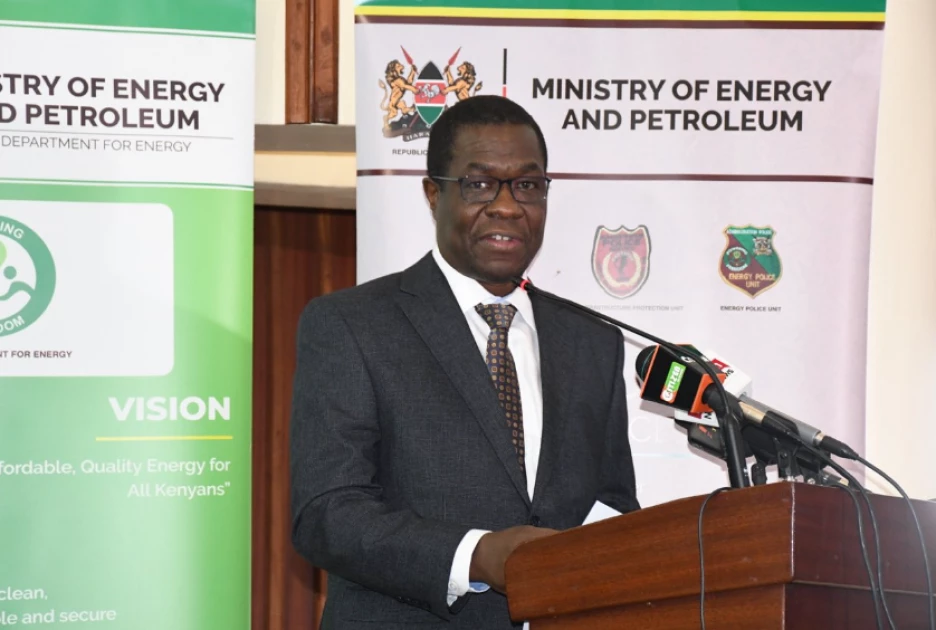
Energy and Petroleum CS Opiyo Wandayi during a past address. PHOTO | COURTESY

Audio By Vocalize
Wandayi who was speaking in Nairobi during the Validation workshop for the Draft National Petroleum Policy said the rising demand for the sub-sector underscores the urgent need for sustained investment, policy alignment, and innovation to inspire further growth which calls for a a robust, forward-looking policy framework to be provided by the Draft National Petroleum Policy.
The Draft Policy, Wandayi said, is inevitable given that Section 5(1) of the Petroleum Act, 2019 allows the Ministry to formulate and periodically review the National Petroleum Policy.
"This Policy, in our view, is both timely and urgent. I say this because even though the current Sessional Paper No. 4 of 2004 on Energy is foundational, it no longer responds effectively to the dynamic developments in the sub-sector. Since the discovery of oil and gas in Kenya in 2012, the petroleum landscape has evolved significantly, presenting both opportunities and challenges," the CS noted.
“It is imperative that we adopt a modern, robust, and coherent policy to guide the sustainable development and management of petroleum resources in our country,” added Wandayi.
The Draft Policy, Wanday said, has been crafted to address emerging issues in the sector while aligning with Kenya’s broader national development agenda.
The policy is anchored on the Bottom-Up Economic Transformation Agenda (BETA), which emphasizes inclusive growth, poverty reduction, and empowerment of the ordinary Kenyan and if well harnessed, petroleum resources can be an enabler in the realization of BETA’s five pillars of Agriculture; Micro, Small, and Medium Enterprises (MSMEs); Affordable Housing; Universal Healthcare; and the Digital and Creative Economy.
According to Wandayi, the Policy also aligns with Vision 2030 and highlights Kenya's commitment to Sustainable Development Goal 7 – ensuring access to affordable, reliable, sustainable, and modern energy for all.
The Policy also outlines a roadmap for the exploration, development, and utilisation of petroleum resources besides focusing on key priority areas including responsible exploration and production, expansion of petroleum storage and distribution infrastructure, increased uptake of Liquefied Petroleum Gas (LPG), security of supply, and the promotion of local content and value addition.
It also places strong emphasis on good governance, transparency, equitable revenue sharing, environmental sustainability, and stakeholder engagement.
"As we move towards finalising this Policy. I emphasise the importance of collaborative implementation. While the government will provide leadership and coordination, successful execution will depend on the active participation and partnership of all stakeholders – both public and private," the CS remarked.
He encouraged stakeholders to approach the process with a shared sense of purpose and commitment.
“We should ensure that the final document reflects our collective vision and provides a firm foundation for a petroleum sector that contributes meaningfully to Kenya’s economic transformation."
Speaking during the occasion, the Principal Secretary for Petroleum, Mohamed Liban, said the Draft National Petroleum Policy, which was being validated, is a result of various engagements and consultations with the Public Private Sectors and Government institutions.
Liban said The Executive Order No. 2 of 2023 outlines the functions for the State Department for Petroleum, which include: Policy formulation and periodic review. As a Department, "we have been working tirelessly towards delivering this mandate, and we are elated at the tail end of realising this goal".
The Development of the Petroleum Policy, the PS said, commenced in October 2023, with the establishment of a Multi-Agency Technical Working Committee that was tasked to spearhead the finalisation of a draft Policy developed in the year 2021, with World Bank support.
Since then, Liban noted, several processes have gone into the formulation of this Policy which involved the review of the draft 2021 Policy in consultation with the industry players and other stakeholders followed by input from the internal and external stakeholders who included the County Executive Committee Members responsible for Energy matters, Council of Governors Committee on Energy
The Petroleum Policy, the PS said, focuses on promoting Kenya’s petroleum potential to attract investment in discovering, developing, producing, and commercialising petroleum resources.
The goal of the Policy, he added, is to harness the oil and gas sector in generating revenue and ensuring security of supply of petroleum products, which will in turn contribute to the country’s socio-economic development for the benefit of the present and future generations.
The comprehensive policy aims to addresses issues on Oil and Gas Sector Policy, Legal, Regulatory, Institutional, Fiscal and Contractual Framework.
In Liban’s view, the policy also addresses upstream sub-sector such as ownership of the resources, promotion of investments, licensing of petroleum blocks, exploration development and production operations, sustainable utilization of gas, decommissioning plus midstream sub-sector, dwnstream sub-sector such as supply of petroleum products, pricing of petroleum products, infrastructure development, liquified petroleum gas.
The effective implementation of the Policy will require the development of an appropriate legal, regulatory and institutional framework. In addition, all stakeholders will be required to undertake their respective roles as outlined in the Policy.
Liban assured that the government would endeavour to provide overall leadership, oversight, guidance, and direction to ensure the effective and efficient implementation of the policy.
Leave a Comment