

Experts map solutions for Africa’s rapid urban growth
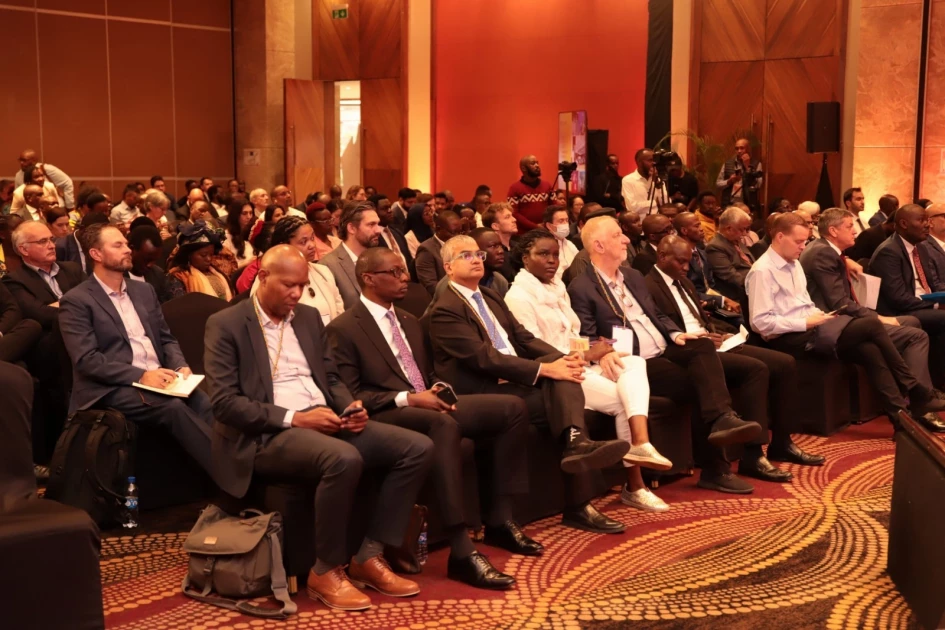
Participants at the New Cities Summit in Nairobi on 12th June, 2025.

Audio By Vocalize
Global urban developers and policymakers
took a significant step on Thursday toward addressing Africa’s fast-growing
urban population by launching a strategic agenda to accelerate the development
of new, investment-ready cities across the continent.
Africa’s
population is expected to grow by 2.2 billion people between 2030 and 2100,
according to a 2023 report by the Mo Ibrahim Foundation.
The report highlights that by 2050, Africa
will represent a quarter of the global workforce, rising to over 40% by 2100.
In response, many countries are exploring charter cities as a way to move
beyond traditional urban development models and better manage rapid
urbanization.
Mark Lutter,
Executive Director of the Charter Cities Institute, opened the New Cities
Summit 2025 with remarks emphasizing the importance of governance: “Charter
cities are new cities with improved legal frameworks. Effective governance is
crucial because it shapes whether people live in prosperity or hardship.
Bringing diverse stakeholders together to share best practices helps accelerate
progress in developing these cities.”
The summit,
held in Nairobi, called on national governments and international partners to
support this shift through funding, technical assistance, and governance
reforms—signaling a new approach to planning, building, and managing Africa’s
urban future.
Eng. Byron
Buyu, Secretary for Urban and Metropolitan Development, speaking on behalf of
Alice Wahome, Cabinet Secretary for the Ministry of Lands, Public Works,
Housing, and Urban Development of Kenya, highlighted Kenya’s ongoing efforts:
“We are investing significantly in urban regeneration and infrastructure.
The Nairobi Railway City is a key example,
aimed at improving mobility, boosting economic growth, and revitalizing urban planning.
Initiatives like Konza Technopolis, the Dongo Kundu Special Economic Zone, and
our Affordable Housing Programme reflect our commitment to reshaping where and
how our citizens live and work.”
Recently, the
Charter Cities Institute and Kenya’s Ministry of Lands signed a Memorandum of
Understanding to promote resilient secondary cities across the country. This
partnership represents a shared commitment to advancing sustainable
urbanization aligned with Kenya’s Vision 2030 goals. Focus areas include climate-resilient
development, city twinning, decentralization of governance, and strengthening
legal and institutional frameworks for urban management.
Unlike
traditional special economic zones (SEZs), which are usually small and focused
mainly on industrial activity, charter cities cover larger areas—often over 10
square kilometres—and operate under distinct regulatory frameworks designed to
attract investment, foster innovation, and support sustainable growth.
Drawing
inspiration from global examples such as Dubai, Hong Kong, and Singapore,
charter cities aim to address challenges like housing shortages, unemployment,
and infrastructure deficits. Experts emphasize that city-level regulatory
reforms are critical to unlocking the full economic potential of African
cities.
Projects highlighted at the summit’s Cities Catapult included climate-smart manufacturing parks, creative economy districts, innovative healthcare access models, and sustainable tourism hubs.
These initiatives will receive support
through early-stage funding, technical guidance, investor connections, and
long-term partnerships. The projects target pressing issues such as youth
unemployment, climate risks, and gaps in social infrastructure facing Kenya and
the wider continent.
Leave a Comment