

Facts about Strait of Hormuz war blockade
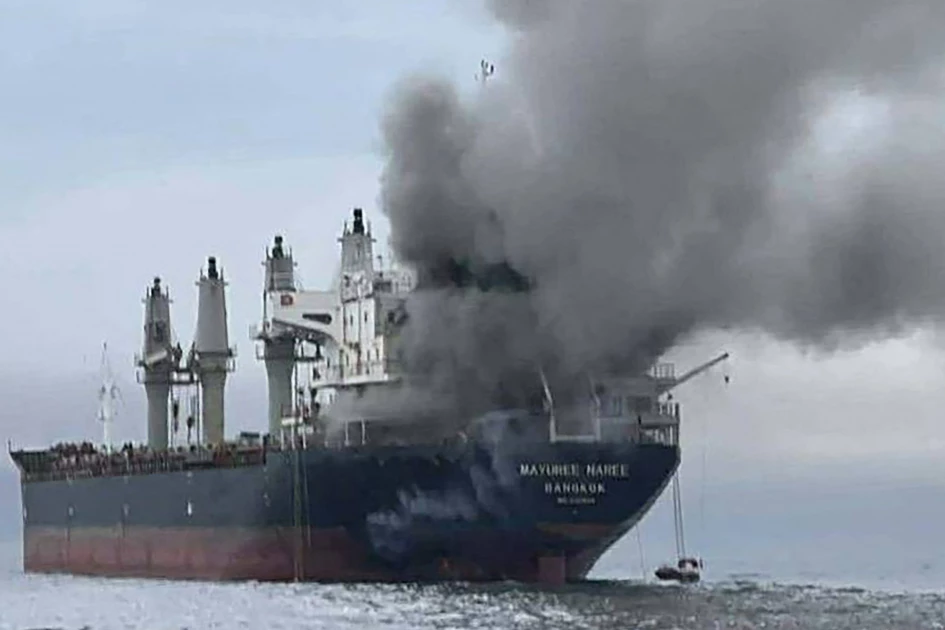
This handout photo taken on March 11, 2026 and released by the Royal Thai Navy shows smoke rising from the Thai bulk carrier 'Mayuree Naree' near the Strait of Hormuz after an attack. Photo by HANDOUT / ROYAL THAI NAVY / AFP

Audio By Vocalize
Around a fifth of global crude oil and liquefied natural gas passes through the waterway in peacetime.
The war erupted on February 28 when the US and Israel began bombing Iran, prompting it to retaliate with strikes across the region and sharply restrict access to the strait.
- 23 security incidents -
Since March 1, 2026, 23 commercial vessels, including 11 tankers, have been attacked or reported incidents in the Gulf, the Strait of Hormuz or the Gulf of Oman, according to the British naval maritime security agency UKMTO.
Across all types of vessels, an additional four attacks claimed by the Iranian Revolutionary Guards have not been confirmed by international authorities.
- 8 sea workers killed -
Since the conflict began, at least eight seafarers or dock workers have died in incidents in the region, according to the International Maritime Organization (IMO).
A further four remain missing and 10 were injured.
- 95% shipping drop -
The channel typically sees around 120 daily transits, according to shipping industry intelligence site Lloyd's List.
From March 1 to 19, commodities carriers made just 116 crossings, according to analytics firm Kpler -- a decrease of 95 percent.
Of these, 71 were by oil tankers and gas carriers and most were travelling east out of the strait.
- 20,000 seafarers stranded -
Around 20,000 seafarers, along with cruise ship passengers, port workers and offshore crews, are affected in the region, according to the UN's International Maritime Organization (IMO).
The IMO estimates at least 3,200 vessels are currently there, up to two thirds of them "large commercial vessels engaged in international commerce".
Marine consultancy Clarksons said in a note on March 18 that there were 250 oil tankers in the Gulf, accounting for five percent of global crude tanker tonnage.
- Ship fuel up 87% -
Ship fuel prices have risen 87 percent since the start of the conflict, according to data from industry monitor Ship and Bunker.
Clarksons said the cost of shipping a barrel of crude oil had doubled to $10 since the start of the year.
Leave a Comment