

Fears of fresh war drive Tigrayans to flee north Ethiopia
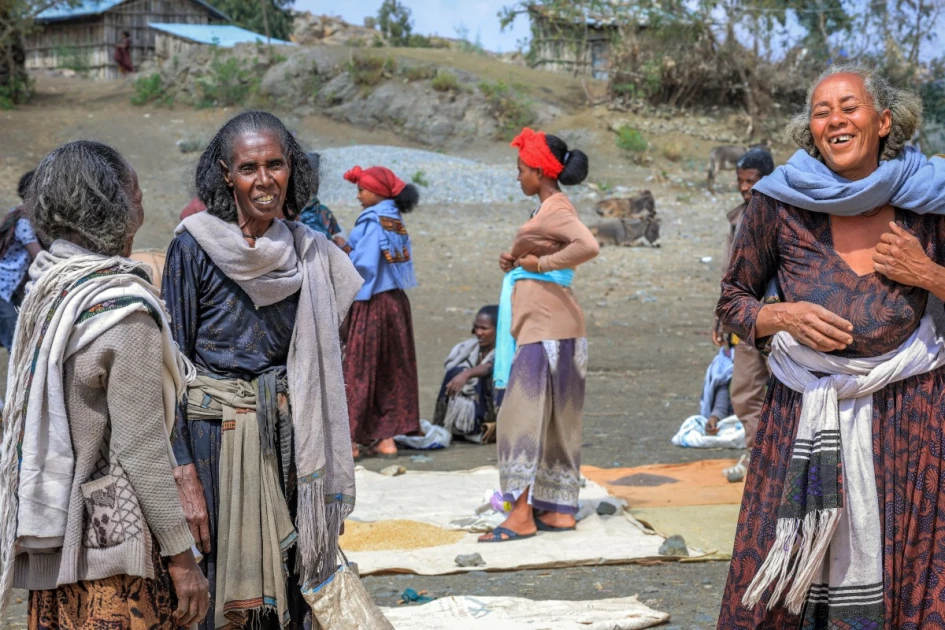
Residents gather to buy and collect goods at an open market in Wejerat, Southern Tigray, on March 3, 2026. Photo by ABEL GEREZGIHER / AFP

Audio By Vocalize
It's deep in the night in Mekelle, the capital of Ethiopia's
Tigray region, but dozens of young men with backpacks and suitcases are
searching for a bus to Addis Ababa.
Abel, 23, fought for the Tigrayan Defence Forces during the
civil war against the federal government of 2020-22 that killed at least
600,000 people. He worries a fresh conflict is imminent.
"It's not safe here anymore," said Abel, whose
name has been changed to protect his identity. "I saw people die. I don't
want to relive that, I don't want the war to catch up with me again."
While war sets much of the Middle East alight, just across
the waters of the Red Sea, another conflict is looming in the Horn of
Africa.
Federal and Tigrayan forces are once again massing at their
shared border in northern Ethiopia.
The peace agreement that ended the last civil war in 2022
was never properly implemented and relations have remained highly volatile, not
helped by Ethiopia's worsening ties with Eritrea, which borders Tigray.
There are no exact numbers, but hundreds are fleeing Tigray
-- a region that was home to around six million people before the war -- every
day by bus or plane.
Abel wants to join them but the buses are full for the
700-kilometre (435-mile) drive to the federal capital of Addis Ababa, one of
the few areas of Ethiopia not facing some form of conflict or insecurity.
- 'Deserted' -
Shortages of basic products are worsening. Hawkers sell
bottles of smuggled petrol at intersections and their prices are rising fast --
from 300 to 430 birr (around $1.90 to $2.80) in just a few days, an AFP
journalist said.
Federal authorities have cut subsidies to the region for
months. Many civil servants are no longer being paid and banks are running out
of cash.
Heading to southern Tigray, a destroyed tank lies on the
side of the road, a relic from the last war.
Chercher, a town of around 50,000 roughly 150 kilometres
south of Mekelle, is near the borders with the Afar and Amhara regions, where
federal troops are reportedly massing.
In January there was a brief outbreak of fighting in the
area, sparking fears that a full conflict was restarting.
Mahlet Terefe, 23, briefly fled to another town with her
three-year-old son when she heard the heavy artillery. She returned to run her
stall selling alcohol and juice, but says business is almost non-existent.
"As you can see its deserted, there is nobody
around," she told AFP.
"I want to leave with my boy before war starts. I'm
very afraid."
A local official in Chercher told AFP it was a matter of
time.
"There will be a new war," said Zinabu Gebredhin.
"Federal forces have mobilised soldiers nearby."
He said the main federal army base was 23 kilometres from
Chercher and troops were positioned on hills just 10 kilometres away.
The federal and Tigrayan administrations blame each other
for the rising tensions.
"The federal troops are advancing" from all
corners of Ethiopia "and I can say that Tigray is being encircled by
federal troops", Amanuel Assefa, second-in-command of the Tigrayan
People's Liberation Front (TPLF), long the dominant party in region, told AFP
last week.
"The highly likely scenario seems that there will be a
conflict," he said.
The following day, Ethiopian Prime Minister Abiy Ahmed said
he did not want war, in a speech that was unusually delivered in Tigrinya, the
language of Tigray.
But he also said the TPLF "wasn't ready to make even a
small compromise".
This verbal sparring is meaningless to Berhan Adhana, 50,
running a small spice stall in the almost-deserted marketplace of Chercher.
"War is destructive, it destroys countries. There is
nothing we will gain from war," she said.
Leave a Comment