
First Lady Margaret Kenyatta roots for increased investments in Africa's maternal and child health
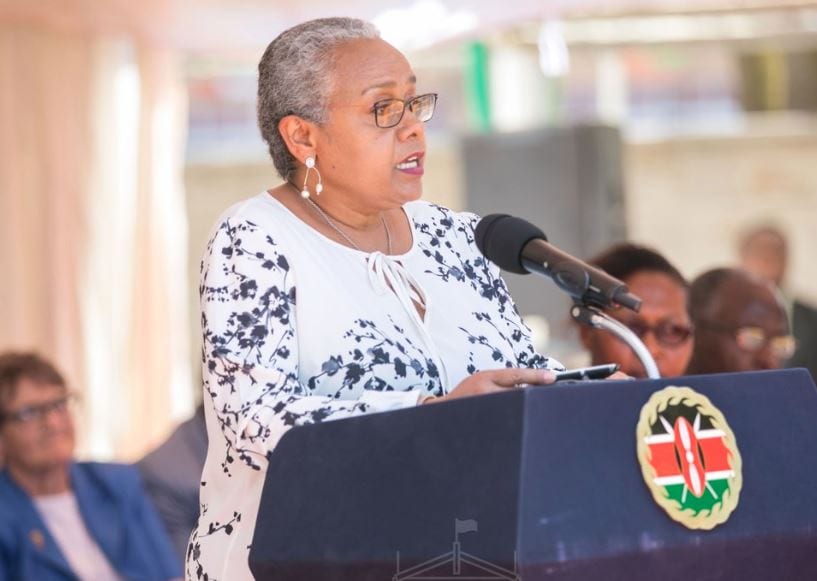
File photo of First Lady Margaret Kenyatta. PHOTO/COURTESY

Audio By Vocalize
First Lady Margaret Kenyatta has advocated for increased investment in
Africa's reproductive, maternal, adolescent and child health systems noting
that private-public partnerships were a viable option for raising resources to
support the sector.
The First Lady rallied global financiers to back Africa's weak maternal
and child health systems which she said were overstretched by societal
challenges such as Female Genital Mutilation (FGM), Gender Based Violence
(GBV), teenage pregnancies and early marriages.
"Through private-public partnerships and collective investments, we
are urged to deepen our work around reproductive maternal, adolescent and child
health," the First Lady she said.
First Lady Margaret Kenyatta spoke through a recorded video message on
Thursday at the 7th Africa Health Business Symposium held at a Nairobi hotel.
At the event, also addressed by Health PS Susan Mochache, the First Lady
said Africa was capable of ending its high maternal and child mortality if the
sector is adequately resourced.
“We must be steeled by the possibility that we can achieve zero maternal
and child deaths by devoting necessary expertise and resources,” she said.
Using the example of her Beyond Zero initiative, the First Lady said the
organization leverages on partnerships to deliver transformative health
interventions.
“This symposium also highlights the growing importance of collaboration
and partnerships. The model of my Beyond Zero Initiative is built on this same
idea. It has been the defining principle, and contributor to the success our
work," she said.
Through partnerships and fundraising platforms such as the Beyond Zero
marathon, First Lady Margaret Kenyatta said her organization was able to pool
adequate resources for the supply of mobile medical clinics to all of Kenya's
47 counties.
In addition to the mobile clinics, the First Lady said Beyond Zero had
rolled out the medical safari initiative so as to enhance access to health
services by vulnerable communities in support of Kenya's universal health
coverage agenda.
“More recently, we have expanded our focus to respond to unmet health
needs through the Beyond Zero Medical Safaris. This program has contributed to
strengthening of our national resolve towards universal healthcare by enhancing
the capacity of our health systems,” the First Lady said.
On Africa's rising cancer disease burden, First Lady Margaret Kenyatta
called for increased screening of particularly cervical and breast cancers
saying the two variants had the highest mortality rates on the continent.
“As we celebrate our work, we are, however, reminded that more needs to
be done; especially around screening and detection of cancers, specifically
cervical and breast cancers. These remain a growing concern with high mortality
rates in our region,” she said.
The First Lady also spoke about Covid-19 saying the pandemic had
overstretched Africa's health infrastructure and called for for the strengthening
of the continent's fragile health systems.
“This forum convenes at a time when we face the risk of reversing our
hard-won gains against the backdrop of the Covid-19 pandemic. The pandemic has
tried and tested our health systems and further demonstrated the urgency of
ensuring health and economic equity, especially for our women. The pandemic has
called for innovative approaches to build resilient health systems,” she said.
In her remarks, Health PS Susan Mochache, who represented CS Mutahi
Kagwe, congratulated the First Lady for her total devotion to the wellbeing and
health of Kenyan women, girls and children.
She reiterated the First Lady's call for health stakeholders to forge
strong partnerships so as to be able to raise adequate resources for investment
in maternal health.
The continental meeting was attended by health ministers from Nigeria,
Uganda, and Somalia as well as representatives of various international
organizations among them WHO's Regional Director for Africa Dr Matshidiso
Moeti.
Join the Discussion
Share your perspective with the Citizen Digital community.
No comments yet
This discussion is waiting for your voice. Be the first to share your thoughts!