
Funding crisis: Why schools are struggling despite set gov't allocations

Audio By Vocalize
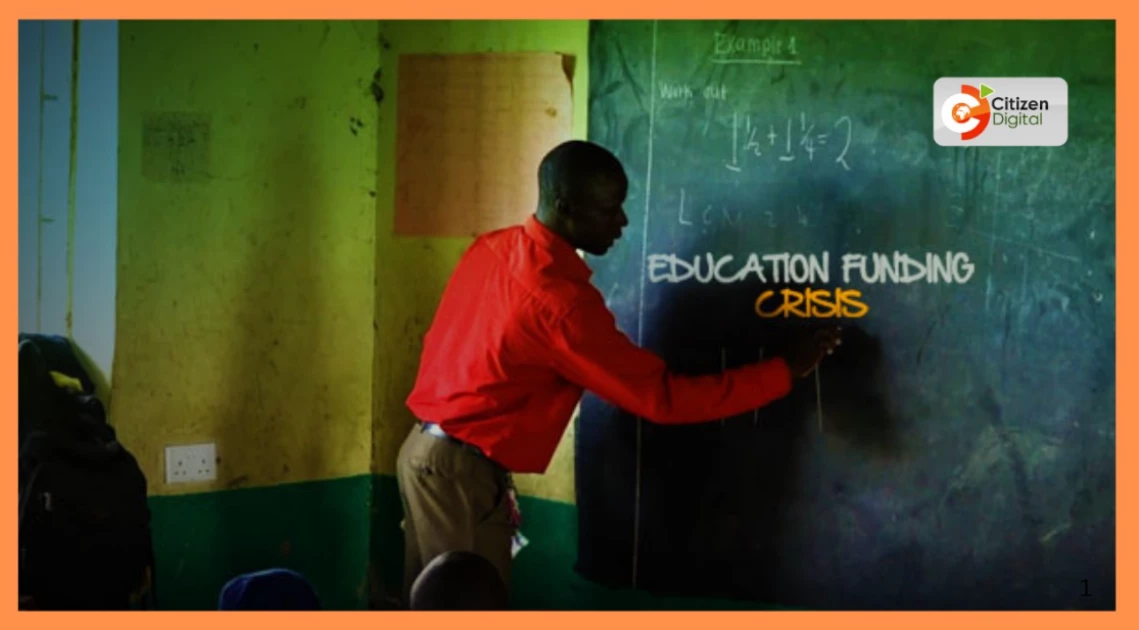
At the heart of the conversation are two figures: Ksh.1,420 per pupil in primary school and Ksh.22,244 per student in secondary school—amounts that the Ministry of Education says are not being fully disbursed.
Since the introduction of free basic education, the government has annually allocated funds per learner, intended to cover essential needs.
However, a 2023 review by the Presidential Working Party on Education Reforms laid bare how these funds are structured and where the money goes.
In primary education, each learner is allocated Ksh.1,420 annually. Of this:
Capitation for Basic Education in Kenya – Primary Education
Tuition Costs: Ksh.731 (51.8%)
Operation Costs: Ksh.689 (48.2%)
Total: Ksh.1,420
The tuition allocation covers textbooks, stationery, textbook maintenance, and assessment costs, while operation costs cater for support staff salaries, utilities, transport, and contingencies.
For secondary learners in free day schools, the capitation rises significantly. Each student is entitled to Ksh.22,244 annually, broken down as follows:
Free Day Secondary, Boarding and Special Needs
Learning Materials: Ksh.4,792
Repairs & Maintenance: Ksh.1,886
Local Transport: Ksh.1,833
Administration Costs: Ksh.1,572
Electricity & Water: Ksh.3,151
Activity Fees: Ksh.1,256
Personnel Emolument: Ksh.5,755
Medical & Insurance: Ksh.1,999
Total: Ksh.22,244
For boarding students, the burden is heavier on parents, who are required to contribute an additional:
Parent Contribution
Boarding & Equipment: Ksh.34,010
Others (e.g., uniforms, personal effects): Ksh.13,050
Total: Ksh.47,060
Despite these structured allocations, education stakeholders say the actual disbursement of funds has often fallen short.
The Ministry of Education has admitted that the Ksh.22,244 figure has not been met in recent years, citing underfunding by the National Assembly during the budgeting process.
Treasury Cabinet Secretary John Mbadi acknowledged the shortfall, stating, “The capitation per student is higher than what is in the budget.”
The Kenya Union of Post Primary Education Teachers has also expressed concern, saying the government has not been disbursing the funds fully as required.
The Ministry of Education says it will continue lobbying Parliament for increased allocations, in a bid to fully meet its capitation obligations and ease the financial strain on schools.
Join the Discussion
Share your perspective with the Citizen Digital community.
No comments yet
This discussion is waiting for your voice. Be the first to share your thoughts!