
Gates Foundation denies claims Bill Gates behind release of 'modified mosquitoes' on Kenyans
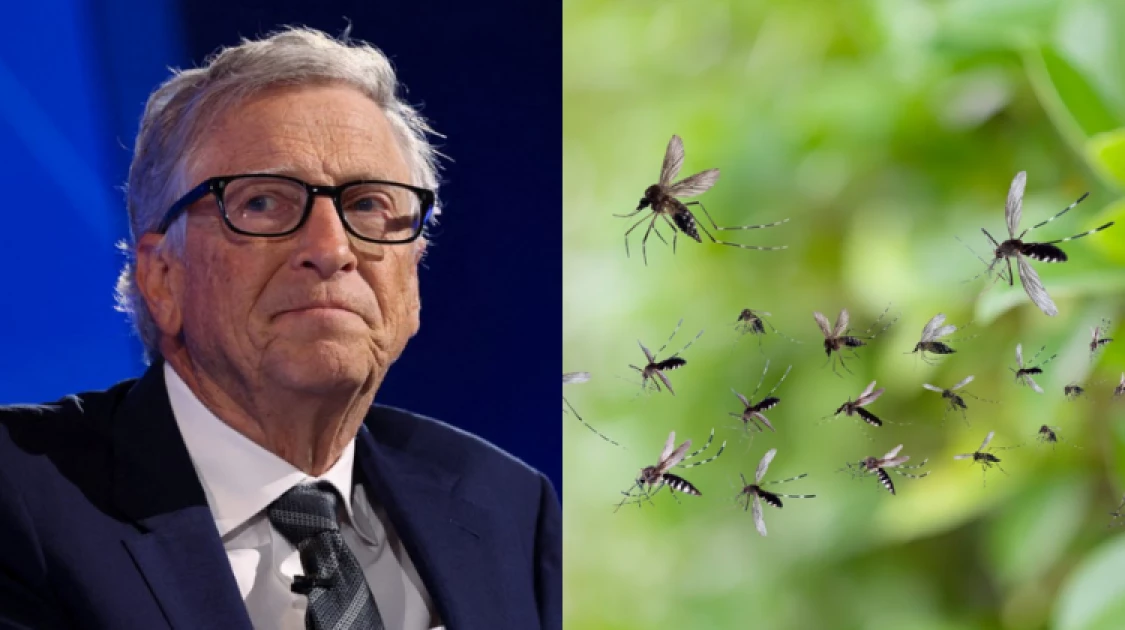
Billionaire and philanthropist Bill Gates. Photo I File

Audio By Vocalize
In a statement released to clarify its role in the country's public health sector, the foundation categorised these claims as "false", seeking to distance itself from rumours of unauthorised biological interventions.
The clarification came after Kenyans online, led by Senior Counsel and politician Paul Muite, took to X to accuse the foundation of nefarious mosquito-related activities, further claiming that the foundation's practices were harming children and the elderly.
He wrote: "@gatesfoundation: Our Capital City Nairobi, is now flooded with mosquitoes released from your laboratories to eliminate the malaria-carrying ones we're told. We believe your genetically modified mosquitoes are designed to harm us. They're now busy biting children and the elderly."
In a brief statement on X, the foundation emphasised that it does not engage in the physical release of the insects or the direct management of vector-control laboratories.
"The Gates Foundation is aware of social media posts claiming that we release mosquitoes in Kenya. This claim is false," the foundation stated.
"The Gates Foundation does not release mosquitoes, operate laboratories that do so, or run vector-control activities in Nairobi or anywhere else."
Addressing concerns over regulatory oversight, the foundation noted that all its work in Kenya is done in accordance with national laws.
The organisation highlighted that its role is to support "Kenyan-led priorities" rather than dictate health policy or bypass local government protocols.
"In Kenya, malaria prevention and control efforts are led by Kenyan authorities and institutions, in accordance with national laws and regulatory oversight," they said.
"The foundation supports Kenyan-led priorities transparently and responsibly, working alongside governments, researchers, and public health partners."
Muite's claim led to an avalanche of varied reactions from Kenyans, with many citing instances they believe that mosquitoes are being mass-produced and released to the public.
The denial comes at a time when malaria remains a significant public health challenge in the region.
Currently, the National Malaria Control Programme (NMCP), under the Kenyan Ministry of Health, oversees the distribution of long-lasting insecticidal nets (LLINs) and indoor residual spraying (IRS).
While the Gates Foundation does fund global research into innovative tools, such as the World Mosquito Program or Target Malaria, it clarified that these specific operational activities in Kenya are managed by local experts and regulated by the state.
Join the Discussion
Share your perspective with the Citizen Digital community.
No comments yet
This discussion is waiting for your voice. Be the first to share your thoughts!