

Germany foils far-right plot to install Prince Heinrich XIII in coup
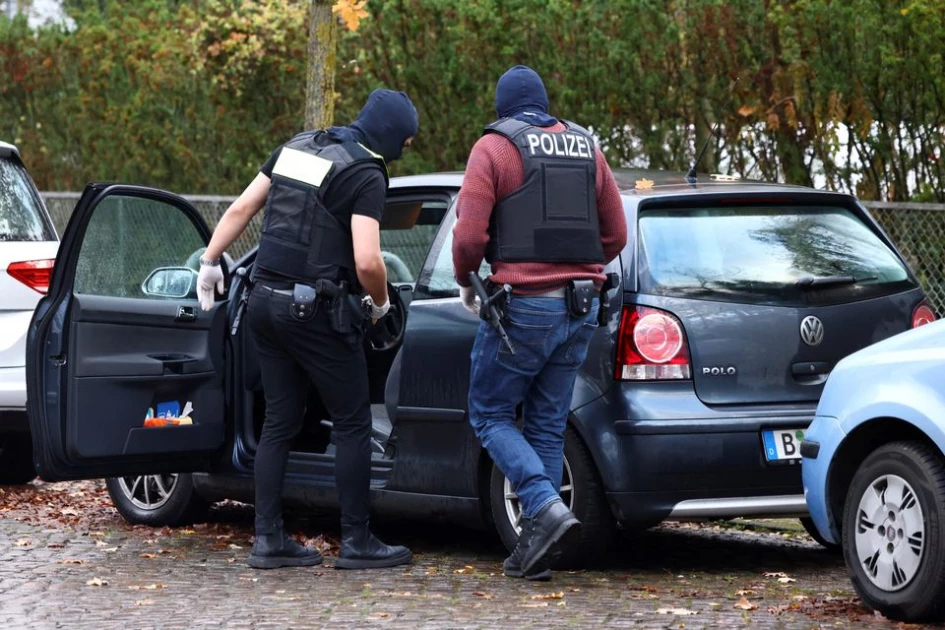
Police search a car as they secure the area after 25 suspected members and supporters of a far-right group were detained during raids across Germany, in Berlin, Germany December 7, 2022. REUTERS/Christian Mang

Audio By Vocalize
Germany on Wednesday
detained 25 members and supporters of a far-right group that the prosecutor's
office said was preparing a violent overthrow of the state to install as
national leader a prince who had sought backing from Russia.
Prosecutors said the
group was inspired by the deep state conspiracy theories of Germany's
Reichsbuerger and QAnon, whose advocates were among those arrested after the
storming of the U.S. Capitol in January 2021.
Members of the Reichsbuerger (Citizens
of the Reich) do not recognise modern-day Germany as a legitimate state. Some
of them are devoted to the German empire under the monarchy, while some are
adherents of Nazi ideas and others believe Germany is under military
occupation.
The plot envisaged a former member of a
German royal family, identified as Heinrich XIII P. R. under Germany's privacy
law, as the leader in a future state while another suspect, Ruediger v. P., would
be the head of the military arm, with the aim of building a new German army,
prosecutors said.
The group had emulated
the structure of the government, creating a "council" that had
regularly met since November 2021 as an administration-in-waiting with
different departments, such as foreign affairs and health, prosecutors said.
They said Heinrich,
who uses the title prince and comes from the royal House of Reuss, which had
ruled over parts of eastern Germany, had reached out to representatives of
Russia, whom the group saw as its central contact for establishing its new
order. It said there was no evidence the representatives had reacted positively
to the request.
Neither the House of
Reuss nor Prince Reuss' office responded to requests for comment.
An Interior Ministry
spokesperson said security agencies were looking closely at any possible
contact with Russia.
The Kremlin said there
could be no question of any Russian involvement in an alleged far-right plot to
overthrow the German state, with spokesman Dmitry Peskov saying that it
"appears to be a German internal problem".
The German government
will respond with the full force of the law, Interior Minister Nancy Faeser
said.
"The
investigations provide a glimpse into the abyss of a terrorist threat from the
Reichsbuerger milieu," Faeser said in a statement, adding that the
constitutional state knew how to defend itself against "the enemies of
democracy".
Faeser said she would
present a bill in the next few days that would make it easier to remove civil
service employees who were deemed to be enemies of the constitution.
The head of Germany's
domestic intelligence agency said the Reichsbuerger movement had
grown considerably in the last year and presented a persistently high level of
danger.
One active soldier and
several reservists were also among those being investigated, a spokesperson for
the military intelligence service told Reuters. The soldier is a member of the
Bundeswehr's KSK elite force, which has been overhauled in recent years due to
a number of far-right
incidents.
The group had been
procuring equipment, trying to recruit new members and holding shooting
lessons, prosecutors added. The focus of the recruitment efforts was primarily
members of the military and police officers, they said.
A former parliamentary
lawmaker from the far-right Alternative For Germany (AfD) was also among those
detained, according to German prosecutors.
In a statement, the
AfD condemned the far-right group's efforts and expressed confidence in the
authorities' ability to bring clarity to the situation quickly and completely.
Investigators suspect
individual members of the group had concrete plans to storm the Bundestag lower
house of parliament in Berlin with a small armed group, prosecutors said.
The vice president of
the Bundestag, Wolfgang Kubicki, told the Rheinische Post newspaper the
building was equipped for attacks and they were aware of potential threat
situations, so "the group's plans were already doomed to fail when they
were forged".
But the revelations of
the plot evoke memories of the storming of the steps of Germany's Reichstag
parliament building by protesters in August 2020 during mass marches against
coronavirus curbs, as well as the attack on the U.S. Capitol.
Germany's domestic intelligence
agency attributes some 21,000 people to the Reichsbuerger (Citizens of the
Reich) movement, with around 5% of them seen as far-right extremists.
The House of Reuss had
previously distanced itself from Heinrich, calling him a confused man who pursued
conspiracy theories, according to local media.
Germany's monarchy was
abolished a century ago. When the Weimar Constitution entered into force on
Aug. 14, 1919, the legal privileges and titles of German nobility were removed.
Officially, there are no princes and princesses in Germany.
Prosecutors said the
raids were conducted by more than 3,000 police officials and security forces
across 11 German federal states. Suspects were also arrested in Austria and
Italy, the office said.
Eight are already in pre-trial
detention, with the suspects due to appear before a judge on Wednesday and
Thursday to determine the next judicial steps.
Italian police said
they had arrested a 64-year-old former German army officer in the
city of Perugia in connection with the case and procedures to extradite him had
begun.
However, the police
declined to comment on a report by Italy's ANSA news agency that the suspect,
who had acted as a recruiter, was a prominent figure in anti-lockdown
demonstrations in Germany during the coronavirus pandemic.
Leave a Comment