
Hewatele to open Kenya’s first liquid oxygen plant
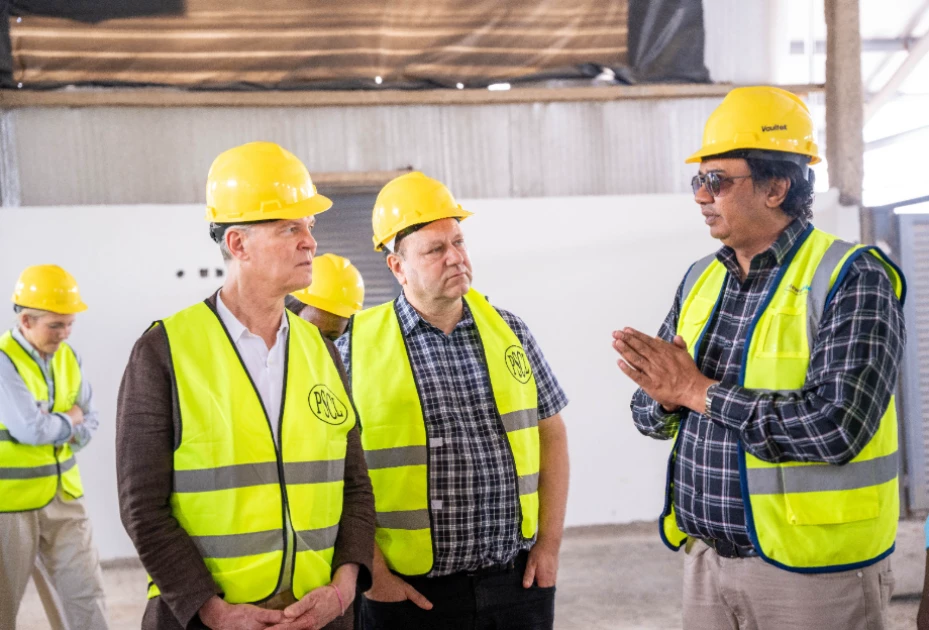
The facility, located at Tatu Industrial Park and expected to be completed by the end of the first quarter of 2026.

Audio By Vocalize
Kenya’s long-standing struggle with medical oxygen shortages could soon ease following the construction of the country’s first liquid oxygen production plant by healthcare solutions provider Hewatele.
The
facility, located at Tatu Industrial Park and expected to be completed by the
end of the first quarter of 2026, is projected to significantly boost local
oxygen production and reduce Kenya’s heavy reliance on imports, which currently
account for about 75 per cent of national supply.
On
Monday, the management and Board of Finnish development financier Finnfund, led
by Finland’s Ambassador to Kenya, Riina-Riikka Heikka, toured the plant,
terming the project a critical intervention for Kenya’s healthcare system.
Kenya
loses thousands of lives annually due to inadequate access to medical oxygen,
with mothers and children among the most affected.
At present, imported liquid oxygen
can take between four and six weeks to arrive, leaving hospitals vulnerable to
shortages.
Hewatele
Chief Executive Officer Dr Zulfiqar Wali said the new plant would dramatically
shorten delivery timelines and improve reliability.
“Oxygen
distribution currently takes between seven and fifteen days. This plant will
cut delivery times to just 24 hours, ensuring timely access where it is needed
most,” Dr Wali said.
Once
operational, the plant is expected to meet more than 50 per cent of Kenya’s
medical oxygen demand, with a daily production capacity of 20 tonnes.
It will supply approximately 300
healthcare facilities across the country and is expected to save hundreds of lives
annually.
The
project has attracted about USD 20 million (approx. Ksh.2.5 billion) in
investment, including USD 3.5 million (approx. Ksh.451 million) from the
Government of Finland through Finnfund.
Other financiers include Grand
Challenges Canada, the Soros Economic Development Fund, UBS Optimus Foundation
of Switzerland and the Africinvest-THF programme.
Finnfund
Managing Director and CEO Jaakko Kangasniemi said the investment demonstrated
how development financing could address urgent public needs while remaining
commercially viable.
“This
project addresses a critical need in Kenya while successfully combining strong
commercial potential with meaningful development impact,” he said.
To
strengthen last-mile delivery, Hewatele has already established liquid oxygen
refilling stations in Kisumu and Mombasa, alongside five gas distribution
depots in strategic locations countrywide.
The company is also rolling out a
hub-and-spoke model, installing cryogenic tanks at major national referral
hospitals to guarantee a continuous and reliable supply.
Beyond
production, Dr Wali urged the government to support local manufacturing by
providing subsidised power under the Bottom-Up Economic Transformation Agenda
(BETA) programme and to include medical oxygen costs in the Social Health
Insurance Fund (SHIF) reimbursement framework.
He said this would enable
hospitals to budget more sustainably for the life-saving commodity.
With plans for additional depots and a
second phase targeting the wider East African region, the Hewatele project is
being hailed as a major boost to Kenya’s healthcare infrastructure and regional
health security.
Join the Discussion
Share your perspective with the Citizen Digital community.
No comments yet
This discussion is waiting for your voice. Be the first to share your thoughts!