

Hoard of priceless treasures recovered from 350-year-old Spanish shipwreck

Audio By Vocalize
Stories of buried treasure and ancient
shipwrecks have captivated for centuries, from pirate tales to Hollywood
blockbusters.
For one team of explorers, however, legend
became reality when they uncovered a trove of artifacts from a 350-year-old
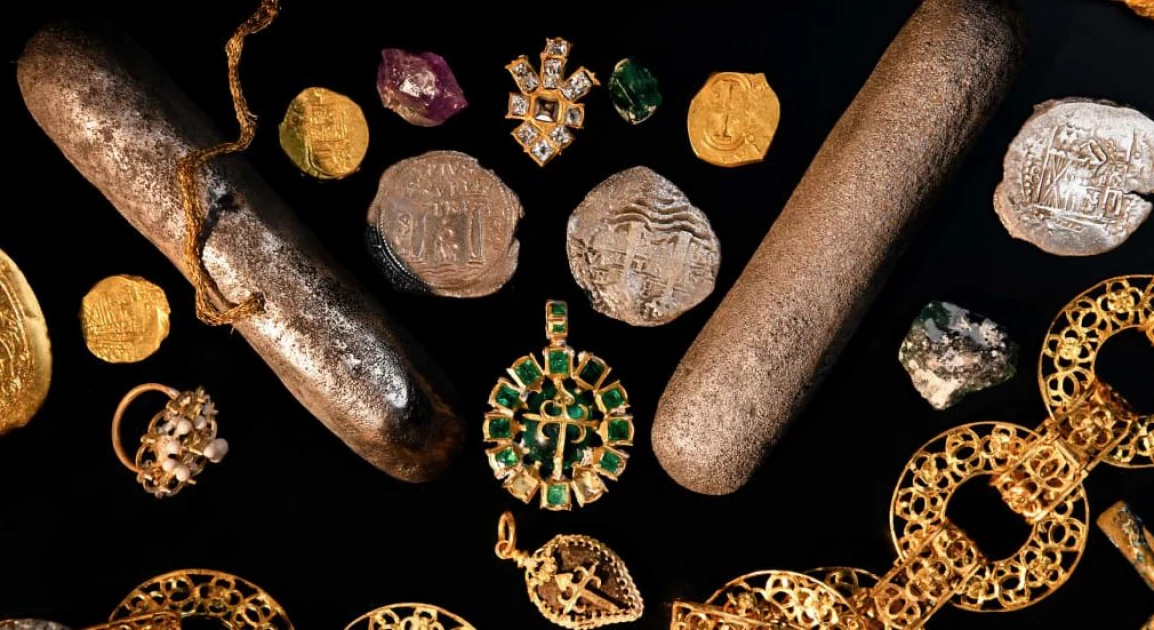
sunken Spanish galleon -- including coins, gemstones and priceless jewels once
belonging to seafaring knights.
The Nuestra Señora de las Maravillas (or Our
Lady of Wonders) sank in 1656 after it collided with another boat from its
fleet and crashed into a coral reef off the Bahamas.
The vessel was carrying a haul of treasure,
some of which was reserved as royal tax for King Philip IV, from Cuba to
Seville, Spain.
The 891-ton ship contained more cargo than
usual, as it had also been tasked with transporting treasure retrieved from
another ship that had sunk two years earlier.
There
have already been several successful attempts to retrieve the ship's cargo,
with almost 3.5 million items recovered between 1650s and 1990s, according to
shipwreck specialist Allen Exploration, which carried out a two-year expedition
from 2020.
But the latest discoveries, which are going
on display this month at the new Bahamas Maritime Museum, offer fresh
insight into life aboard the vessel.
Working with local divers, archaeologists and
other experts, the researchers are also in the process of "reconstructing
the mystery of how the ship was wrecked and fell apart," project marine
archaeologist James Sinclair said in a press release.
Using remote-sensing technology, such as
sonar and magnetometers, Allen Exploration tracked "a long and winding
debris trail of finds" scattered over a 13-kilometer stretch of ocean
floor, founder Carl Allen added in a statement.
Among
the discoveries was a 1.76-meter-long gold filigree chain and several bejeweled
pendants that once belonged to knights of the Order of Santiago, a
centuries-old religious and military order.
One
of the gold pendants features a large oval Colombian emerald and a dozen
smaller emeralds, which experts believe may represent the 12 apostles,
alongside the Cross of St. James.
Three
other knightly pendants were also discovered, including one shaped to look like
a golden scallop shell.
"When we brought up the oval emerald and
gold pendant, my breath caught in my throat," Allen said, adding:
"How these tiny pendants survived in these harsh waters, and how we
managed to find them, is the miracle of the Maravillas."
Other recovered artifacts shine a light on
daily life on the Maravillas, which sailed during the "Spainish Golden
Age," including Chinese porcelain and olive jars, as well as a silver
sword handle.
Some of the galleon's valuable contents may
also have been contraband for the purpose of "illegally greasing the palms
of Spanish merchants and officials," Allen said.
The items discovered by Allen's team will be
permanently housed at the Bahamas Maritime Museum, which opens August 8 in
the Caribbean nation's second-largest city, Freeport.
And Sinclair believes that there may yet be
more discoveries to be made.
"The ship may have been obliterated by
past salvage and hurricanes ... But we're convinced there are more stories out
there," he said.
Leave a Comment