
Inside gov't plan to regulate live broadcasting of events
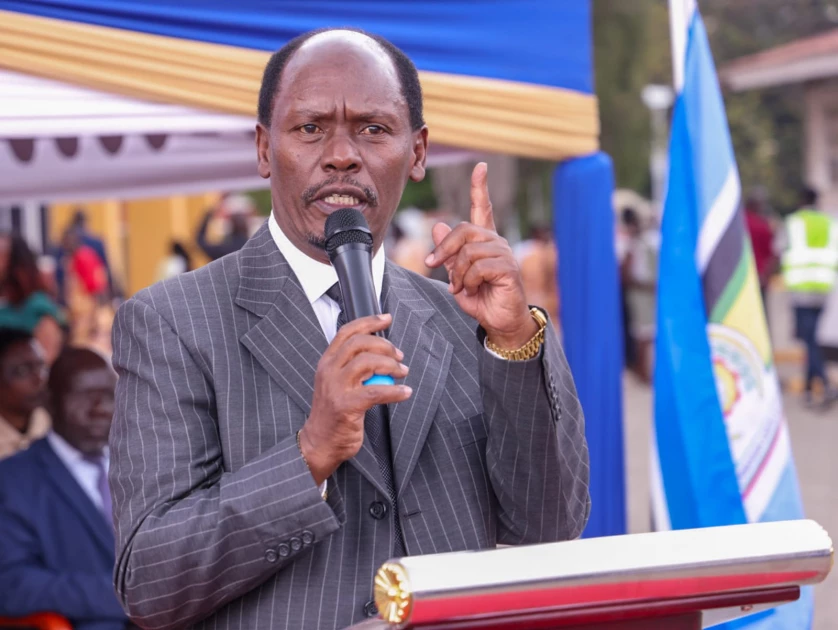
ICT CS William Kabogo during the Annual Data Privacy Conference in Eldoret on Tuesday, January 28, 2025. PHOTO|COURTESY

Audio By Vocalize
ICT Cabinet Secretary William Kabogo maintains that the government was justified in switching off media houses on June 25th to allegedly protect children from the violence that was being broadcast live on mainstream television stations.
A week after the government pulled the plug on all leading media houses in the country, halting the livestreaming of the June 25th anniversary demonstrations, Kabogo defended the move, saying it was meant to shield minors from live broadcasts of deaths, injuries, and destruction of property.
"Generally, the main reason for switching off was within the parameters of the watershed period. There was a lot of violence being aired on national TV, and the violence was aired when children and such like people are watching TV," said Kabogo.
He added that the protests, which were largely peaceful, spiraled out of control towards Wednesday afternoon, forcing the Communications Authority to step in.
"When the violence became too much, a committee responsible for advising me told me there was excessive violence on air," he said.
The Cabinet Secretary, however, struggled to explain under which law the directive was issued, admitting there was a gap in the existing legislation.
"Situate it so that it is not left to the whims of the CS," said Kathiani MP Robert Mbui.
"Provide for circumstances when livestream can be stopped and when it can't be stopped," added Mathare MP Anthony Oluoch.
"I should be able to put it in black and white on which circumstances," Kabogo admitted.
Appearing before the National Assembly Committee on Delegated Legislation, Kabogo revealed that the ministry was in a last-minute push to introduce further stringent measures to govern the livestreaming of media content.
Section 11 of the proposed amendments to the Media Council Act states: “A media enterprise shall incorporate a minimum seven-second delay in live broadcasts to prevent the unintended publication of material that violates this code.”
Media Council of Kenya CEO David Omwoyo said, "Seven seconds is an international standard. In war reporting where the military is involved, 21 seconds to a minute’s delay is the minimum. It allows time for the editor to make a decision."
The regulations further state that: “A person subject to this Act shall be responsible for hate speech published or disseminated on their platform.”
The proposed law imposes punitive penalties for violations. A person convicted of breaching it will be liable to a fine of between Ksh.200,000 and Ksh.1 million, or imprisonment for a term between six months and one year. Media owners and managers will also be held liable under the same terms.
"For example, when the CS says you can shoot to kill and it is live—are they now responsible for that comment?" posed MP Robert Mbui.
A week ago, Interior Cabinet Secretary Kipchumba Murkomen also blamed the media for fueling the chaotic demonstrations.
"Media houses became the centre of mobilization for some of these protesters," said Murkomen.
The ministry has been directed to rework the legislation and present it afresh before enforcement. The new regulations come at a time when another bill to regulate demonstrations is also in the works.
Join the Discussion
Share your perspective with the Citizen Digital community.
No comments yet
This discussion is waiting for your voice. Be the first to share your thoughts!