
Inside the clashes between locals and large-scale producers in Kenya’s tea industry
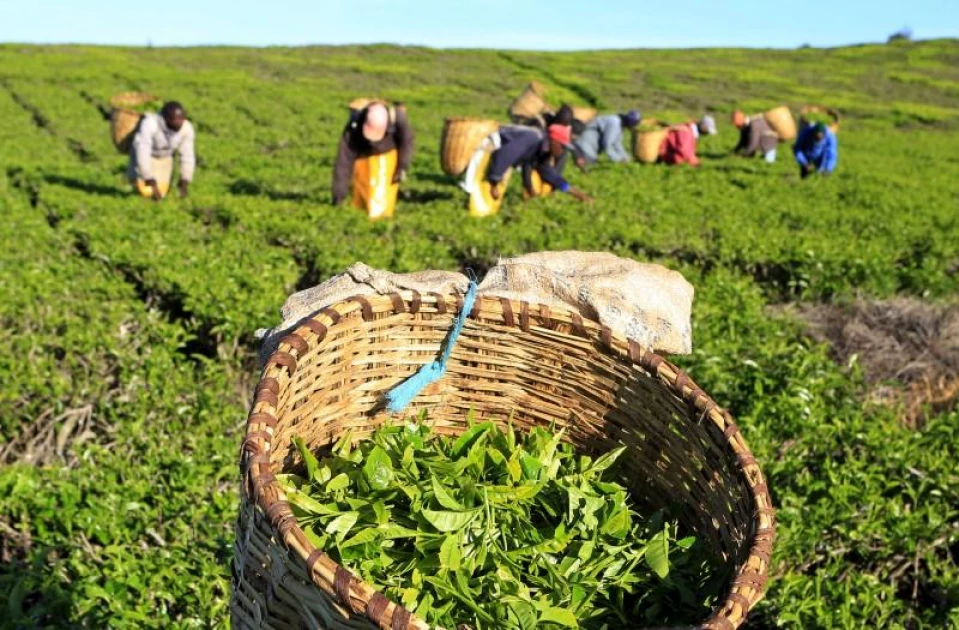
Workers pick tea leaves at a plantation in Nandi Hills. | REUTERS/Noor Khamis/File Photo

Audio By Vocalize
It
started on a low key from mid-2022 with local residents in the tea growing belt
that covers Kericho, Bomet and Nandi counties, illegally plucking tea from the
region’s big multinational tea estates and factories, and selling it to the
smaller ones.
The illegal pluckers, emboldened by their claim of losses of jobs, have their
places taken over by machines that now litter the green landscape that not too
long ago was populated with human labour.
But the assault on the estates escalated from the green leaves and a bud to the
hand held and human-operated tractors that now roam the tea fields, quickly
harvesting the tea leaves.
At the peak of the attacks, a near full-blown confrontation between the local
residents, now rendered jobless and the multinationals keen to cut costs and
improve productivity.
By the time the fires were put out, the damage had been done; tea plucking
machines, four of them lay torched, in the fields and by the roadside; the rage
against the machines extending into the tea estates’ future; thousands of tea
seedlings vandalized; greenhouses destroyed in one of the worst attacks on the
big tea estates in the county.
The fields here are slowly recovering from the devastating effect of the just
past drought and the green that Kericho is famed for is once again manifesting
one green leaf at a time, weaving into a tapestry of well-trimmed carpet of
shrubs, whose produce has for years fed, clothed and educated thousands of
families here and beyond.
Indeed, since the first tea bush was planted in Kenya in 1903, and commercial
tea planting started in 1924, tea has remained a mainstay for the tea-growing
highlands of (MAP) Nakuru, Narok, Kericho, Bomet, Nyamira, Kisii, Kakamega,
Bungoma, Vihiga, Nandi, Elgeyo Marakwet, Trans-Nzoia, Kiambu, Murang’a, Nyeri,
Kirinyaga, Embu, Tharaka-Nithi, and Meru.
The tea industry is responsible for earning Kenya 120 billion shillings every
year in export earnings, and a further 22 billion shillings on local sales,
garnered from the 450 million kilograms of tea produced yearly.
The industry also supports about 5.0 million people directly and indirectly while
an estimated 650,000 tea growers depend on tea making the industry one of the
leading sources of livelihood in the country.
This has been the situation for residents of Kericho for over sixty years, residents
have turned up to work in the tea plantation and in return, the tea estates
have sustained their livelihoods
This symbiotic relationship has been responsible for the growth of towns and
village centres built around tea estates and factories. But things have been
changing as the globe embraces evolving technological advances.
In
places where men and women broke their backs plucking tea for hours on end.
Machines
sweep through rows of bushes in record time. The labour cost and time spent
collecting the produce have reduced by more than 70%, but so has the source of
livelihood, and the economic landscape of the now redundant labour force...now
these violent run ins are becoming more common
“Hii mambo haikuanza juzi vile inasemakana, ilianxa vile watu wa estate
waliambia watu waende retire mapema, watu wengine walioachiliwa hawana makwao,
wakaanza kuiba chai pole pole... ikafika wakati vijana wanajitokeza kutafuta
kazi wachache wanachukuliwa, wengine wanaachiliwa, wakanza kuungana na wale
wakwanza pole pole, si unaona kikundi inapanuka,” Richard Mawere, a resident of
Kimulot, says.
At Kimulot Village, a trading centre on the fringes of Chemasingi Tea Estate is
a former shadow of it’s former self.
Not
too long ago, businesses thrived fueled by the earnings of the residents who
were employed at the tea estate…Now, padlocked doors and nearly deserted alleys
greet a visitor here.
“Vile watu wengi walifutwa kazi maduka mengi yalifungwa, biashara vilifungwa,”
says Andrew Ronoh.
Benard Ronoh adds: “Asubuhi tulikuwa tunaondoka tunapeleka workers kwa
multinatioanls, jioni tunarudisha wao, wakipata yao pia sisi tulikuwa tunapatak
riziki.”
The state of affairs here is attributed to what has been happening in the tea
estates for close to two decades now.
Multinational
tea estates’ introduction of tea plucking machines has changed the dynamics of
life here. Where an individual tea picker would pluck at most 45 kilos of tea
leaves a day, the machines are doing nearly 9 times that amount.
The
tea growers say this has been beneficial to their businesses.
“The reason why we went for mechanization, on the cost of production on an
estate, and this is an estate that has several hundreds of acres of tea bushes,
they used to be highly labour intensive those days we would employ altogether the
large scale to the tune of 40 to fifty thousand workers but over time the cost
of labour especially has continued to go up,” Apollo Kiarie of the Kenya Tea
Growers Association (KTGA) says.
While the tea estate reaps significant benefits from the machines, residents
and unionists decry its crippling impact on the way.
David Sang, the Secretary General of KTGA says “The machines take over has
undoubtedly upset the cart, but it isn’t something that happened
yesterday…indeed, the back and forth between the tea estates and the locals
over the machines have been the subject of a now concluded court battle that
saw the estates get the green light to mechanise…however, the recent violent
confrontations are also rooted in a more hidden agenda.”
While the attacks on the multinationals in the recent spate of violence has
been blamed on unemployment as a result of the takeover of jobs by machines, it
has not been lost on the population that the politic of the elections of 2022
and the continual fanning of the same by politicians has also played a part.
Apolo Kiarie, the KTGA CEO, notes that “our political class when they were
campaigning did so on the platform that they will get the land back from the
large scale people and that they would get machines out and get them back. But
nobody is asking the reasons why we went that way.”
Kericho County Governor Eric Mutai says “When we had our Kenya Kwanza economic
charter in Kericho which was led by the deputy president Rigathi Gachagua, (National
Assembly) Speaker Moses Wetangula, we all sat in Kericho and it was an economic
charter, people expressed themselves, they said they wanted the government to
look into ways of helping them to remove the machines and have them pluck tea,
so it isn't the governor, it’s a thing that went beyond to become a Kenya Kwanza
charter want the machines, they wanted to pluck tea.”
Governor Mutai elected on the promise to wrestle back the lost jobs from the
machines now says the current prevailing situation is not just about the
machines and what they have taken from the locals, but also more deep-seated
problems that traces its roots back to the colonial times.
“This is tied to the historical injustices, the community feel like they own
the land and with this land that they own, it doesn’t seem to benefit them,
that is the multinationals do not seem to benefit them. , there's a deep
feeling within the community that comes out of a lack of sense of identity,
they no longer identify with the investor,” he says.
His claims are supported by the Kipsigis community clans organization, who are
also demanding that the community land tea-picking jobs revert back to the
community unconditionally.
The multinationals however say the grievances raised and the community’s ways
of seeking redress have come at a great cost to the large-scale tea producers
and the entire tea industry at large.
“We are talking about the loss of assets, started in October, machines were
burnt, houses and buildings have been brought down, we are talking about 100
million in terms of tea plucked at nine, we are talking about 200 million, we
are not talking about when we shut down operations, we have to redo, level the
table again,” Apollo says.
The
conflict between the locals and the multinationals saw the establishment of a
task force by the county government to look into among other things, the
historical land injustices, the labour conflict, mechanisation and land rates
and rents, as well as the relationship between the multinationals and the local
business community.
The
findings of the task force released in January included the recommendation on
the balance between mechanisation and the deployment of human labour.
“I believe that in the interest of sustainability so that the host community
feels embraced and they benefit from these jobs, I believe that it is time that
the investor cedes ground and accepts that Africa is a developing continent and
as a developing country there is a need for unskilled labour, we still have a
huge pool of unskilled labour that if they are given a chance, they can pluck,
but while at the same time we are listening to the investor and strike a
balance, it will be an issue of percentages, so that the investor doesn't also
feel like they are losing,” says Governor Mutai.
The task force also recommended that the land on which the tea estates sit be
reverted to the community without any charge. The community leaders agree.
Says Kimetto: “This thing will go to the future generations, and these old men
when we are fighting for this thing, we are not fighting for ourselves, we are correcting
a mistake, when the British left, they transferred that mistake to the Kenya
government for leasing out our ancestral land, there is no Kipsigis who knows
about the leases, no Kipsigis was consulted, so how does the government lease
out Kipsigis land.
Apollo adds: “They are legal ways to go about this, they are asking the wrong
people.”
Join the Discussion
Share your perspective with the Citizen Digital community.
No comments yet
This discussion is waiting for your voice. Be the first to share your thoughts!