
Kenya calls for enhanced global cooperation to counter synthetic drug threat
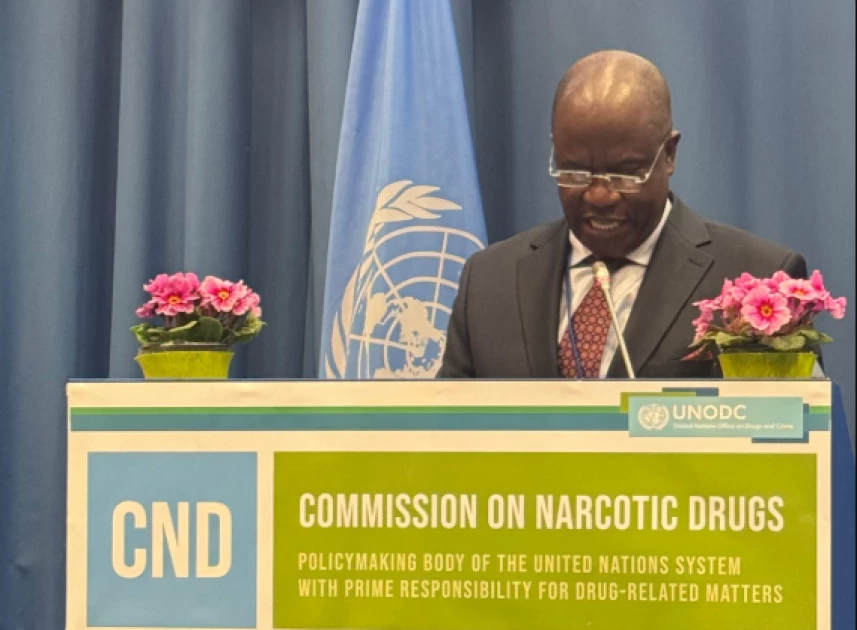
Dr Stephen Mairori, who also serves as the Board Chair of the National Authority for the Campaign Against Alcohol and Drug Abuse (NACADA).

Audio By Vocalize
The appeal was made during the 69th session of the Commission on Narcotic Drugs (CND) in Vienna by Kenya’s Head of Delegation and Chair of the National Authority for the Campaign Against Alcohol and Drug Abuse (NACADA) Board, Bishop Dr Stephen Mairori.
Addressing delegates under an agenda item reviewing the implementation of the 2019 Ministerial Declaration on Strengthening Actions at the National, Regional and International Levels to Accelerate the Implementation of Our Joint Commitments to Address and Counter the World Drug Problem, Bishop Mairori outlined Kenya’s legal and policy framework for combating drug abuse and trafficking.
He noted that Kenya’s approach is anchored in a national policy that prioritises security, public health and comprehensive care for affected individuals, while upholding the global principle of common and shared responsibility in addressing the world drug problem.
However, he warned that emerging trends in the global drug market are complicating efforts to curb narcotics trafficking and abuse.
According to the Kenyan delegation, the market is increasingly shifting from traditional plant-based narcotics to synthetic substances that can be manufactured anywhere. The growing trend of mixing different substances, sometimes marketed as fashionable recreational drugs, has also heightened risks to public health.
“These evolving trends are a catalyst for a paradigm shift in countering the world drug problem,” Bishop Mairori said. “Our interventions must remain alive to the impact these substances and drug mixtures have on the health and well-being of individuals, families and communities.”
Kenya emphasised the need for stronger support for developing countries to effectively respond to these challenges.
Among the key priorities highlighted were the strengthening of modern forensic capabilities to analyse synthetic drugs and new psychoactive substances, the development of advanced technological platforms to monitor drug-related activities, and improved mechanisms to prevent the diversion of precursor chemicals used in drug manufacturing.
Bishop Mairori also welcomed the Commission’s decision to retain the implementation of global drug control commitments as a standing agenda item, expressing optimism that member states will achieve measurable progress before the next major global review scheduled for 2029.
He said sustained international cooperation would be essential in safeguarding communities worldwide from the evolving threats posed by illicit drugs.
Join the Discussion
Share your perspective with the Citizen Digital community.
No comments yet
This discussion is waiting for your voice. Be the first to share your thoughts!