

Kenya has lifted its ban on genetically modified crops: the risks and opportunities
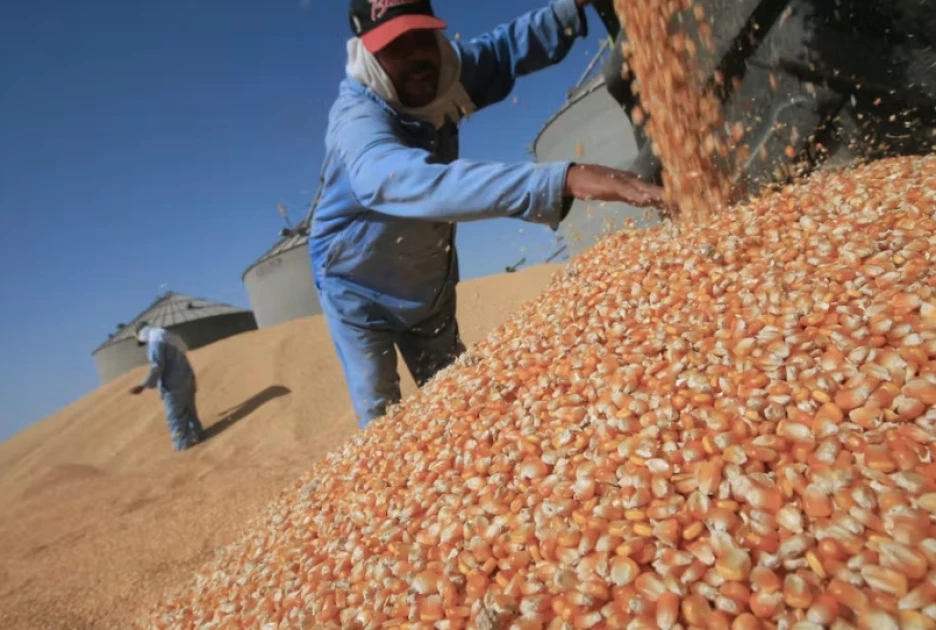
An Egyptian worker gathers the crop at a maize field, the country’s first harvest of genetically modified maize in 2008. Khaled Desouki/AFP via Getty Images

Audio By Vocalize
Kenya
recently lifted a ban on the cultivation and importation of genetically
modified crops amid the worst drought
in 40 years and soaring food prices. This includes white maize,
the country’s main staple. The decision was welcomed by
scientists who see GM crops as the answer for food security.
But it is opposed by
a spirited lobby who are concerned about potential risks to health and the
environment. Benard Odhiambo Oloo, who is a food safety and quality expert,
provides insights into the debate.
Genetically
modified organisms (GMOs) refer to plants, microbes or animals that have had
their genetic make-up altered through the introduction of a select gene from
another unrelated species. For crops this is usually for the purpose of conferring a
desired characteristic such as increased yield, insect
tolerance or drought resistance among others.
Genetic
engineering refers to the science
involved in the selection of desired genes responsible for
specific traits from a species and transferring them into the genes of another
organism, thus modifying the second species’ genetic makeup.
Humans
have been improving the
quality of domesticated crops for thousands of years. But this
has mostly been through conventional breeding, where important traits are encouraged,
selected and passed down from one generation to the next.
Conventional
breeding would typically take 10-15 years. The turnaround for genetic
engineering is usually less than five years. But, due to the strict regulations on commercialisation,
most GM crops have been in the pipeline for decades especially in Africa.
How
prevalent is their cultivation in Africa?
The
approval and cultivation of GMOs in Africa has been slow. Only a few countries have allowed their
commercialisation. South Africa has been a leader in adoption of GMO crops in Africa
and has had experience spanning over a decade. The number of countries in
Africa where GM crops are cultivated has grown from three in 2016 to 10 by 2022.
These 10 countries have commercialised different types of GMO crops.
Apart
from South Africa, Egypt, Sudan, Ethiopia, Burkina Faso, Malawi, Nigeria, Ghana
and eSwatini have allowed the planting of GMO seeds. A number of other
countries are at different stages of development and commercialisation of a
number of GMOs.
The
leading GMO crops under consideration across different
countries (Kenya, Malawi, Uganda, Nigeria, Ghana and others) are GM cotton
(tolerant to African bollworm), GM cassava (resistant to cassava brown streak
disease) and GM maize (resistant to stem borer) among many more.
This
year Ghana approved the release of pod borer
resistant cowpea, thus joining the growing list of African countries to
commercialise GM crops. This is the first genetically modified crop to be
approved in the country.
In
December 2019 the Kenyan government gave the nod for the commercialisation of
GMO cotton. After more than two seasons of growing GM cotton, Kenyan farmers
have expressed satisfaction with the good yield
from Bt cotton in spite of the drought conditions in the last few seasons.
Elsewhere
in Africa, farmers have also reported significant reduction in the cost of
production through reduced spraying for control of insect pests and diseases.
Controlling African bollworm, for example, was costly and the pest caused losses
in cotton farming.
This
list is expected to keep growing even though in most African countries the
cultivation of GMOs has experienced protracted delays through regulatory,
political and social blockades.
Why
did Kenya ban GMOs? What has changed?
Kenya banned GM crops in 2012. The ministerial statement on the ban was largely informed
by a 2012 a scientific report dubbed the Séralini
study that associated GMOs with cancer in rats.
Anti-GMO
activists have often referred to that report and in
addition presented the unknown impact of the modifications as the main reason
for pushing for bans. The other issues range from fears about the effect of
GMO, the mixed signals from EU about health and
safety of GM foods, and the potential risk of GMOs to the environment and biodiversity.
The
activists also cite the fear of possible effects of GMOs on
non-target organisms and potential development of resistance to insect-pests by
the GM crops. Lastly, food safety fears of GMOs remain pertinent in some
parts of the continent.
The
Kenyan government’s change of stance was underpinned by a number of
developments. First of which was the report by a task force on genetically
modified foods that resulted in proper scientific regulation and presence of a strong regulatory framework.
Another
factor is the lingering drought in which over 4 million Kenyans currently face
food insecurity. This may have led the government to consider more radical
solutions despite opposition.
The
government has decided to review each application for introduction of GMOs on a
case-by-case basis.
What
could go wrong? And what mitigation plans are there?
There
are three main concerns about what could go wrong with
GMOs. These are unintended harmful effects, food safety, environmental safety
and social attitudes, including fears that GMOs are a case of “man playing God”.
There
is also the concern of unintended harmful effects of GMOs on the
environment. In anticipation of these risks, scientists working in the field of
GMO have created a raft of regulations. These regulations aim to evaluate
whether GMOs are just as safe to humans and the environment as their conventional
counterparts before they can be accepted for commercialisation.
Food safety: Food safety studies including tests of allergenicity (the ability of an antigen
to induce an abnormal immune response) are a mandatory requirement for commercialisation of GMOs.
Countries have also instituted biosafety authorities with a mandate to regulate the development and
commercialisation of GMOs.
Environmental safety: An international agreement provides a
framework for handling, transport and use of GMOs. It provides a clear road-map
for evaluation of the impact of GMOs on the environment. It has instituted the
practice of post release monitoring and evaluation for 10 years or more after
the release of a GM crop.
The
potential development of weeds that can resist one or more specific herbicides
– so-called super weeds – is a case in point. Herbicide tolerance has helped
farmers to control weeds and significantly reduce cost of GM crop production.
This is because crops can be genetically modified to confer resistance to
common herbicides, such as glyphosate. There is a chance however that farmers
can over-rely on this technique of weed control to the detriment of the weeds
developing resistance.
The
potential for such resistance must be closely monitored. In Kenya, it would
fall upon county governments through the extension officers to report any early
cases – and to take action – if there are any potential signs of resistance.
The aim should be to use multiple approaches to weeds and pest control also
referred to as integrated pest managanent systems.
Socio-cultural aspects: The government must make every effort
to address people’s concerns about GMOs. This includes pointing out that humans
have modified crops for thousands of years. GM foods have now been grown and
consumed for over 20 years in different countries. There is so far no
scientific evidence to confirm any of the fears. GM crops have been evaluated to be just as safe for human
consumption and to the environment as conventional crops.
[Written
by Benard Odhiambo Oloo; Lecturer of Food Science
and Technology, Department of Dairy and Food Science and Technology., Egerton
University.]
Leave a Comment