

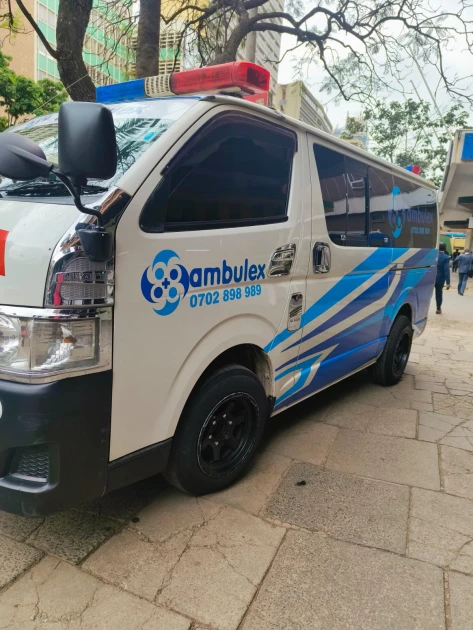
Kenya’s emergency workers to receive mental health support through Ambulex-Thalia Partnership

Audio By Vocalize
The program,
named ShieldLine,
will integrate mental health screening and therapy services into the daily
routines of thousands of ambulance workers, trauma medics, and rescue personnel
across the country. ShieldLine leverages Thalia’s omnichannel mental health
platform and Ambulex’s nationwide emergency infrastructure to deliver what both
organizations describe as a “protective second layer” for those who often face
trauma in silence.
“We’ve long
prioritized physical rescue, but now we’re extending that same urgency to
emotional and psychological rescue,” said Judith Oketch, CEO and founder of
Ambulex. “Emergency responders are the lifeline of our healthcare system—but
until now, no one’s asked who’s taking care of them.”
Globally, emergency medical personnel are five times more likely to suffer from post-traumatic stress disorder (PTSD), anxiety, and burnout than the general population.
In Kenya, the numbers are underreported, but anecdotal evidence
points to a rising tide of silent suffering. Ambulance workers recount
sleepless nights, emotional detachment, and self-medication—signs of unresolved
emotional trauma.
“There’s a
cultural stigma,” said Ruth Mwaura, the Psychology Lead at Thalia
Psychotherapy. “In most cases, frontline responders are expected to be stoic.
But chronic exposure to distress—accidents, deaths, chaos—builds up, and it can
crush a person from the inside out.”
ShieldLine
will be deployed through a multi-layered model that includes:
- Regular
mental health screenings accessible via USSD, SMS, or app
- Anonymous
support through Ajala,
Thalia’s low-data calling and messaging platform
- Trauma
debriefs and peer support systems tailored for high-stress teams
- Integration
with Ambulex’s ERT mobile application, enabling workers to access support while
on duty
The
partnership will also launch a nationwide awareness campaign—Behind the Siren—a
multimedia initiative capturing the raw, often unseen emotional toll emergency
responders bear. Through short films, voice diaries, and editorial features,
the campaign aims to humanize those behind the uniform and catalyze public
support.
While Thalia
has earned accolades for pioneering work in making mental health services
accessible via basic mobile phones—serving over 400,000 users across six
African countries—Ambulex has redefined emergency medical access in Kenya’s
most underserved regions, offering life-saving transport and care where none previously
existed.
Together, the
companies are addressing a problem that has long festered in the shadows of
health policy: the mental health of caregivers.
“This is
about sustainability,” said Mercy Mwende, COO at Thalia Psychotherapy. “If we
don’t take care of the emotional wellbeing of our responders, we risk weakening
the entire emergency response system. ShieldLine ensures that help goes both
ways.”
As the
African Union’s Agenda 2063 calls for universal access to quality healthcare,
initiatives like ShieldLine are being viewed as prototypes for scalable,
pan-African models. With its emphasis on tech-enabled delivery, low-cost
access, and public-private collaboration, the program could become a standard
in how nations support their first responders.
Stakeholders
from Kenya’s Ministry of Health and several county governments have already
expressed interest in expanding the model, particularly as part of broader
efforts to integrate mental health into universal health coverage.
The pilot
phase of ShieldLine will launch in June 2025, targeting Nairobi, Kisumu, and
coastal counties with high volumes of emergency activity. A joint task force
from Thalia and Ambulex will oversee the rollout, collect data, and refine the
model for a national scale-up by year’s end.
In a sector where burnout and trauma are often considered part of the job, ShieldLine is sending a different message: saving lives should not come at the cost of your own.
Leave a Comment