
Lang’ata Cemetery undertaker opens up on scary tales surrounding it
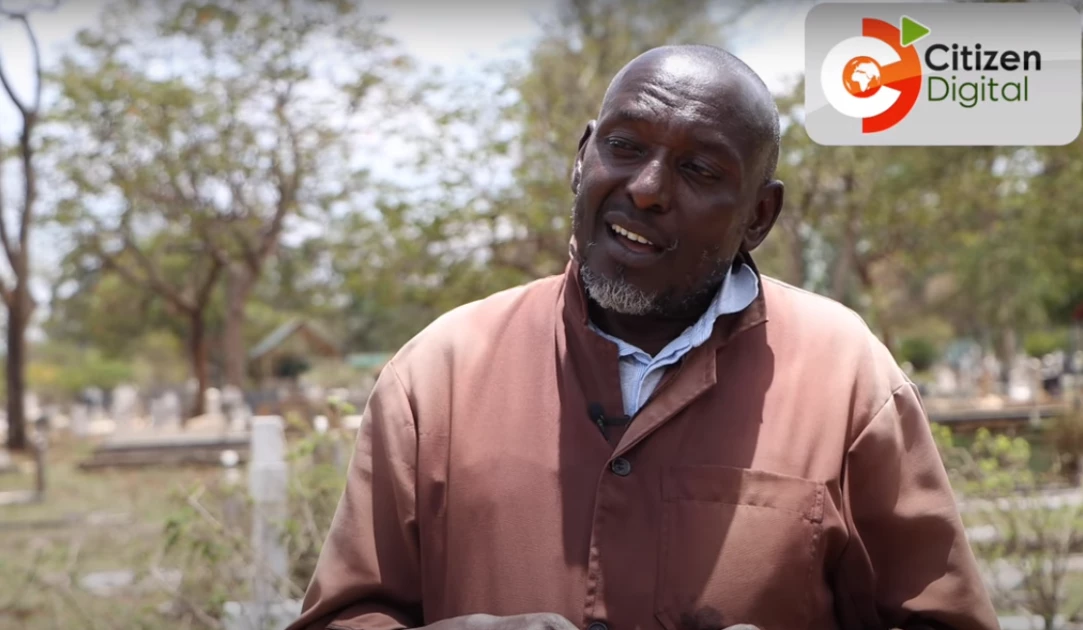
Lang’ata Cemetery undertaker Nderitu Maina. PHOTO | CITIZEN DIGITAL

Audio By Vocalize
Sitting on a 120-acre piece of land along the
busy Lang’ata Road, the Lang’ata Cemetery is home to thousands of people who
have died in Kenya since independence.
Many are buried here, and a short observation
tells you that relatives, families and friends keep streaming in to check on
their departed loved ones.
There have been lots of tales and rumours
surrounding this place, ranging from exhumation of bodies by unscrupulous
dealers stealing expensive coffins and clothes, to the place being haunted by
spirits of the departed souls.
These are tales that have been passed down
from generation to generation, and some will tell you that they fear going near
the cemetery.
Citizen Digital visited the cemetery and
sought to find the truth about all that has been said about this grave field.
At the main office that sits inside the
cemetery but near Lang’ata Road, Nderitu Maina is busy on call. He is in charge
of this cemetery, a position he has held for the last 15 years.
This is his daily routine, receiving calls
from people who want to bury their loved ones. Nderitu gives directions on the
procedure of burying at the cemetery, and this is where our interview begins.
“Our cash office is at City Mortuary. You go
there, pay and then we are alerted here. We have two types of graves here,
permanent and temporary graves.”
He goes ahead to tell us the difference
between the two graves, saying temporary graves are reused after a while. This
while, he says, is 10-15 years. For the permanent graves, they have a lease
period of 99 years, and one can bury a loved one on top of another.
Is this the reason Lang’ata Cemetery has
never been fully used?
“That is a question you will ask my
superiors. What I know is the cemetery is 120 acres big, and there is more
space we are yet to utilise,” Nderitu says.
We leave the office and take a walk to one of
the areas where permanent graves are. Here, there are tombstones dating as far
back as 1958 when the deceased was buried.
Nderitu says the cemetery has people from all
walks of life, from priests to security officers to ordinary people.
We then delve into the myths and tales
surrounding this place, asking for him to let us into the truth about this feared
place.
“Everything you’ve heard about this place is
not true. A grave is just a grave, nothing else. A cemetery is a cool place to
work from. At night this place is very calm, no spirits or ghosts, safe for a
few wild animals from the orphanage which is our neighbour here. You will find
them roaming just like any other place,” Nderitu says.
Asked if there have been cases of illegal
exhumation and stealing of coffins, Nderitu denies with finality, saying those
are false stories that the public should be made aware of.
On the issue of excavating the cemetery to
create more space for burial, he further said that is also another lie peddled
by people who don’t have knowledge about the place.
“People talk a lot. I used to hear these
stories before I came. And even when I came, they are still being said. Some
people used to take advantage of such tales to commit crime in the cemetery,
like stealing and sharing their loot from here because no one could follow them
into this place. But that has since stopped with all the security around here,”
he says.
As we conclude our interview, Nderitu receives
a call to prepare the final resting place for Banisa MP Kullow Maalim Hassan.
The legislator died on Wednesday, March 29, 2023, at the Aga Khan Hospital
after being hit by a motorbike three days earlier.
Nderitu rushes to attend to this as we dodge grave after another and find our way to Lang’ata Road.
Join the Discussion
Share your perspective with the Citizen Digital community.
No comments yet
This discussion is waiting for your voice. Be the first to share your thoughts!