

Marsabit: Urgent humanitarian response required to address rising malnutrition cases
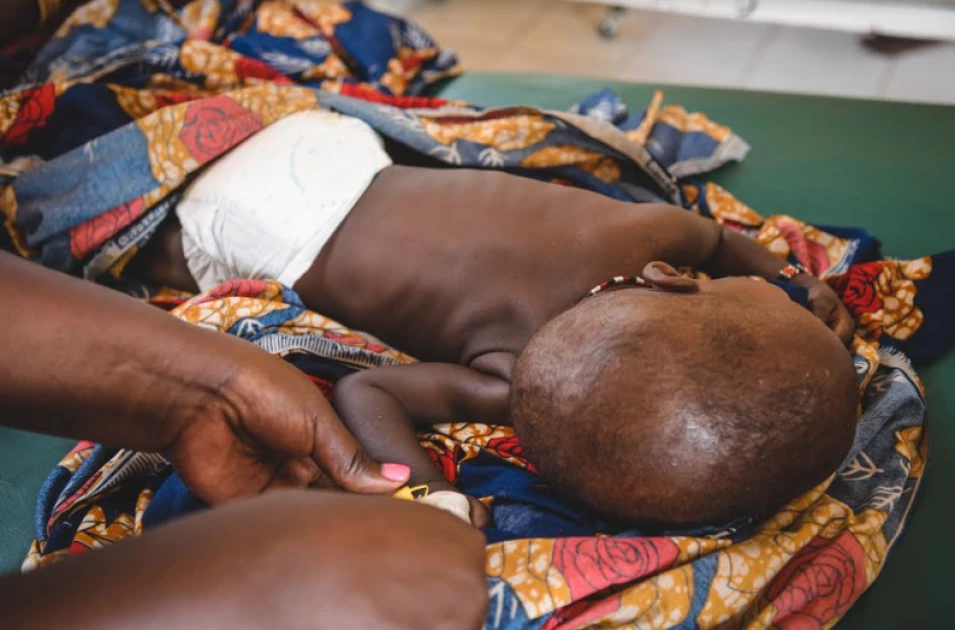
A malnourished child admitted to MSF supported inpatient malnutrition clinic in Illaret

Audio By Vocalize
In north-eastern parts of Kenya, an ongoing drought rages following three consecutive seasons of failed rains, making an already dire food insecurity situation worse. Marsabit County is now at a level three crisis phase of high or above-usual rates of acute malnutrition.
If the medical and humanitarian assistance doesn’t improve, this situation may continue to September 2022. Despite the prolonged drought crisis, the region has seen underinvestment in nutrition from the county and national governments.
In the area of Illeret, malnutrition cases have been
increasing in households due to people drinking less milk because of the health
deterioration and deaths of livestock of this pastoralist
community.
Telite, a 26-year-old mother of six from Lomadang village,
has twin boys who are still breastfeeding and currently in the Médecins Sans
Frontières/Doctors without Borders and partners nutrition program with moderate
and severe acute malnutrition. Her breastmilk is insufficient as she hardly
gets anything to eat.
“We had 20 cattle and sheep too,” Telite says,
“but all have died. We collected the carcases near the road to be burnt.”
Pasture and water resources have declined, causing long distance trekking to
find grazing areas for livestock and for domestic use. Households barely have a
meal per day. “I now collect firewood for sale near Ethiopia,” says Telite.
“I also fetch water from the well and sell it. If I get money, I buy flour for
porridge, but sometimes when I do not sell, we just sleep hungry.”
The situation is worsened by reduced access to food in
the market and decline in trade, as prices of groceries have shot up by 25 to
50 per cent. This lack of food has led to families sharing the nutrition
supplements given to malnourished children.
In February 2022, MSF carried out an assessment in five
sub-counties of Marsabit. North Horr sub-county, specifically in Illeret,
presented the worst food security situation and the highest number of
malnourished children. A mass screening done by UNICEF in Marsabit, also
in February, showed a critical global acute malnutrition rate of 23.3 per cent.
Eleven malnourished children who were patients in the program died between
mid-February to mid-March.
As the malnutrition numbers rose in Illeret, management of patients in need of treatment at the health center has been a challenge. The nearest referral facility is five hours drive away, with barely a public transport vehicle, exacerbating the impacts of limited medical staff and drugs in public health facilities.
The Ministry of Health and partners conducted outreach activities to support the integrated management of acute malnutrition in some sub counties. These activities could not be sustained regularly, reducing identification of malnourished children and follow-ups in the community.
“More funding and coordination are needed to be able
to meet people's critical needs and address malnutrition. Mobile outreach needs
to offer regular nutrition assessment and support,” says Edi Atte, MSF country
director “In the past, logistical and human resource challenges meant
outreach clinics were held only once or twice a month, undoing the treatment
progress of malnourished children and follow-ups.”
MSF has been working with the Ministry of Health and partners
to strengthen the medical component of nutrition management activities in
Illeret. MSF teams support screening, diagnosis and management of acute
malnourished children. The active case finding and surveillance have increased
the number of children who have access to this care.
“Since we started our intervention in March,” Edi Atte
says, “there has been an increase in admissions of children with acute
malnutrition and children not responding to treatment. We enhanced referrals to
the stabilisation centre in Illeret. This has saved lives.”
MSF also helped adapt the inpatient department of Illeret
Health Centre to a 10-bed inpatient therapeutic feeding centre. Mothers in the
feeding centre also receive at least three meals a day, to enhance their lactation.
It’s now raining in the region and food distribution is
happening. However, there is still a critical need for consistent, quality and
adequate amount of food distribution for households. Long-term solutions must
be found to help people access water, an issue which continues to impact
children’s health.
“MSF urgently calls for sustained food distribution to all households in Illeret and increased human resources for Illeret Health Center,” says Edi Atte. “Donors need to act now to avert humanitarian catastrophes that will continue if more is not done quickly.”
Leave a Comment