
MCSK unable to account for Ksh.56M royalties collected in 2023
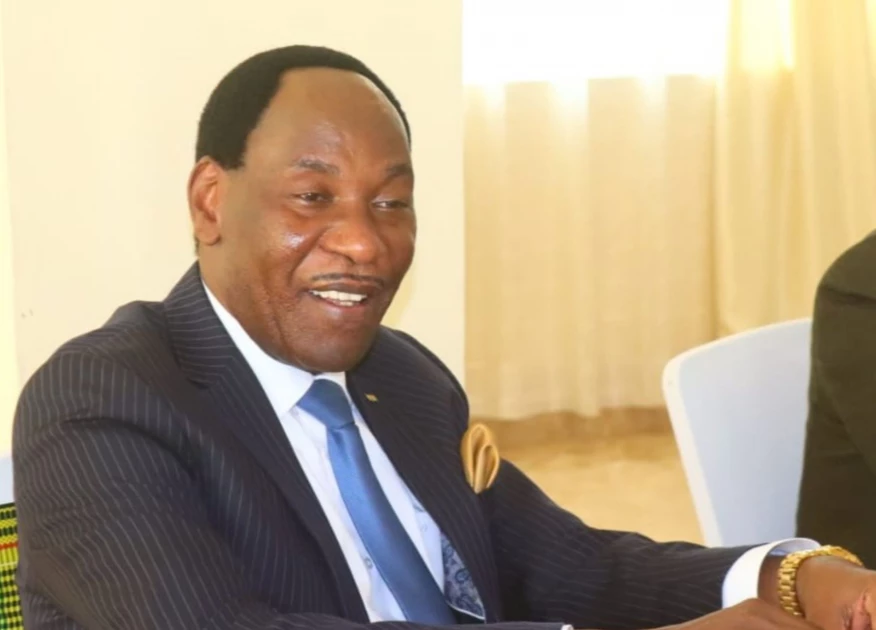
MCSK CEO Ezekiel Mutua. PHOTO: @EzekielMutua/X

Audio By Vocalize
The Music
Copyright Society of Kenya (MCSK) is under fire for failure to account for
Ksh.56 million collected as royalties in 2023.
This
was revealed by the Kenya Copyright Board (KECOBO) chairman Joshua Kutuny on
Wednesday, who flagged a disparity in the royalties collected by MCSK, Kenya
Association of Music Producers (KAMP) and the Performers Rights Society of
Kenya (PRISK) last year.
MCSK,
KAMP and PRISK are the three licensed music Collective Management Organisations
(CMOs) and they were invited to meet KECOBO’s board of directors
to account for monies collected in 2023.
From
the information presented by the three CMOs, the board said it established that
a sum of Ksh.249,687,212.80 was collected jointly from January to December
2023.
The
copyright board however pointed out a disparity in amounts declared by MCSK and
those declared by KAMP and PRISK for the year’s joint collection.
“While
KAMP and PRISK declared a collection of Ksh.249 million and they accounted for
Ksh.61 million and Ksh.52.7 million, respectively, MCSK on its part declared
receipts of Ksh.109 million representing a shortfall of Ksh.26 million,” Kutuny
said in a statement.
Cumulatively,
MCSK declared total revenues of Ksh.139,295,094, Kutuny added, which comprised Ksh.109
million from public performance and Ksh.30 million from mechanical income.
KECOBO
said MCSK could not account for the Ksh.26 million received from the joint collection
and another Ksh.30 million from other CMOs abroad and Google Ireland.
It noted
that during the meeting, all the CMOs were represented by CEOs and chairmen,
except MCSK which sent a director and a legal officer.
The
matter has been handed over to the Ethics and Anti-Corruption Commission (EACC)
and Director of Criminal Investigations (DCI) for investigation, Kutuny said.
LESS
ROYALTY PAYMENT
At
the same time, the KECOBO directors noted that royalties were paid only from the
first quarter of the 2023 collections.
“All
the societies did not set aside royalties from collections in quarters two, three
and four despite an improved business environment,” said the copyright board
chair.
KECOBO
noted that if the revenue were to be paid to MCSK members per the copyright regulations,
each artist could earn at least six times the amount paid during the year in
royalties.
The board further observed that the income from broadcasting stations, public service
vehicles (PSVs) and new media revenue is “grossly poor,” to which the CMOs made
various improvement proposals.
KECOBO
said it shall be acting on the proposals in due course through engagement with
relevant stakeholders such as the Communication Authority, the Inspector
General of Police and the Interior Ministry to establish a framework for
enforcing CMO.
‘GOVERNMENT-RUN
CMO’
The
revelations come days after Gender, Culture, Arts and Heritage Cabinet
Secretary Aisha Jumwa said her ministry is working on a plan to have music
copyrights and royalties paid through the government-owned eCitizen platform.
Her
comments followed her Public Service counterpart Moses Kuria’s announcement
that the government seeks to make amendments to the Copyright Act "to
create a government-run Collective Management Organisation."
"Our
artists will be individually registered. They can view online how much money is
collected. Siku 40 za wezi wa jasho ya artists zimeisha," Kuria said in a February
11 post on X.
But the MCSK CEO Ezekiel Mutua shot down the proposal, terming it ineffective. He said the move could lead to legal battles, arguing that private rights cannot be regulated.
Mutua claimed some musicians have been misleading ministers
by encouraging the government to collect copyright and royalty fees for them
via the government services portal.
Join the Discussion
Share your perspective with the Citizen Digital community.
No comments yet
This discussion is waiting for your voice. Be the first to share your thoughts!