

MPs demand transparency in ICT sector funding, Worldcoin data compliance
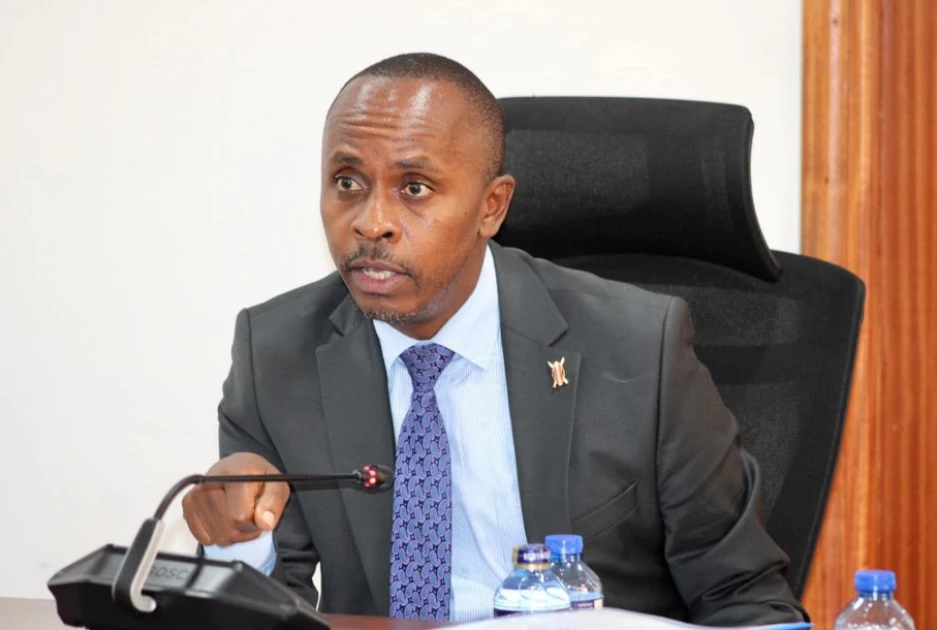
The National Assembly’s Departmental Committee on Communication, Information and Innovation Chairman John Kiarie during the session on May 13, 2025. PHOTO | COURTESY | PARLIAMENT

Audio By Vocalize
Members of Parliament have called for greater accountability, strategic
planning, and budget rationalization in the ICT sector following a review of
the Budget Estimates for the Financial Year 2025/2026 with the Ministry of
Information, Communications, and the Digital Economy and its affiliated
agencies.
The National Assembly Departmental Committee on Communication,
Information and Innovation (CII) on Tuesday raised concerns over inconsistent
project costing, duplicated funding, low budget absorption, and inadequate
sustainability frameworks, particularly for programs like Studio Mashinani,
digital hubs, public Wi-Fi, and cybersecurity infrastructure.
“You have done 10 Studio Mashinanis in the last 10 years, and now you
want to do two in this financial year. What’s your strategy, or are you just
riding on the digital hub agenda?” posed Mbooni MP Erastus Kivasu.
His Bomachoge Chache counterpart Alfah Miruka added: “We need itemized
costing on the end to end budget of Studio Mashinanis. You have big
discrepancies on the costing of the studios and digital hubs. You’re asking for
millions with no clarity on output or value.”
The ministry revealed that the current budget for Studio Mashinani is
zero, despite earlier projections.
A previous estimate priced four studios at Ksh.40 million, while a KBC
quote was approximately Ksh.30 million.
The committee questioned the ministry’s fiscal discipline, highlighting
pending bills totaling Ksh.7.3 billion, including Ksh.1.4 billion for
Government Advertising Agencies, Ksh.6.9 billion for Postal Corporation Kenya,
and Ksh.450 million for IEBC.
When the ministry provided conflicting debt figures, MP Miruka sought
clarification: “How are you going to maneuver around your pending bills? This
is Treasury’s data. Who’s telling the truth, you or Treasury?”
The rollout of 1,400 digital hubs under the BETA Digital Superhighway
was scrutinized for delays, unclear equipment responsibilities, and overlapping
mandates among ICTA, Konza Technopolis, and KPLC.
“Why build structures through CDF without a plan for equipping and
sustaining them?” asked Kisumu East lawmaker Shakeel Shabbir.
ICTA CEO Stanley Kamanguya responded: “We are behind schedule. However,
we’ve resolved disbursement flow issues with KPLC and progress is ongoing.”
MPs also demanded an update on compliance with a High Court ruling
mandating the deletion of Kenyan biometric data collected by Worldcoin.
“Where are we on this? Who deletes the data? Is it Worldcoin or the
Communications Authority (CA)?” Posed Keiyo South MP Gideon Kimaiyo.
Committee Chairperson and Dagoretti South MP John Kiarie added: “How
will you ensure data is deleted, how will you verify that World Coin doesn’t
utilise the data?”
The Data Protection Commission reported holding its first review meeting
and receiving an affidavit from Worldcoin claiming the data was deleted in
2023, with verification still underway.
On cybersecurity, the committee expressed concern over fragmented
operations, low investment, and a Ksh.2.8 billion funding shortfall.
“Cybersecurity must be centralized. Government must stop working in
silos,” urged MP Kiarie. The ministry assured that a centralized model is being
finalized to enhance national resilience.
Lawmakers criticized the slow progress in connecting remote health
facilities to digital infrastructure and the lack of sustainability in public
Wi-Fi projects.
“We can’t implement Universal Health Coverage without digital
connectivity. What are you doing to prioritize this?” asked MP Kimaiyo.
Officials noted that contractors are on site and a new model involving
Internet Service Providers has been developed to manage public Wi-Fi networks.
The Kenya Digital Economy Acceleration Project (KDEAP), co-funded by the
World Bank, was flagged for poor absorption and administrative delays.
“You’ve had the money, but your absorption is too low. Should we reduce
your budget?” challenged MP Miruka.
The committee also raised concerns over funding cuts to the Kenya
Advanced Institute of Science and Technology (KAIST).
“With the cuts, KAIST won’t even have enough to recruit one professor
per department. CUE can’t accredit a university without faculty. This is a
national priority,” said Prof. J. Khamasi.
As the CII Committee finalizes its review of the FY 2025/26 budget
estimates, MPs emphasized that strategy, efficiency, and alignment with citizen
priorities must guide ICT investments.
“We’re not here to rubber-stamp numbers. We want fiscal responsibility,
strategic alignment, and real value for the Kenyan people,” concluded MP Kiarie.
Leave a Comment