
NASA expected to push back Moon missions
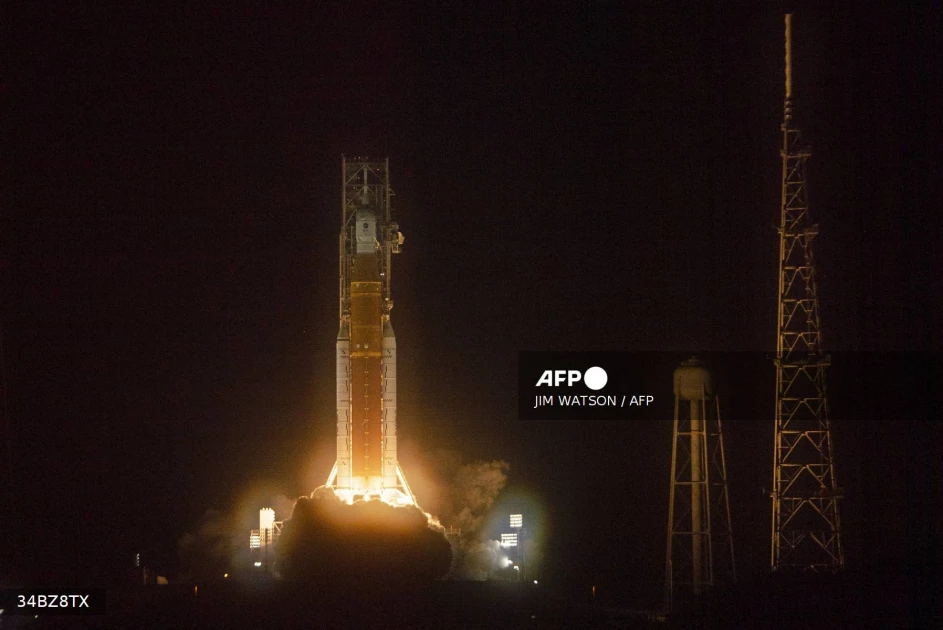
The Artemis I unmanned lunar rocket lifts off from launch pad 39B at NASA's Kennedy Space Center in Cape Canaveral, Florida, on November 16, 2022. (Photo by Jim WATSON / AFP)

Audio By Vocalize
NASA is holding a briefing Tuesday in which
it is widely expected to push back the timeline for the Artemis missions to
return astronauts to the Moon, amid delays to the delivery of key components by
contractors.
Artemis, named after the sister of Apollo in
Greek mythology, was officially announced in 2017 as part of the US space
agency's plans to establish a sustained presence on Earth's nearest space neighbor,
and apply lessons learned there for a future mission to Mars.
Its first mission, an uncrewed test flight to
the Moon and back called Artemis 1, took place in 2022, after several
postponements.
According to the current plan the Artemis 2
launch, involving a crew that doesn't land on the surface, is set for late this
year. Artemis 3, in which the first woman and first person of color are to set
foot on lunar soil, should take place in 2025 at the Moon's south pole, where
NASA hopes to exploit the ice to produce rocket fuel.
NASA is also looking to build a lunar space
station called Gateway where spacecraft will dock during later missions.
Elon Musk's SpaceX has won the contract for a
landing system for Artemis 3 based on a version of its prototype Starship
rocket, which remains far from ready. Both of its orbital tests have so far
ended in explosions.
What's more, delays to Starship have knock-on
effects because the spacesuit contractor needs to know how the suits will
interface with the spacecraft, and simulators need to be built for astronauts
to learn its systems.
"As of March 2023, NASA has obligated
approximately $40 billion to 860 contractors in support of the Artemis
campaign," an official watchdog report published in October 2023 said.
The report added that the space agency
"does not have comprehensive visibility into the Artemis campaign's
subcontractors or sub-tier suppliers," preventing it from being able to
manage "numerous and ongoing" challenges to the supply chain, contributing
to delays.
A key difference between the 20th-century
Apollo missions and the Artemis era is the increasing role of commercial
partnerships, part of a broader strategy to involve the private companies in
space exploration to reduce costs and to make space more accessible.
For example, the space agency paid the
company Astrobotic more than $100 million to carry important scientific probes
to a mid-latitude region of the Moon.
That mission, which blasted off this weekend,
looks set to fail after suffering a critical loss of fuel due to a problem with
its propulsion system.
Join the Discussion
Share your perspective with the Citizen Digital community.
No comments yet
This discussion is waiting for your voice. Be the first to share your thoughts!