

North Korea hints at vaccine campaign, but no one knows the details
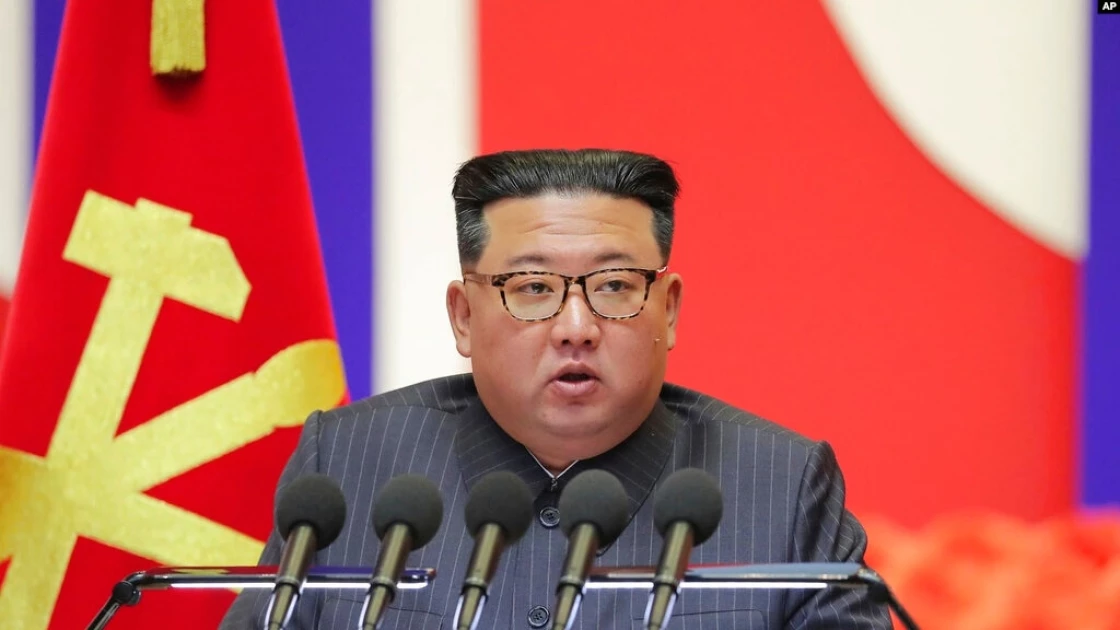
In this photo provided by the North Korean government, North Korean leader Kim Jong Un speaks during a 'maximum emergency anti-epidemic campaign meeting' in Pyongyang, North Korea, Aug. 10, 2022.

Audio By Vocalize
North Korea has suggested it could soon begin COVID-19 vaccinations, but it
remains unclear what vaccines it will use, where it will get them, or how many
doses it will administer.
In a passing reference during a speech last week to the
Supreme People’s Assembly, the country’s parliament, North Korean leader Kim
Jong Un seemed to indicate a COVID-19 vaccination campaign would start in
November.
“While administering vaccination in a responsible way, we
should recommend that all residents wear masks for the protection of their own
health from November,” Kim said, warning of a possible resurgence of COVID-19
and influenza this winter.
Kim’s warning came less than a month after he declared
victory over the virus and relaxed some of North Korea’s most stringent
anti-epidemic measures.
North Korea has repeatedly ignored vaccine offers from COVAX, the United Nations-backed vaccine distribution effort.
Even after Kim’s latest
comments, there is no evidence North Korea has made any vaccine requests from
Gavi, the vaccine alliance that helps run COVAX.
“If DPRK requests our assistance for its COVID-19 vaccine introduction, we’ll happily share vaccine doses with them, as we have done with 146 other countries – over 1.7 billion doses so far,” a Gavi spokesperson told VOA, without specifying whether a request had been made.
DPRK is the abbreviation for
North Korea’s official name, the Democratic People’s Republic of Korea.
North Korea and Eritrea are the only countries yet to begin mass COVID-19 vaccinations.
Experts have long warned North
Korea could be hit particularly hard by the coronavirus pandemic because of its
lack of medical resources, especially in rural areas, where poverty is also
more common.
So far, there is no evidence of mass COVID-related deaths in North Korea. That could be because North Korea acted quickly to close its borders after the coronavirus emerged in neighboring China in early 2020.
North Korea’s authoritarian
government also has a much higher degree of social control than almost any other
country.
But even if North Korea has experienced mass COVID-19 outbreaks, the world would not necessarily know.
During the pandemic, North
Korea’s secretive government has cut off nearly every point of contact with the
outside world. It also does not have adequate COVID-19 testing supplies,
experts say.
For more than two years into the pandemic, North Korea denied experiencing any COVID-19 cases.
The North finally acknowledged an outbreak in May, but in subsequent weeks reported a steady decline in cases.
At the time, a World Health
Organization official expressed skepticism about the North’s claim the
situation was improving.
If North Korea does begin a mass vaccination campaign, it
would most likely use vaccines from China, according to many analysts.
In early June, Gavi said it “understands” North Korea
accepted a vaccine offer from China and had started to administer doses.
However, it did not provide any details.
Around that time, North Korea started small-scale vaccinations for targeted groups, according to several unconfirmed reports in Radio Free Asia, which relied on unnamed sources inside North Korea.
There has been no evidence, however, of a
widespread vaccination campaign.
Russia and China, North Korea’s two closest international
partners, are the most likely to provide North Korea mass quantities of
vaccines, according to Nagi Shafik, a former WHO official who has worked in
North Korea.
“But I think China in this context is more qualified because
of the mass production they have, not only [of] the vaccines, but also
[because] they can give support for the cold chain, as well,” Shafik told VOA.
Refrigerated vaccines could be
challenging
The most effective COVID-19 vaccines, which use advanced mRNA technology, require a network of ultra-cold refrigerators and specialized delivery trucks.
That may be a challenge in many parts of North
Korea, though Shafik has argued that North Korea’s cold chain system is
more advanced than commonly thought.
Even though China has not produced an mRNA vaccine, Beijing’s
potential offer may still be preferable to those of COVAX and others who are
likely to require international observers to be present during the vaccine
delivery and distribution.
“They don’t want foreigners to come right now maybe, I’m not quite sure,” said Shafik, stressing that Pyongyang may be open to Western vaccine offers at a later stage.
Leave a Comment