

Rishi Sunak: The super-rich former banker who will be the first person of color to lead Britain
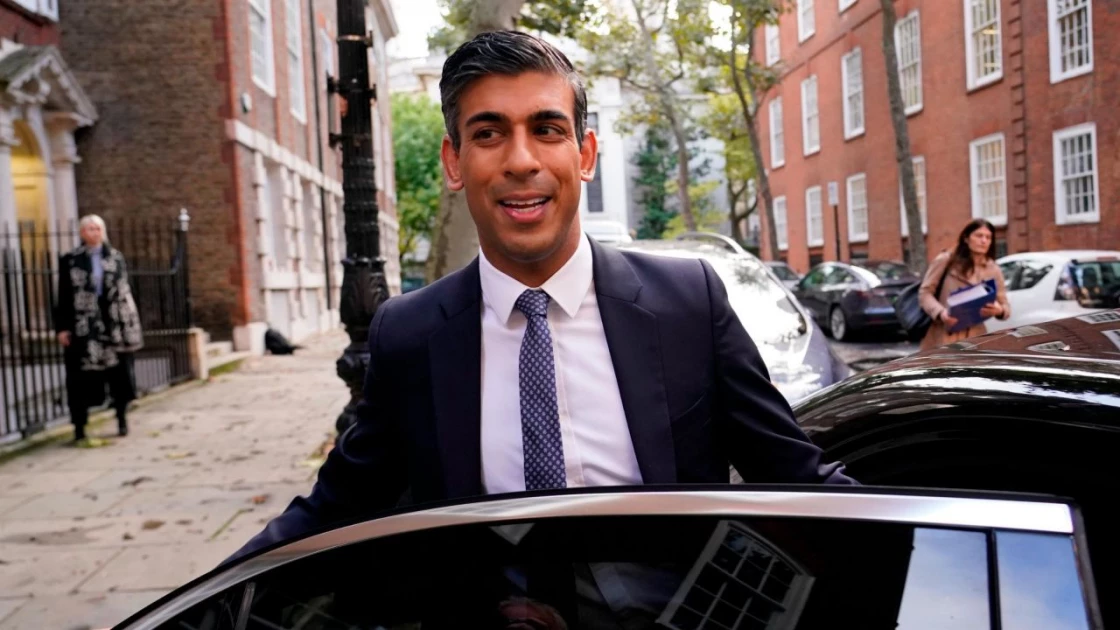
Sunak leaves his campaign office in London on Monday.

Audio By Vocalize
Just seven short weeks ago, it looked as if it might be all
over for Rishi Sunak.
The former chancellor of the exchequer – the
UK’s title for its chief finance minister – made a high-stakes gamble. He
launched an attack that helped to end Boris Johnson’s premiership, put himself
forward as his replacement, but ultimately lost to Liz Truss. Admitting defeat,
he retreated to the parliamentary back benches.
But in a sign of just how unpredictable
British politics has become, Sunak has returned triumphant from the political
wilderness to replace Truss, whose premiership imploded last week.
Sunak was the only leadership hopeful to
secure the support of 100 Conservative members of parliament, the necessary
threshold set by party officials for potential candidates. He will become the
first person of colour to be British prime minister – and at the age of 42, he
is also the youngest person to take the office in more than 200 years.
He was the last person standing after his
rivals – Johnson and the Leader of the House of Commons Penny Mordaunt – fell
by the wayside.
Speaking after being declared the new
Conservative leader, Sunak said he was “honoured and humbled” to become the
next prime minister.
“It is the greatest privilege of my life to be
able to serve the party I love, and to be able to give back to the country I
owe so much to,” Sunak said.
“The United Kingdom is a great country, but
there is no doubt we face a profound economic challenge,” he added. “We need
stability and unity, and I will make it my utmost priority to bring our party
and our country together.”
Sunak first publicly declared on Sunday
morning that he would be standing in the contest. Other than that brief
statement, he made no big pitch for the leadership this time round.
In the last contest, over the summer, he was
widely seen as the more moderate of the two candidates. Compared to Truss, he
took a less ideological line on matters like Brexit and the economy. (Unlike
Truss, a remainer-turned hardline Brexiteer, Sunak voted for the UK to leave
the European Union in the 2016 referendum.)
Like Truss, Sunak promised a tough approach to
illegal immigration and vowed to expand the government’s controversial Rwanda
immigration policy.
Sunak, whose parents came to the UK from East
Africa in the 1960s, is of Indian descent. His father was a local doctor while
his mother ran a pharmacy in southern England, something Sunak says gave him
his desire to serve the public.
“British Indian is what I tick on the census,
we have a category for it. I am thoroughly British, this is my home and my
country, but my religious and cultural heritage is Indian, my wife is Indian. I
am open about being a Hindu,” Sunak said in an interview with Business Standard
in 2015.
He will be the first Hindu to become British
prime minister, securing the position on Diwali, the festival of lights that
marks one of the most important days of the Hindu calendar. Sunak himself made
history in 2020 when he lit Diwali candles outside 11 Downing Street, the
official residence of the UK chancellor.
He has faced challenges over his elite
background, having studied at the exclusive Winchester College, Oxford and
Stanford universities. He is known for his expensive taste in fashion and has
worked for banks and hedge funds, including Goldman Sachs.
Sunak has also been scrutinised over the tax
arrangements of his wife Akshata Murty, the daughter of an Indian billionaire.
Earlier this year, Sunak and Murty appeared on
the Sunday Times Rich List of the UK’s 250 wealthiest people – the newspaper
estimated their joint net worth at £730 million ($826 million).
Sunak’s election on Monday marks the pinnacle
of what has been a speedy rise to power. He was first elected as an MP in 2015
and spent two years on the back benches before becoming a junior minister in
Theresa May’s government. Johnson gave Sunak his first major government role,
appointing him as chief secretary to the Treasury in 2019 and promoting him to
chancellor in 2020.
Sunak has experience of economic
crisis-fighting, having guided the UK through the Covid-19 pandemic, and
positioned himself as the “sound finance” candidate.
During the pandemic, Sunak put in place
measures worth £400 billion ($452 billion) aimed at boosting the economy,
including a generous furlough scheme, business loans and discounts on eating in
restaurants. But that stimulus came at a huge cost and left the government
scrambling to find savings.
Sunak was an early critic of Truss’ economic
plan, which was panned by investors, the International Monetary Fund and credit
ratings agencies. While he also advocated for lower taxes, he said tax could
only be cut once inflation is brought under control, which could take several
years.
His warning over the summer that Truss’
unfunded tax cuts could spark panic in the financial markets turned out to be
true. The British pound crashed to a record low against the US dollar when
Truss and her Chancellor Kwasi Kwarteng unveiled their plan. Prices of UK
government bonds rose at the fastest pace ever, sending borrowing costs
skyrocketing.
He also secured the most votes from MPs in the
last leadership election – comfortably clearing the new threshold with 137
endorsements. Although Truss eventually won the decisive vote among grassroots
members, Sunak was not far behind, gaining 43% of the vote.
Johnson has made no secret of the fact that he
believes Sunak betrayed him by resigning from his government, triggering his
resignation on July 7 after a string of scandals made his position untenable.
Johnson’s downfall followed months of
revelations of parties held in 10 Downing Street while the rest of the country
was under Covid lockdown restrictions. Johnson himself was fined by the police,
making him the first prime minister in history found to have broken the law in
office.
For a long time, Sunak stood by Johnson –
especially since he too was fined in the so-called Partygate scandal.
But he turned against him after Johnson was
slow to act when his deputy chief whip responsible for party discipline, Chris
Pincher, was accused of sexually assaulting two men at a party in early July.
(Pincher later said he had “drunk far too much,” although has not directly
addressed the allegations.)
Sunak’s shock resignation from Johnson’s
cabinet over the Pincher scandal set into motion a series of high-profile
resignations that led to Johnson’s demise – and ultimately, to his own rise to
Downing Street.
Sunak faces an enormous task. The UK is in the
midst of a deep cost-of-living crisis and soaring inequality. Financial markets
are still spooked after Truss’ disastrous economic policy missteps.
The Conservative party, already unpopular after 12 years in power, has plunged itself into a state of utter chaos over the past four months and is now well behind the opposition Labour party in opinion polls. The only comfort for Sunak is that he doesn’t have to call an election until January 2025.
Leave a Comment