
SATO: How innovative solution is transforming sanitation in Kenya

Audio By Vocalize
Overall, this strategy hasn't been nearly so successful as there hasn't been enough scale of investment to provide the required infrastructure to eliminate a global crisis for decades.
Today, there are still 3.4 billion people across the globe without safely managed sanitation, and 354 million continue to practice open defecation.
This translates into more than just statistics, more than 1,000 children under five years old die from preventable WASH-related diseases.
The economic impact of the global sanitation crisis is a significant barrier to development, with costs reaching hundreds of billions of dollars annually due to healthcare expenses, lost productivity, and social disruption.
In Kenya, the urgency is palpable. Nearly half the population, 23 million people, lack access to basic or improved sanitation, while 3.6 million still practice open defecation.
Rural counties like Kitui and Siaya, informal urban settlements, refugee camps, and under-resourced schools bear the brunt of this crisis.
Preventable diseases like diarrhea claim thousands of young lives every year, stunting growth, limiting learning, and constraining economic potential across entire communities.
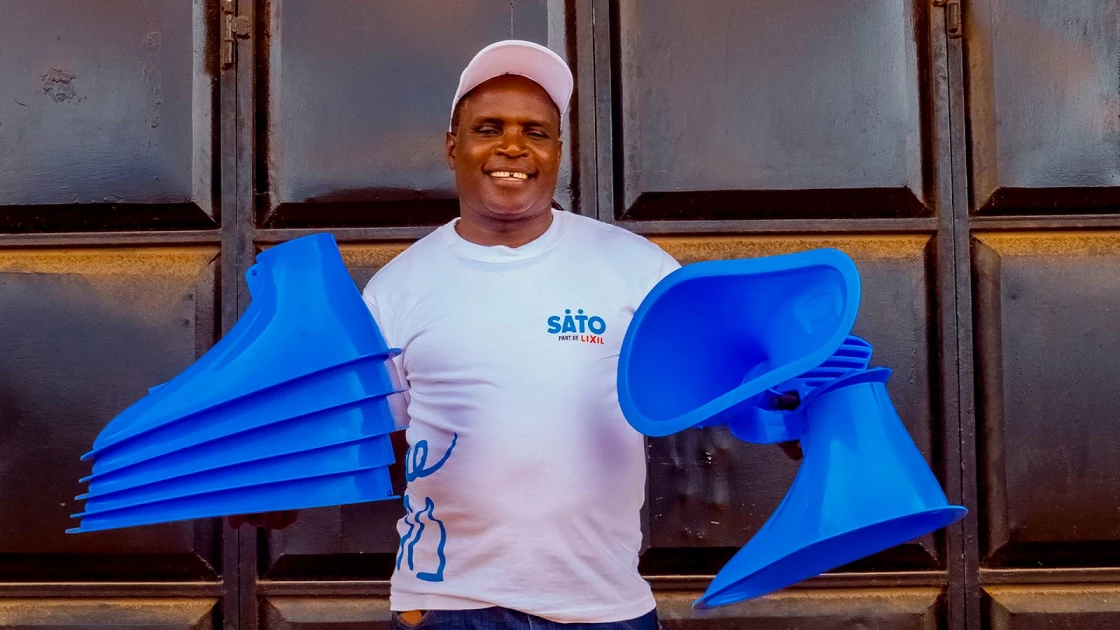
Since 2016, SATO, a social business part of LIXIL, has proven that a social business model works. SATO has reached 103 million people globally with improved sanitation and hygiene, shipping more than 10 million units across 59 countries and territories, predominantly in sub-Saharan Africa and Asia.
These numbers are more than statistics, they represent lives transformed, communities empowered, and health systems strengthened.
Samuel Langat, Leader, Africa, SATO, reflects: "Reaching 103 million lives globally is a monumental step toward dignity and health for all, emphasizing that Africa is at the heart of this sustainable transformation.. This milestone reflects the dedication of our teams and partners in delivering sustainable sanitation solutions. Every person deserves safe sanitation, and we're just getting started."
Kenya demonstrates what scalable sanitation looks like and success here isn't found in a single project, but in a localized ecosystem. Local Manufacturing & Supply ensures products are affordable and always available.
A robust distribution network ensures solutions reach even the most remote communities through entrepreneurial empowerment by training local masons to install solutions, turning a sanitation gap into a source of livelihoods.
The School Toilet Enhancement Programme (STEP) has upgraded facilities in over 110 schools, improving sanitation for more than 60,000 students. Supply chains in Matungu sub-county now serve over 7,000 children, while targeted programs in Kitui and Siaya counties address some of the country’s most persistent sanitation gaps.
Refugee settlements in Kakuma and Kalobeyei are also accessing sanitation through locally distributed products.
"These interventions do not just deliver infrastructure, they change behavior, build local capacity, and foster ownership within the communities themselves," added Langat.
The World Health Organization (WHO) estimates that for every $1 invested in sanitation, there is a return of about US$5.50 through reduced healthcare costs, increased productivity, and fewer premature deaths.
In Kenya, this is not just development; it is economic sense, meaning that every SATO installed is a direct contribution to the country’s economic resilience, a clear illustration of how market driven sanitation can deliver social and financial returns simultaneously.
Alex Njagi, Leader, Kenya, SATO, adds: "103 million lives transformed hits home in Kenya, where SATO has given the country safe toilets for entire communities where children and women are not exposed to illness or assault. Our innovative water-saving solutions alongside our team's passion and determination have restored health and hope, living our purpose together through every installation."
Partnerships with UNICEF Kenya, the Ministry of Health, and Peace Winds Japan also demonstrates the power of coordination.
"These collaborations integrate policy, expand reach, strengthen supply chains, and ensure sustained behavior change. When governments, NGOs, and private companies align their efforts, sanitation solutions reach more people, persist longer, and create lasting community impact," Njagi said.
What sets SATO’s model apart is its business model that allows the solutions to be embedded by the communities.
Locally produced, locally distributed, and locally installed, the solutions become part of the community itself, the company states.
Kenya’s success is not just a national success story; it is an inspiration for the continent.
"It proves that sanitation at scale is possible, that market-driven solutions can reach the most underserved, and that dignity, health, and economic opportunity can be delivered together," Njagi reflected.
The country’s experience illustrates that sustainable systems, rather than one-off projects, can generate measurable outcomes, including improved public health, economic resilience, and social empowerment.
SATO’s journey demonstrates one undeniable truth: sanitation is not charity. It is infrastructure, economics, and dignity. And when systems scale effectively, change does not trickle. It accelerates, reaching the people who need it most.
Kenya’s transformation, from entrenched sanitation gaps affecting 23 million people to measurable community empowerment across households, schools, and refugee settlements, shows the power of innovation, coordination, and local ownership.
By proving that private sector innovation can complement public and NGO efforts, SATO demonstrates that meaningful sanitation change is happening now, one locally made pan at a time, improving lives across Africa and beyond.
Leave a Comment