

Securing Kenya’s economic lifeline along the rail and port corridor

Audio By Vocalize
By 3.30 am, the Commandant of the Kenya Railways and Ports Police is assessing updates from a network that links the Port of Mombasa to inland depots and neighbouring states, a corridor that underpins Kenya’s trade and transport system.
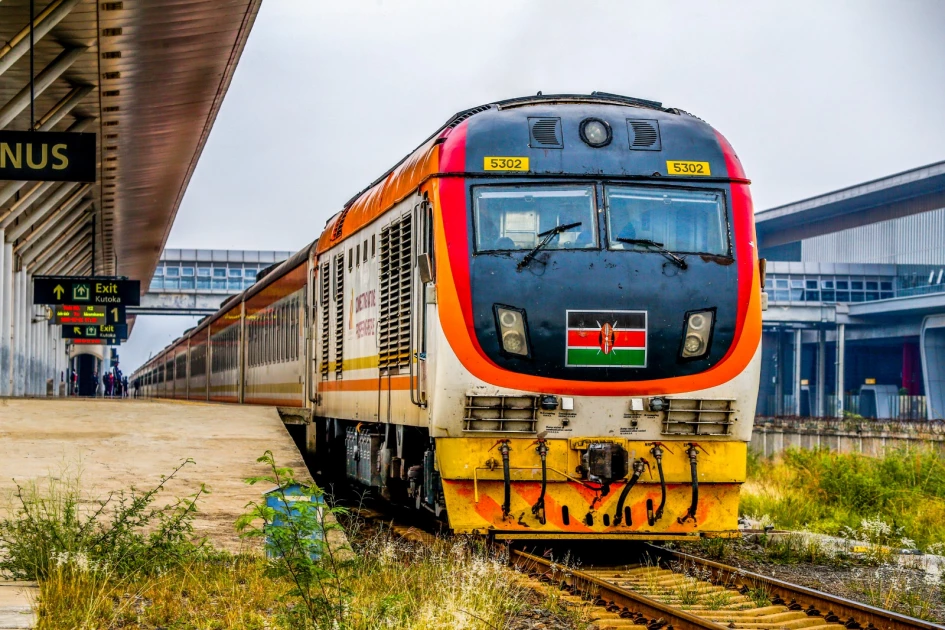
The railway and port infrastructure he oversees is more than a transport link; it is a central artery of the economy, moving thousands of passengers daily and facilitating the flow of cargo that supports industry, commerce and regional trade.
“Our core mandate as Railway Police is to ensure that we safeguard railway property and lives by ensuring that we secure passengers who are on transit up to their destination,” Mayek says.
That protection begins well before departure. Passengers are screened at stations and onboard trains to prevent the movement of contraband, illegal goods and narcotics.
Cargo moving along the corridor undergoes similar scrutiny, with consignments screened using specialised equipment and detection dogs from the police K9 unit trained to identify explosives and drugs.
Given the strategic importance of the corridor, operations rely on a multi-agency security framework bringing together regular police officers, detectives from the Directorate of Criminal Investigations, the Anti-Terrorist Police Unit and the Kenya Wildlife Service.

Officer Commanding Police Division (OCPD) Muthoni Wahome (L), Commandant of the Kenya Railways and Ports Police Geoffrey Mayek, and Officer Commanding Station (OCS) Gerald Kithinji during a routine security check at the Nairobi Terminus.
This coordination is particularly crucial where sections of the railway pass through national parks and other sensitive zones.
According to Mayek, efficiency along the Standard Gauge Railway (SGR) is central to maintaining trade flow.
“The single-line track serves between 11 and 14 trains daily, meaning any disruption can have ripple effects across schedules, cargo delivery timelines and passenger movement. Maintaining seamless coordination is therefore not just a security matter, but an economic imperative,” he avers.
Beyond the railway line itself, Mayek oversees security at Kilindini Port in Mombasa, as well as the ports of Lamu and Kisumu, and inland depots in Nairobi and Naivasha.
Cargo leaving these facilities is escorted to guard against tampering, helping to preserve the integrity of goods in transit and reinforce confidence in the corridor.
The Commandant also notes that the unit plays a role in combating wildlife trafficking, a crime that can undermine conservation efforts and international trade compliance.
“Scanning systems are used to detect game trophies and other prohibited wildlife products in collaboration with Kenya Wildlife Service officers,” he adds.
Having joined the police service in 1991, Mayek views his role as both professional and personal.
“Police service requires an officer who has a calling to be a police officer. I love being a police officer, and I’m dedicated to performing my duties,” he says.
His service has taken him to Wajir, Mombasa, Nakuru, Nyahururu and Nairobi, as well as on a peacekeeping mission in Sudan, an experience that has shaped his approach to leadership.
“Before I look at my officers, I am a human being. Apart from the uniform they wear, they are ordinary human beings,” he says.
As trade volumes grow and infrastructure expands, modernisation is increasingly part of the security conversation.
Mayek says integrating drone technology and enhanced surveillance systems is a priority, aimed at strengthening monitoring along the corridor while reducing reliance on traditional patrols.
Even amid the weight of responsibility, he occasionally pauses to reflect and relax on the stretch through Tsavo, where wildlife and open landscapes unfold beyond the train windows, a reminder of the diverse terrain and interests bound together by the railway line.
The benchmark for Mayek’s success remains straightforward: an incident-free day along one of Kenya’s most vital economic corridors.
Leave a Comment