
Sex for firewood: Mt.Elgon women's toil to cook meals at the mercy of abusive forest officers
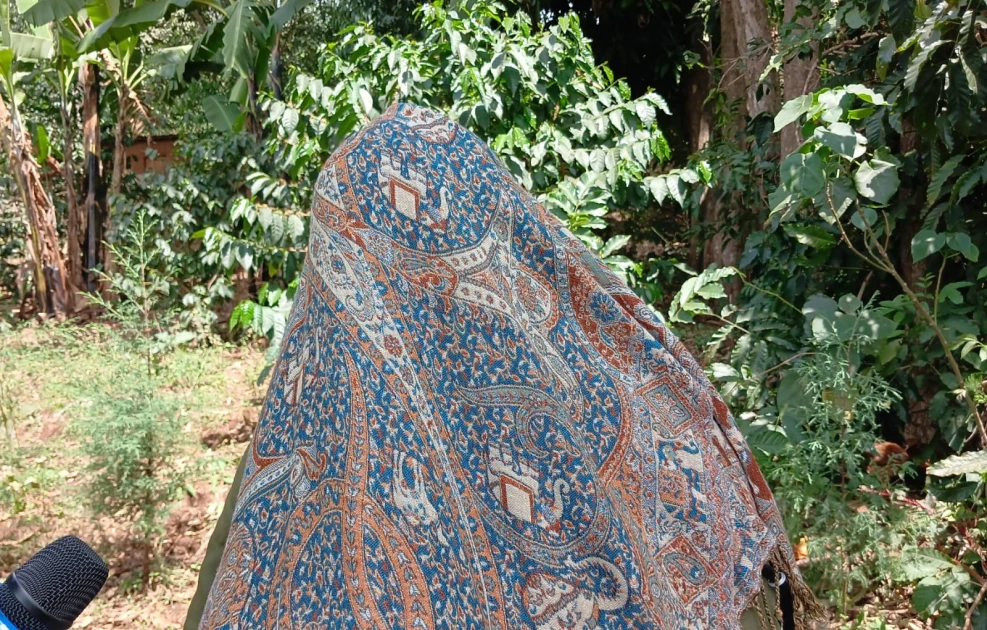
A victim of Mt Elgon sexual exploitation ring speaks to the media with her face concealed.

Audio By Vocalize
In some cases, people are forced into desperate measures or exploited just to obtain a few sticks, a stark reminder of how survival can push ordinary lives to extreme limits.
For some, the absence of firewood means going hungry, unable to prepare meals.
The struggle for survival has led women to trade their bodies for essential resources, intensifying cycles of victimization.
Leaders Acknowledge the Problem
During the Inaugural Mount Elgon Day 2025, Didmus Barasa, the Member of Parliament for Kimilili, expressed his concern about the exploitation women face in the region. Speaking at the event, Barasa said:
Naskia uchungu wakati mama anaenda kutafuta kuni kwa msitu anapata askari ya msitu ako pale anaanza kuomba mama vitu amabayo bibilia inasema unafanya na bwana yako peke yake. Alafu wanawekewa vikwaazo ati ndio uruhusiwe uingie kwa msitu utafute mpaka ufanye majukumu ya mama na huyo sio bwana yako.
(Translation: "I feel pain when a woman goes to the forest to gather firewood, only to find the forest officer there asking for things that the Bible says should be between a woman and her husband. Then, they are given conditions to enter the forest and gather wood only if they fulfill these demands.")
The allegations were denied by Alex Lemarkoko, Chief Conservator Forest, who stated:
“Askari wetu wako na instructions hafawai kufanya mambo kama ile mheshimiwa amesema, na kama kunaye yule ambaye anafanya aripotiwe to the nearest police station na nearest forest station tunachukua hatua mara moja.”
(Translation: "Our officers have instructions not to do things like what the honorable member has mentioned, and if there is anyone doing so, they should be reported to the nearest police station and nearest forest station, and we will take immediate action.")
The Widespread Impact of Gender-Based Violence
The crisis of women and girls being coerced into sexual exploitation for firewood illustrates the serious threats on SDG 5: Gender Equality.
The lack of basic resources, coupled with societal pressures and insufficient protections, pushes women into dangerous situations, perpetuating cycles of exploitation and abuse. Addressing this issue is crucial for achieving gender equality and safeguarding the dignity of women and girls.
A report from the Technical Working Group on Gender-Based Violence (GBV) revealed troubling statistics on the prevalence of physical and sexual violence against women across Kenya.
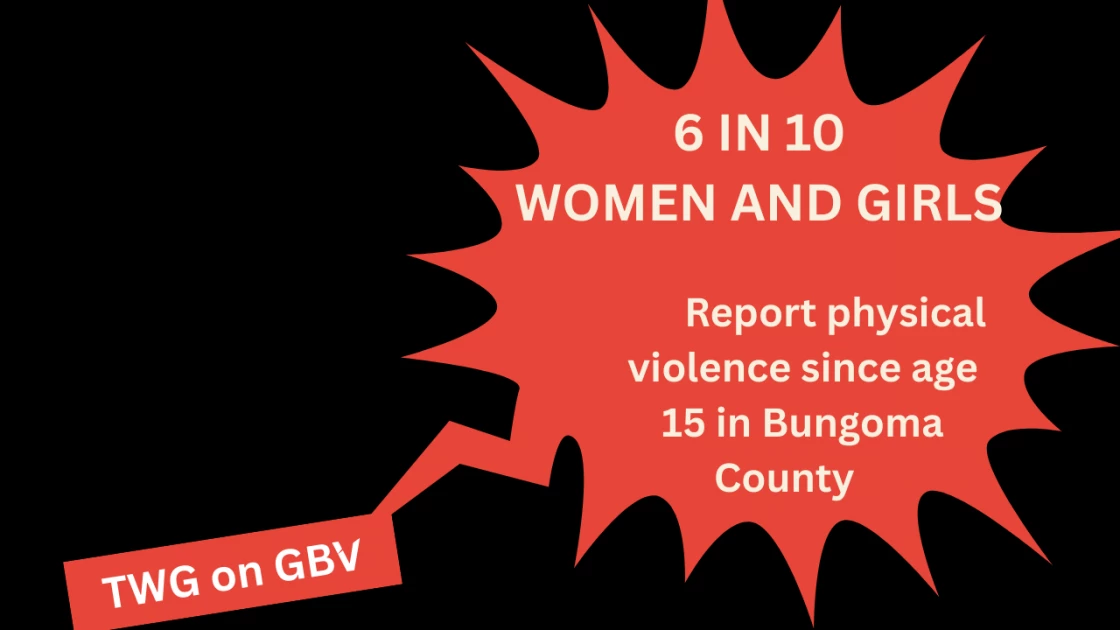
In Bungoma, 62% of women report experiencing physical violence since the age of 15, a striking statistic that highlights the urgency of addressing GBV. This is followed by Murang'a and Homa Bay counties at 54%, with Migori at 51%.
Alarmingly, 13% of women nationwide have faced sexual violence. These statistics call for targeted interventions, particularly in regions like Bungoma, where the situation is dire.
What should be a simple task-gathering firewood-has turned into a dangerous ordeal that forces women to navigate the steep slopes of Mt. Elgon, facing the risk of sexual exploitation by those controlling access to the forest. Citizen Digital traveled to Mt. Elgon, Bungoma County, to investigate further.
Exploitation in the name of survival
The dependence on firewood for survival in Mt. Elgon has placed women in an untenable situation. Many claim that cartels and individuals controlling the forests restrict women's access, leaving them with a stark choice: either go without the firewood essential for survival or succumb to the demands of those in power.
According to the Kenya Forest Service office, firewood is supposed to be sold at 100 Kenya Shillings. However, the women claim they are being charged 300 shillings per person and 600 shillings for the use of donkey carts to transport the firewood. Money they cannot afford.
This exploitation, fueled by poverty and desperation, forces women to exchange sexual favors for firewood or money. In such circumstances, consent becomes irrelevant. What may seem like a voluntary trade is actually a survival mechanism driven by economic violence and gender inequality, as emphasized by the Technical Working Group report on Gender-Based Violence.
Hannah's Story: A Mother's Struggle
Hannah (a pseudonym), a 46-year-old widow from Chepkurkur with six children, shared her painful experience. “Money is very difficult for me to get,” she said.
“I go to the forest to gather firewood for subsistence and for selling. When we meet these men, they help us, but at what cost?”
Hannah recalls how, last year, she was forced to make the agonizing decision between feeding her children and maintaining her dignity.
"They give us money and let us collect firewood, but we’re left with nothing but our dignity in tatters." Women like Hannah, already marginalized, are further exploited by those who control basic life necessities. After training by United Nations Human Rights Office (OHCHR) and other partners and becoming aware of her rights, she resorted to using “masakari”-dried plant stalks and husks-for cooking.
She worries that this won’t last, especially with the rains coming.
Claris's Story: The Long-Lasting Effects of Sexual Violence
Claris (name changed), a survivor of sexual violence, recalled the harrowing experience of being raped while gathering firewood in the Mt. Elgon forest on October 17, 2007.
"They grabbed me, beat me, and dragged me through the mud. I screamed, but no one was there to help," she said.
This traumatic event was exacerbated when her husband, fearing infection, abandoned her and their three children. "I have never heard from him since; it happened during the Mt. Elgon unrest-the Sabaot Land Defense Force (SLDF) insurgency."
The SLDF insurgency, which occurred between 2006 and 2008, was fueled by land disputes and ethnic tensions. The Sabaot militia engaged in violence, including killings, kidnappings, and sexual violence, all arising from land conflicts and ethnic divisions.
Claris reflected on the emotional and physical scars she still carries from that day. "I was treated for fistula years later," she added, showing the lasting impact of her suffering.
Claris’s experience exemplifies how widespread gender-based violence intersects with the desperate measures women must take to survive in Mt. Elgon. Like many other survivors of sexual exploitation, Claris did not immediately recognize herself as a victim.
Fear of retaliation and the deep cultural pressures to conform prevent many women from acknowledging their victimization. This silence and the resulting economic dependence allow cycles of exploitation to persist, with survival being the only thing that truly matters.
Despite these overwhelming challenges, Salome Ndiwa, a widow and passionate human rights defender from Mt. Elgon, shared her personal struggles in the community. As we spoke, she struggled to light a fire with nearly depleted dry logs.
"Some women prepare themselves carefully-showering and dressing up-before heading into the forest, hoping to be noticed by the men who control the forests," Salome explained.
Upon speaking with Eric Abungu, head of Forest Services in Bungoma, he denied knowledge of the allegations. While rumors of sexual violence had circulated, investigations revealed these claims to be unsubstantiated.
However, he acknowledged that if officers were coercing women into sex in exchange for firewood, it would severely harm government revenue streams. He promised to investigate further to ensure accountability and prevent wrongdoing.
Salome also pointed out the rising number of teenage pregnancies, with 16 girls at Chepkurkur Primary and 54 at St. Thomas Aquinas High School reporting pregnancies in 2023. These figures starkly reflect how entrenched poverty and the “sex for firewood” practice have heightened the vulnerability of young girls.
The Technical Working Group on Gender-Based Violence report underscores the critical role of economic violence in exacerbating this situation. "Economic violence occurs when abusers control or deny access to land, financial resources, employment, education, and property," the report states.
This is particularly pervasive in patriarchal rural communities, where women are often forced into economic dependency, reinforcing gender inequality and exploitation.
Betty Okero, team leader at the CSO Network, has been working with the United Nations Human Rights Office (OHCHR) and Irish Aid. She emphasizes the connection between economic and gender-based violence in regions like Mt. Elgon, where women face exploitation due to limited access to land, education, and financial resources. Okero advocates for systemic change to dismantle harmful cultural norms and create new ones that empower women.
“The Mabanga Declaration was a crucial step, but we must ensure women have control over resources, including land, to break the cycles of poverty and violence,” Okero said.
Addressing land rights and equitable access to resources is essential for achieving long-term gender equality and empowering women in marginalized communities.
"This situation is unacceptable," Betty Okero stressed. "We must act immediately to strengthen legal frameworks, investigate and ensure justice for survivors, and hold perpetrators accountable. It’s crucial to invest in long-term solutions like sustainable livelihoods and community-based interventions. We need to revisit the Mabanga Peace Declaration and challenge harmful cultural norms that perpetuate violence against women and girls. Women deserve access to land, economic empowerment, and protection from exploitation. Let us work together to create a society where women can live with dignity, free from fear, and fully participate in economic development."
To break the cycle of exploitation and empower women in Mt. Elgon, stakeholders must prioritize educational opportunities, ensure equitable access to resources like land and financial support, and implement systemic changes that promote gender equality and economic independence.
Join the Discussion
Share your perspective with the Citizen Digital community.
No comments yet
This discussion is waiting for your voice. Be the first to share your thoughts!