

SRC to oppose new Bill that seeks to give MPs power to determine own allowances
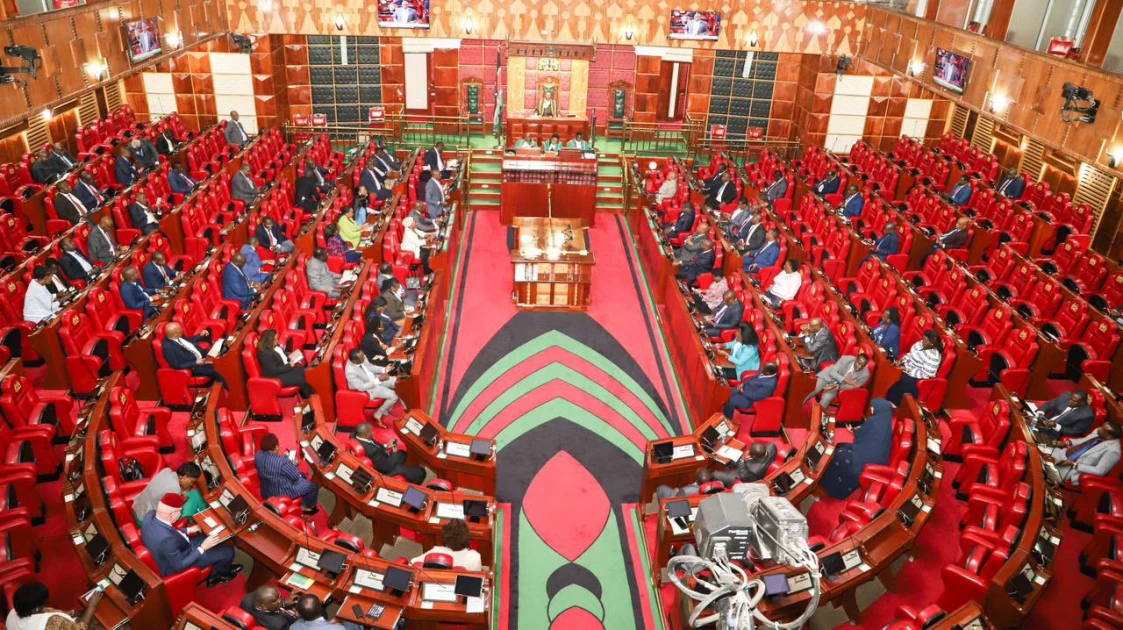
File image of MPs in the National Assembly.

Audio By Vocalize
The Salaries and Remuneration Commission and the Controller of Budget have been at loggerheads with the JSC over ways of determining the facilitative allowances in the Judiciary.
The Statute Law (Miscellaneous Amendments) Bills no. 67 and no. 68, partly seeks to amend the Parliamentary Service Act and the Judicial Service Act to allow the respective commission to determine the daily subsistence allowances for their respective employees including state officers.
The JSC is counting on Article 172 of the Constitution which in sub-article one provides that the JSC shall review and make recommendations on the conditions of service of (i) judges and judicial officers, other than their remuneration.
However, the SRC depends on Article 230 of the constitution. In sub-Article 4, the powers and functions of SRC include setting and regularly reviewing the remuneration and benefits of all State officers. Members of Parliament and Judges are state officers.
According to an analysis by the SRC, the wage bill in the current financial year is set to hit Ksh.1.17 trillion. Out of that, Ksh.41.3 billion or 4 per cent is in the form of daily subsistence allowances.
At the judiciary, the wage bill has been rising since the year 2017 when it was at Ksh.7.2 billion. It is projected to hit Ksh.11.7 billion in the current financial year. According to the SRC, the JSC started implementing a self-determined DSA rate in 2019. They have since been at loggerheads with the controller of the budget as the rate is beyond what is allowed by SRC.
According to SRC, the chief justice should get Ksh.22,000 in local daily subsistence allowance. The CJ currently gets Ksh.30,000 as allocated by the JSC, a difference of Ksh.8,000. Other senior judicial officers receive DSA higher than that of SRC by between Ksh.3,000 and Ksh.7,000.
In international travels, the per diem for a Judiciary state officer receives 1,078 US dollars as per JSC contrary to SRC’s rate of 772 dollars. Parliament had been giving a similarly higher rate until August last year when the PSC complied with the SRC's direction.
With the amendment bill in the National Assembly, MPs are hoping to give the mandate of determining their periderms to the Parliamentary Service Commission (PSC). The PSC rate for Canada had been set at 1,053 US dollars.
As such the cost of per diems has been rising at the Judiciary for the last six years. From a low of 6 per cent in 2017/2018 to a projected high of 24 per cent of the Judiciary wage bill.
Consequently, the wage bill at the judiciary is now 62 per cent of its revenues, while in parliament; it is at 55 per cent. Should parliament make the changes to the Parliamentary Service Act, then PSC will be at liberty to determine the mileage claims rates.
At the moment, SRC allows claims of Ksh.152.6 for every kilometre travelled to and from the constituency office by MPS. It currently costs 25.3 billion shillings every five years. It is likely to go up by Ksh.14.5 billion should parliament raise the rate to Ksh.210 per kilometre as per the recent rate by PSC.
Collectively, the Ksh.14.5 billion extra DSA by parliament and the judiciary is sufficient to employ over 17,000 teachers at the entry level by the Teachers Service Commission. The same amount according to SRC would be sufficient to employ 8,494 health workers.
It could also employ 11,480 teachers and health workers at both national and county levels in equal numbers. SRC has opposed the amendments saying they are unconstitutional for seeking to take away functions reserved for SRC and SRC alone.
Leave a Comment