

Tattoo artists in uproar over EU ink bans
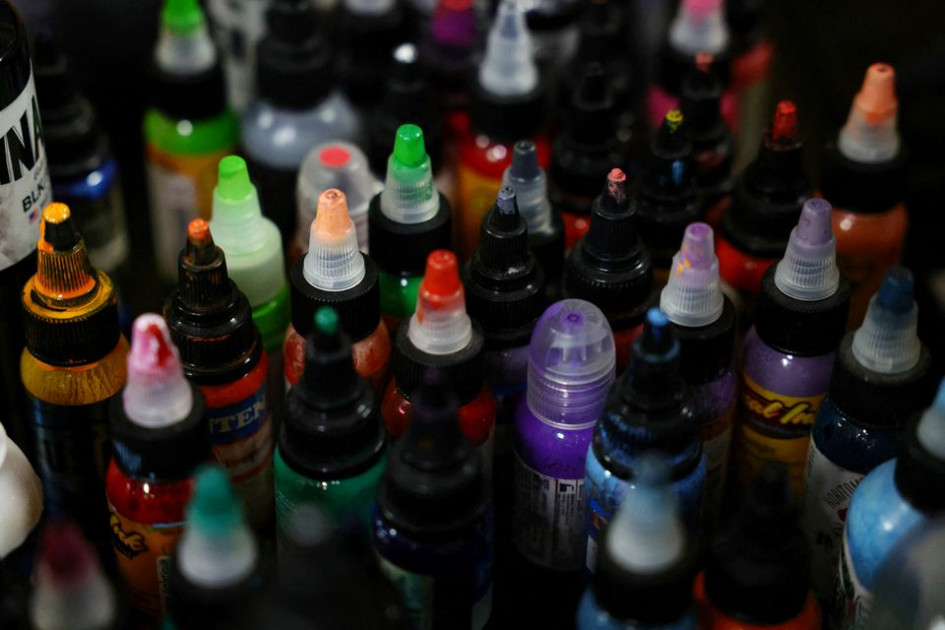
Flasks of ink are seen inside the Tin-Tin Tattoo studio in Paris as new EU restrictions on coloured tattoo come into force, France, January 4, 2022. REUTERS/Sarah Meyssonnier

Audio By Vocalize
Tattoo parlours across the European Union
were in crisis on Tuesday as a new rule came into force which effectively bans
many of their most popular inks and which one artist described as like taking
"taking the flour from a bakery."
Tattoo artists say alternatives
to the inks, some of which have been in circulation for decades, do not yet
exist or are in short supply, and the law deals a blow to an industry already
reeling after repeated lockdowns.
The law limits the use of certain
chemicals which the EU said are hazardous, with some linked to cancer,
reproductive difficulties and skin irritation, and which are contained in
mixtures for tattoo inks and permanent make-up.
The law was agreed in December
2020 but the industry was given a year to adjust and find alternatives.
Star tattoo artist Tin-Tin, who
heads the French tattoo industry union SNAT, told Reuters the new rules would
just drive people to parlours that do not respect the legislation.
"It's ridiculous. It's like
taking the flour from a bakery, it's a stupid as that. If we don't have any
colours or ink to work with, what are we going to work with?" he said.
The European Commission said
manufacturers and artists had had a year to prepare and alternatives exist,
except for two particular pigments, for which more time was granted to find
replacements.
The European Chemicals Agency,
which is behind the research on the inks, said at least 12% of the EU's 450
million citizens, so at least 54 million people, have tattoos.
The EU intends to harmonise laws
across the bloc by setting maximum concentration limits for groups of substances
or individual substances found in the inks.
Gwenaelle Reaume, the secretary
of the Tattoo Belgium association, said the COVID-19 pandemic had held up
research and production, calling on the government for more time.
While her salon had ordered inks from new, approved suppliers in time, many of her colleagues' needles had run dry, she said. Still, her client Anne Keyen said she was not unduly worried about her existing tattoos.
"They
put all sorts of things which aren't good for health in food, and then they
come after tattoo ink. I admit that, as someone with tattoos, I don't
understand this law," she said.
Leave a Comment