
Trump aid cuts deal a blow to HIV prevention in Africa
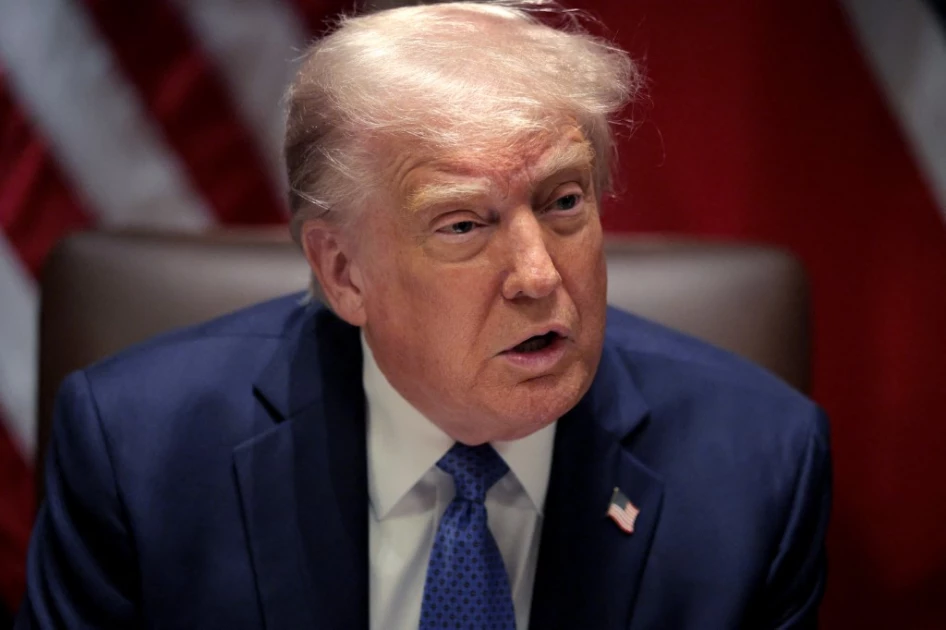
APRIL 24: U.S. President Donald Trump delivers remarks during a bilateral lunch with Norway's Prime Minister Jonas Gahr Store in the Cabinet Room at the White House on April 24, 2025 in Washington, DC.

Audio By Vocalize
Cherem admits he should have been more careful about practicing safe sex but had become accustomed to using the U.S.-supplied pharmaceutical.
The drug - known as Pre-Exposure Prophylaxis, or PrEP - is typically taken daily as a tablet and can reduce the risk of contracting HIV through sex by 99%.
"I blame myself... Taking care of myself is my first duty as a person," Cherem said at his gym in Awka, the capital of Nigeria's southeastern state of Anambra.
"I equally blame the Trump administration because, you know, these things were available, and then, without prior notice, these things were cut off."
Trump ordered a 90-day pause on foreign aid after taking office in January and halted grants by the U.S. Agency for International Development (USAID).
The agency was responsible for implementing the bulk of the assistance under the President's Emergency Plan for AIDS Relief (PEPFAR), the world's leading HIV/AIDS initiative.
Sub-Saharan Africa remains the epicenter of the AIDS pandemic. Trump's cuts have restricted the availability of drugs that millions of Africans have taken to prevent infection - particularly vulnerable communities such as gay men and sex workers - as aid groups and public health systems in Africa strove to roll back the disease.
The number of initiations, or people who have taken at least one dose of the drug, rose in Africa from fewer than 700 in 2016 to more than 6 million by late 2024, according to PrEPWatch, a global tracker. More than 90% of new initiations last year were financed by PEPFAR, using cheap generic versions of the drug.
Sub-Saharan Africa had 390,000 AIDS-related deaths in 2023, or 62% of the global total, according to UNAIDS, the United Nations AIDS agency. However, progress has been made: that death toll was down by 56% from 2010, according to the World Health Organization.
Now, some of those who've lost access to the preventative medication because of U.S. cutbacks are already testing positive, according to 10 patients, health officials and activists.
Restrictions on PrEP have coincided with dwindling supplies of more widely used HIV prevention tools like condoms and lubricants "because of the US funding cuts", according to a UNAIDS fact sheet, from May.
The combination is creating what nine activists and three medical experts described as a major threat to prevention across the continent.
"I just see this as incredibly short-sighted because we were on a winning path," said Linda-Gail Bekker, an HIV expert at the University of Cape Town.
She said that many African governments did not have the resources to spend on PrEP drugs on top of treatment for HIV infections, risking a worsening of the pandemic.
"It's as predictable as if you take your eye off a smouldering bushfire and the wind is blowing: a bushfire will come back."
Trump has said that the United States pays disproportionately for foreign aid and he wants other countries to shoulder more of the burden, as he seeks to reduce U.S. government spending across the board.
The U.S. disbursed $65 billion in foreign assistance last year, nearly half of it via USAID, according to government data,
"It's a question of who has primary responsibility for the health needs of citizens of other countries, and it's their own governments," said Max Primorac, a former senior USAID official who is now senior research fellow at The Heritage Foundation's Margaret Thatcher Center for Freedom.
"We all know, and this is a bipartisan issue, that aid dependency doesn't help these people - that the best solution is for these countries to be able to take over the responsibility of these programs."
A RISE IN CASES
UNAIDS says the permanent discontinuation of PEPFAR-supported prevention and treatment programs could lead to an additional 2,300 new HIV cases globally per day. There were 3,500 new cases per day in 2023.
Reuters spoke to 23 health workers, PrEP users and activists, nearly all of whom said that the increase in HIV infections since the funding cuts was impossible to quantify because many organisations working with vulnerable populations have been defunded.
A State Department waiver issued on February 1 allowed some PEPFAR activities to restart, but only covered HIV prevention for mother-to-child transmission.
That means PEPFAR-financed PrEP is no longer available for gay and bisexual men, sex workers and injecting drug users who are especially exposed to the virus.
Many African governments had specifically targeted these groups in their PrEP programs.
Join the Discussion
Share your perspective with the Citizen Digital community.
No comments yet
This discussion is waiting for your voice. Be the first to share your thoughts!