
Trump team wants to scrap car-crash reporting rule that Tesla opposes
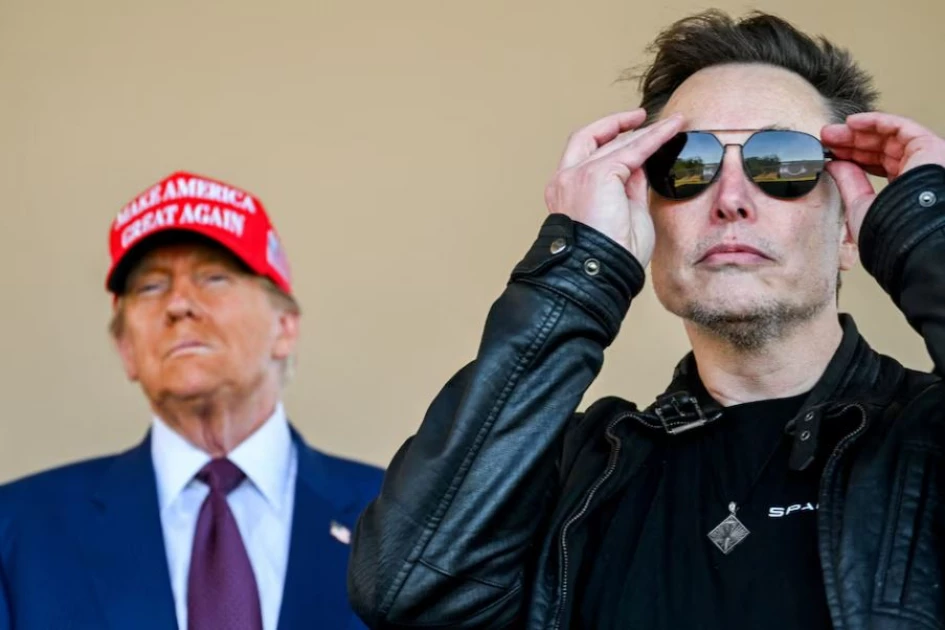
U.S. President-elect Donald Trump and Elon Musk watch the launch of the sixth test flight of the SpaceX Starship rocket in Brownsville, Texas, U.S., November 19, 2024. Brandon Bell/Pool via REUTERS

Audio By Vocalize
The Trump transition team wants the incoming administration
to drop a car-crash reporting requirement opposed by Elon Musk’s Tesla,
according to a document seen by Reuters, a move that could cripple the
government’s ability to investigate and regulate the safety of vehicles with
automated-driving systems.
Musk, the world's richest person, spent more than
a quarter of a billion dollars helping Trump get elected president in November.
Removing the crash-disclosure provision would particularly benefit Tesla, which
has reported most of the crashes – more than 1,500 – to federal safety
regulators under the program. Tesla has been targeted in National Highway
Traffic Safety Administration (NHTSA) investigations, including three stemming
from the data.
The recommendation to kill the crash-reporting rule came
from a transition team tasked with producing a 100-day strategy for automotive
policy. The group called the measure a mandate for "excessive" data
collection, the document seen by Reuters shows.
The Trump transition team, Musk and Tesla did not respond to
requests for comment.
Reuters could not determine what role, if any, Musk may have
played in crafting the transition-team recommendations or the likelihood that
the administration would enact them. The Alliance for Automotive Innovation, a
trade group representing most major automakers except Tesla, has also
criticized the requirement as burdensome.
A Reuters analysis of the NHTSA crash data shows Tesla
accounted for 40 out of 45 fatal crashes reported to NHTSA through Oct. 15.
Among the Tesla crashes NHTSA investigated under
the provision were a 2023 fatal accident in Virginia where a driver using the
car's "Autopilot" feature slammed into a tractor-trailer and a California
wreck the same year where an Autopiloted Tesla hit a firetruck, killing
the driver and injuring four firefighters.
NHTSA said in a statement that such data is crucial to
evaluating the safety of emerging automated-driving technologies. Two former
NHTSA employees said the crash-reporting requirements were pivotal to agency
investigations into Tesla’s driver-assistance features that led to 2023
recalls. Without the data, they said, NHTSA cannot easily detect crash patterns
that highlight safety problems.
NHTSA said it has received and analyzed data on more than
2,700 crashes since the agency established the rule in 2021. The data has
influenced 10 investigations into six companies, NHTSA said, as well as nine
safety recalls involving four different companies.
In one example, NHTSA fined Cruise, the
self-driving startup owned by General Motors, $1.5 million in September for
failing to report a 2023 incident in which a vehicle hit and dragged a
pedestrian who had been struck by another car. GM said this week it would end
robotaxi development at Cruise and fold it into its group working on
driver-assistance technology.
NHTSA's so-called standing general order requires automakers
to report crashes if advanced driver-assistance or autonomous-driving
technologies were engaged within 30 seconds of impact, among other factors.
In addition to ditching the reporting rule, the
recommendations call for the administration to "liberalize"
autonomous-vehicle regulation and to enact "basic regulations to enable
development" of the industry.
In an October Tesla earnings call, Musk called for “a
federal approval process for autonomous vehicles,” rather than a patchwork of
state laws he called “incredibly painful” to navigate. He said he would use his
position as a government-efficiency czar, a post Trump had promised him, to
push for such regulatory changes.
After the election, Trump named Musk to co-lead a newly
created Department of Government Efficiency to advise from “outside government”
on slashing federal staff, spending and regulations.
Tesla is among the most prominent automakers developing
advanced driver-assistance features, which can assist with lane changes,
driving speed and steering.
Tesla’s Autopilot and “Full Self-Driving” systems, which are
not fully autonomous, have come under intense scrutiny in lawsuits and a
DOJ criminal probe examining whether Tesla exaggerated its vehicles'
self-driving capabilities, misleading investors and harming consumers.
Tesla despises the crash-notification requirement, believing
that NHTSA presents the data in ways that mislead consumers about the automaker's
safety, two sources familiar with Tesla executives’ thinking told Reuters.
In recent years, Tesla executives discussed with Musk the
need to push for scrapping the crash-reporting requirement, according to one of
the sources. But because Biden officials expressed enthusiasm for the program,
Tesla executives ultimately concluded that they would need a change in
administration to get rid of the requirements, according to the source.
Tesla finds the rules unfair because it believes it reports
better data than other automakers, which makes it look like Tesla is
responsible for an outsized number of crashes involving advanced
driver-assistance systems, one of the sources said.
NHTSA cautions that the data should not be used to compare
one automaker's safety to another because different companies collect
information on crashes in different ways.
Bryant Walker Smith, a University of South Carolina law
professor who focuses on autonomous driving, said Tesla collects real-time
crash data that other companies don’t and likely reports a "far greater
proportion of their incidents” than other automakers.
Tesla also likely has a greater frequency of crashes involving driver-assistance technologies because it has more vehicles on the road equipped with them and drivers engage the systems more often, Smith said. That means the vehicles may more often get into “situations that they aren’t capable of handling,” he said.
Leave a Comment