
UK Prime Minister Boris Johnson resigns after nearly 60 members of his government quit
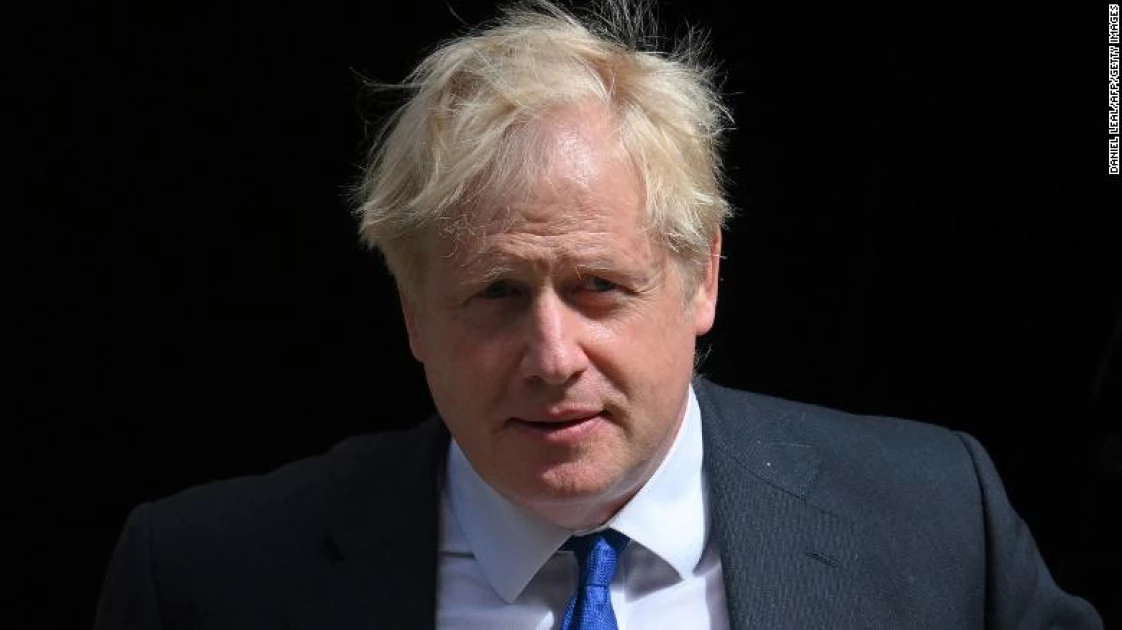
Newly resigned UK Prime Minister Boris Johnson as he leaves 10 Downing Street in central London on Wednesday to head to the Houses of Parliament for the weekly Prime Minister's Questions session. PHOTO/COURTESY: CNN

Audio By Vocalize
Boris Johnson has resigned following a revolt within his
Conservative Party, saying in an address to the nation that the process of
choosing a new prime minister "should begin now."
"It is clearly now the will of the parliamentary
Conservative Party that there should be a new leader of that party and
therefore, a new prime minister," said Johnson.
"The process of choosing that new leader should begin
now," he added, saying the timeline will be announced next week.
Johnson is not planning to leave office immediately, however.
"I've today appointed a Cabinet to serve, as I will, until a new leader is
in place," he said, in a televised speech outside 10 Downing Street.
He spoke of his attempts to stay on as leader and how
"painful" it is for him to step down, but made no mention of the
scandals that have proved his political downfall.
"In the last few days, I've tried to persuade my colleagues
that it would be eccentric to change governments when we're delivering so
much... and when the economic scene is so difficult domestically and
internationally," Johnson said.
"I regret not to have been successful in those arguments,
and of course, it's painful, not to be able to see through so many ideas and
projects myself," he added.
Johnson went on to address voters directly, and expressed his
sadness at stepping down after nearly three years in the role.
"To you, the British public: I know that there will be many
people who are relieved and, perhaps, quite a few will also be
disappointed," he said. "And I want you to know how sad I am to be
giving up the best job in the world, but them's the breaks."
Johnson has in recent months been engulfed in a series
of scandals that forced even
his most stalwart supporters to abandon him.
Nearly 60 members of the government -- including five cabinet
ministers -- have resigned since Tuesday, furious about the botched handling of
the resignation by Johnson's former deputy chief whip, Chris Pincher, who was
accused of groping two men last week.
Johnson initially attempted to ride out the crisis -- despite an unprecedented flight of middle-ranking ministers from the government, a battering at Prime Minister's Questions and a bruising appearance before a committee of senior lawmakers in Parliament.
On Wednesday, he still insisted he
wasn't going to resign.
But Johnson finally gave in Thursday after some of his most
loyal allies told him that the game was up.
The leader of the opposition Labour Party, Keir Starmer, said it
was "good news for the country" that Johnson had decided to resign,
adding that "it should have happened long ago."
"He was always unfit for office. He has been responsible
for lies, scandal and fraud on an industrial scale," said Starmer on
Twitter.
The opposition leader also had scathing words for the
Conservatives. "They have been in power for 12 years. The damage they have
done is profound. Twelve years of economic stagnation. Twelve years of
declining public services. Twelve years of empty promises," Starmer said.
"Enough is enough. We don't need to change the Tory at the
top -- we need a proper change of government. We need a fresh start for
Britain."
While Johnson has announced his resignation as Conservative
Party leader, it is possible that he will remain as Prime Minister until
October, when the party meets for its annual conference.
Conventionally, when a Conservative leader resigns, he or she
gives the party time to hold a thorough leadership contest.
"What a depressing state of affairs. So much needless
damage caused," Business and Energy Secretary Kwasi Kwarteng said on
Twitter.
"We now need a new Leader as soon as practicable. Someone
who can rebuild trust, heal the country, and set out a new, sensible and
consistent economic approach to help families," he added.
Scottish First Minister Nicola Sturgeon also called for the
leadership question to be settled.
"There will be a widespread sense of relief that the chaos
of the last few days (indeed months) will come to an end, though notion of
Boris Johnson staying on as PM until autumn seems far from ideal, and surely
not sustainable?" Sturgeon said in a series of tweets.
Conservative MP Steve Baker told CNN that the party needs
"to move swiftly to a leadership contest."
Baker said Deputy Prime Minister Dominic Raab should be
caretaker prime minister, but that Johnson could also continue in office.
"I am absolutely determined that we should not prolong this
crisis. If it's agreed within government that Boris Johnson should continue as
caretaker, then that's fine with me," Baker told CNN. "Because we
need to just end the crisis, get into a leadership contest, and start fresh in
September."
Baker had earlier told the BBC that he was "seriously
thinking" about standing in the contest.
Johnson's departure will mark a remarkable downfall for a Prime
Minister who was once seen as having political superpowers, with an appeal that
transcended traditional party lines.
He won a landslide victory in December 2019 on the promise of
delivering a Brexit deal and leading the UK to a bright future outside the
European Union. But his premiership unraveled in the aftermath of the Covid-19
pandemic.
In recent months the Prime Minister has faced a barrage of
criticism from all sides over his conduct and that of some members of his
government, including illegal, Covid-19 lockdown-breaking parties thrown in his
Downing Street offices for which he and others were fined.
Numerous other scandals have also hit his standing in the polls.
These include accusations of using donor money inappropriately to pay for a
refurbishment of his Downing Street home and ordering MPs to vote in such a way
that would protect a colleague who had breached lobbying rules.
Last month, he survived a confidence vote among members of his
own party, but the final count of his lawmakers who rebelled against him was
higher than his supporters expected: 41% of his own parliamentary party refused
to back him.
He suffered a further blow late last month when his party lost
two parliamentary by-elections in a single night, raising new questions about
his leadership.
His reputation was also dented by the resignation of his second
ethics adviser in less than two years.
Join the Discussion
Share your perspective with the Citizen Digital community.
No comments yet
This discussion is waiting for your voice. Be the first to share your thoughts!