
Urgent call for evidence-based policies as experts gather in Nairobi to support refugees in East Africa
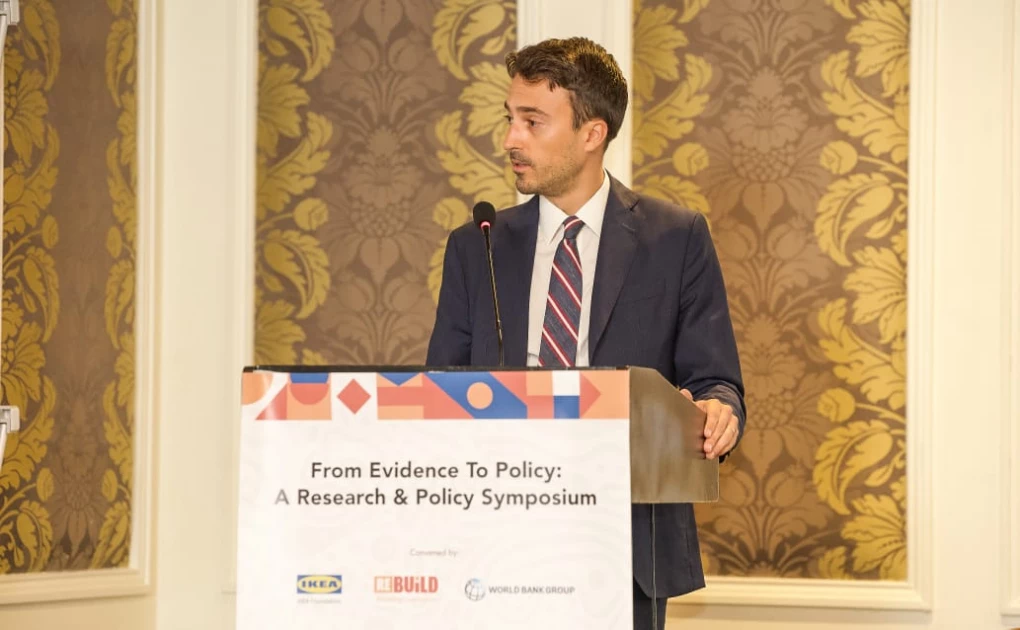
Miguel de Corral, World Bank’s Senior Operations Officer, Fragility, Conflict and Violence.

Audio By Vocalize
Titled “From Evidence to Policy: Transforming Refugee Livelihoods Strategies in Kenya, Uganda, and Ethiopia,” the symposium brought together researchers, policymakers, and practitioners to discuss strategies for improving refugee livelihoods.
With over 800,000 refugees and asylum seekers in Kenya alone, the necessity for informed policies has never been more critical.
“Kenya has a long history of hosting refugees, but with unprecedented displacement levels, bridging the humanitarian-development nexus is essential,” said Pecious Zikhali, Senior Economist at the World Bank’s Poverty and Equity Global Practice.
Jacob Bonyo, Country Director for RefugePoint, further emphasized the urgency of the situation, revealing a concerning trend: “In the Eastern Horn of Africa and the Great Lakes region, the total numbers of refugees and asylum seekers by the end of last month was slightly over 5.5 million. That number is growing at an amazing rate, maybe I should say a worrying rate. Just four years ago, in 2020, that number was 4.6 million.”
Held in Nairobi from October 15th to 16th, 2024, the symposium focused on four key thematic areas: Access to Finance & Microenterprises, Access to Social Protection, Access to Jobs and Skills Development, and Access to Justice and Legal Identity. These themes reflect the complex challenges faced by refugees and the need for comprehensive, evidence-based solutions.
“Through our work, we strive to bridge the gap between research and policy – specifically how research enriches policy, and how policy draws on research,” explained Priscilla Dembetembe, Re
Program Director. “In an ideal world, good research should be designed to be relevant to policy, and its results delivered in a palatable form to policymakers; equally, good policy formulation and development should be based on relevant research findings.”
This sentiment was echoed by Patrick Okello, Commissioner for Refugees at the Office of the Prime Minister in Uganda, who noted, “The world keeps evolving, and the best development options can best be defined through research.”
Miguel de Corral, Senior Operations Officer for the World Bank’s Fragility, Conflict, and Violence (FCV) Group, highlighted the critical juncture at which the region finds itself. “We stand at a crucial juncture in which innovative and pathbreaking research and evidence is needed more than ever,” he declared.
“The protracted forced displacement crisis is becoming further challenged by the continuation, and in some cases the intensification, of conflicts and instability across the region, as well as recurrent and more severe climatic shocks that threaten to reverse development gains and deplete the resilience of communities on the ground.”
A key initiative discussed during the symposium was the Kenya Analytical Program on Forced Displacement, a collaborative effort by the World Bank, UNHCR, and the Center for Effective Global Action.
Funded by the Government of the Netherlands through the Partnership for Improving Prospects for Host Communities and Forcibly Displaced Persons (PROSPECTS), this program is crucial in closing data gaps and informing solutions that benefit both refugees and host communities, promoting inclusivity.
“From the seminal ‘Yes in My Backyard’ study, to IFC’s ‘Kakuma as a Marketplace’ study, to various socioeconomic surveys conducted, and most recently to the work done under the Kenya Analytical Program on Forced Displacement, these have been essential to undertaking better evidence-based and targeted programs and policies,” emphasized De Corral.
One significant finding from this research challenges common perceptions about refugee and host community dynamics. “As recent data shows, in many cases, host communities are as socioeconomically vulnerable, or even more, than refugees,” noted de Corral. “For example, Turkana hosts are particularly disadvantaged, with a shocking rate of multidimensional poverty at 86 percent.”
The Re: BUiLD Program illustrates the effectiveness of strategic partnerships in addressing refugee challenges. Funded by a €30 million investment from the IKEA Foundation, this initiative focuses on three key areas: providing livelihood services and market-oriented interventions to 20,000 clients in low-income neighborhoods of Nairobi and Kampala; gathering evidence through various methods, including pilots, randomized controlled trials, and monitoring data; and influencing policies, practices, and investments at national, regional, and global levels through a bold advocacy agenda.
“We must rethink how we approach the interventions that we implement to ensure that refugees not only survive but thrive in the host countries that they’re living in,” said Banchiamlack Dessalegn, Ph.D., Regional Vice President for East Africa at the IRC.
She highlighted the importance of distinguishing between acute and protracted displacement situations, calling for tailored programming to effectively address each scenario.
The symposium featured expert panels, keynote speakers, and thought leaders from organizations including the IRC, the IKEA Foundation, and the World Bank. These experts shared insights and discussed transformative strategies for addressing global challenges related to refugee livelihoods.
Participants engaged with groundbreaking research and case studies that highlighted impactful interventions and emerging solutions to enhance livelihoods for refugees and their host communities. The event also provided a platform for rich dialogue, fostering collaboration among researchers, practitioners, and policymakers as they explored practical actions to strengthen refugee policies.
Mohamed Hassan, a researcher with the Refugee-Led Research Hub, offered a critical perspective on current approaches to refugee livelihoods. “Too often we focus on entrepreneurship, self-employment, informal work for refugees as the primary solution,” Hassan observed.
“Overlooking pathways to formal employment, especially in countries where there is a relatively open policy to work for refugees like Kenya, Uganda, and Ethiopia.”
Hassan’s critique highlights how current frameworks often fail to recognize refugees as potential professionals, colleagues, or managers, instead pigeonholing them into informal sectors.
The networking opportunities offered by the symposium were particularly valuable, allowing attendees to connect with a diverse group of stakeholders from refugee communities, the international development and humanitarian sectors, including NGOs, refugee-led organizations, government agencies, academic institutions, and private sector partners.
“We have to look at refugees not only as subjects of research, but also the owners of their own stories. Through engaging them in designing research, implementing it, and also engaging them in policymaking, we can ensure that they are also part of the changes that we want to see,” stated Rediet Kassaye, Program Manager at the IKEA Foundation.
As the global refugee crisis continues to escalate, with unprecedented levels of displacement, the importance of events like this symposium cannot be overstated. By bringing together key players from various sectors and countries, the organizers have created a unique opportunity to translate cutting-edge research into effective, life-changing policies for millions of displaced people.
By Thomas Bosire
Join the Discussion
Share your perspective with the Citizen Digital community.
No comments yet
This discussion is waiting for your voice. Be the first to share your thoughts!