
US Senator wants military ties with Uganda reviewed after army chief Muhoozi’s controversial tweets
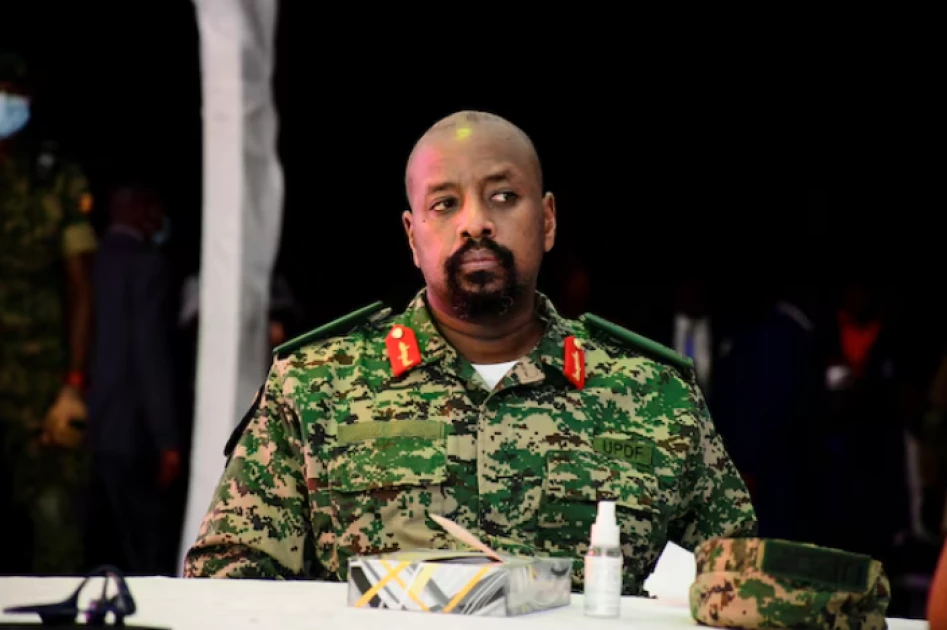
Lt. General Muhoozi Kainerugaba, the son of Uganda's President Yoweri Museveni, who leads the Ugandan army's land forces, looks on during his birthday party in Entebbe, Uganda May 7, 2022. REUTERS/Abubaker Lubowa/File Photo

Audio By Vocalize
U.S. Senate Foreign Relations Committee Chairman Jim Risch has warned that Washington may re-evaluate its long‑standing security partnership with Uganda after General Muhoozi Kainerugaba, the country’s Chief of Defence Forces and son of President Yoweri Museveni, posted incendiary messages on social media that rattled bilateral ties.
In a post on X on Saturday,
Risch said Muhoozi had “crossed a red line” by accusing the U.S. Embassy in
Kampala of aiding opposition leader Bobi Wine amid a controversial security
operation earlier this month.
Risch described
the apology that Muhoozi later issued - in which he deleted the posts and said
he had been “fed wrong information” - as “hollow” and insufficient.
“Commander Muhoozi
Kainerugaba has crossed a red line and now the U.S. must reevaluate its
security partnership, which includes sanctions, and military cooperation with
Uganda,” he wrote.
“The president's
son, and likely successor, cannot just delete tweets and issue hollow
apologies. The U.S. will not tolerate this level of instability and
recklessness when American personnel, U.S. interests, and innocent lives in the
region are at stake.”
Muhoozi’s now
deleted controversial posts accused U.S. diplomats of colluding with Wine
during or after a January 16 raid on the opposition leader’s home, claims that
the U.S. Embassy has not publicly confirmed.
The army chief
also announced a suspension of cooperation between the Uganda People’s Defence
Forces and the U.S. mission, including joint operations in the region.
Hours later,
Muhoozi backtracked, saying he had been misinformed and that he had “spoken
with the U.S. Ambassador” and that military cooperation would “continue as
usual.”
He framed his
reversal as an effort to preserve ties with what he called “great friends.”
But Risch’s
admonition reflects deeper concern in Washington about not just the tweets
themselves, but the broader political climate in Uganda.
His comments come
on the heels of U.S. lawmakers questioning the credibility of Uganda’s
January 15 presidential election, which long‑time President Museveni won with a
resounding margin that critics - including some U.S. officials - have denounced
as illegitimate.
Tensions between
Kampala and Washington have been mounting against a backdrop of allegations of
election violence, crackdowns on opposition supporters, and reports of arrests
and harassment tied to the polls, particularly targeting supporters of Bobi
Wine and his National Unity Platform.
Join the Discussion
Share your perspective with the Citizen Digital community.
No comments yet
This discussion is waiting for your voice. Be the first to share your thoughts!