

What mosquitoes are most attracted to in human body odor is revealed
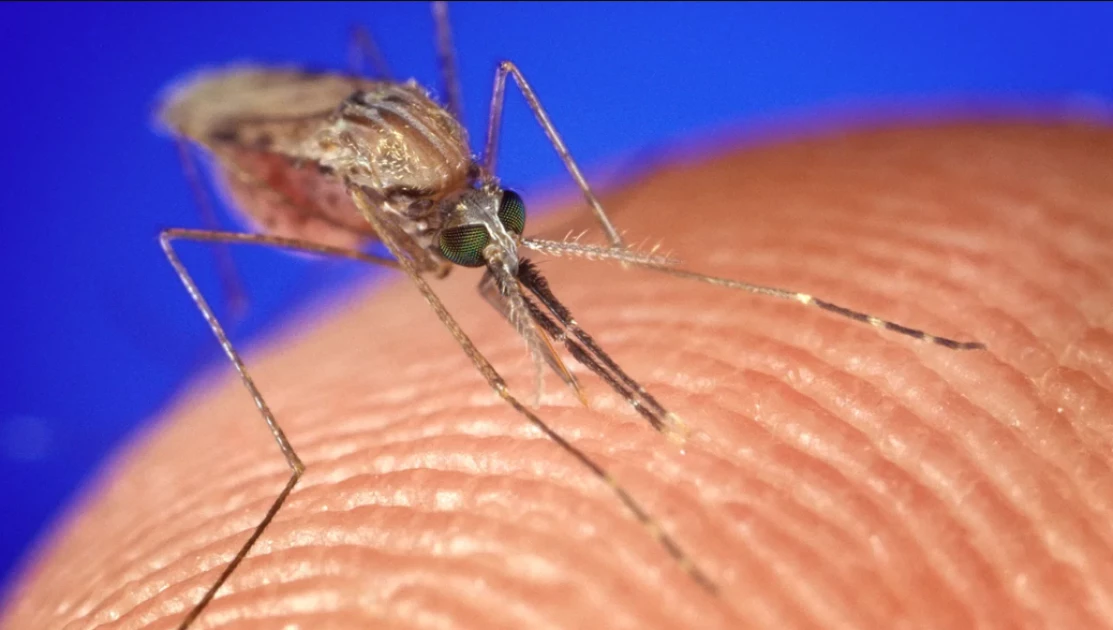
A new study on mosquitoes focused on Anopheles gambiae, a species found in sub-Saharan Africa.

Audio By Vocalize
Anyone who has spent a summer
evening swatting away mosquitoes, or a summer day scratching mosquito bites,
can agree: Mosquitoes stink. But the smells produced by humans are an important
part of what draws mosquitoes to us.
In
a scientific report published Friday, scientists helped pinpoint the different
chemicals in body odor that attract these insects by building an ice-rink size
testing arena and pumping in the scents of different people.
Mosquitoes are part of the fly family, and most of the time, they feed on nectar.
However,
females preparing to produce eggs need a meal with extra protein: blood.
Best-case scenario, getting bitten will just leave you with an itchy red bump. But mosquito bites often turn deadly, thanks to parasites and viruses the insects transmit. One of the most dangerous of these diseases is malaria.
Malaria is a blood-borne disease caused by microscopic parasites that take up residence in red blood cells.
When a mosquito bites a person
infected with malaria, it sucks up the parasite along with the blood. After
developing in the mosquito’s stomach, the parasite “will migrate to the
salivary glands and then be spat back out into the skin of another human host
when the mosquito blood-feeds again,” said Dr. Conor McMeniman, an assistant
professor of molecular microbiology and immunology at the Johns Hopkins
Bloomberg School of Public Health and Johns Hopkins Malaria Research Institute
in Baltimore.
Malaria
has been eradicated in the United States in the past century thanks to window
screens, air conditioning and improvements to drainage systems where
mosquitoes’ aquatic larvae can grow, but the disease remains a danger to much
of the world.
“Malaria still accounts for more than 600,000 deaths per year, mostly in
children under the age of 5 years, and also pregnant women,” said McMeniman,
the senior author of the new study published in the journal Current
Biology.
“It
inflicts a lot of suffering around the world, and part of the motivation for
this study was to try and really understand how mosquitoes that transmit
malaria are finding humans.”
McMeniman,
along with Bloomberg postdoctoral researchers and the study’s first authors,
Drs. Diego Giraldo and Stephanie Rankin-Turner, focused on Anopheles gambiae, a
species of mosquito found in sub-Saharan Africa. They partnered with Zambia’s Macha
Research Trust, led by scientific director Dr. Edgar Simulundu.
“We were really motivated to try and develop a system where we could study the behavior of the African malaria mosquito in a naturalistic habitat, reflective of its native home in Africa,” McMeniman said.
The researchers also wanted to compare the mosquitoes’ smell preferences across different humans, to observe the insects’ ability to track scents across distances of 20 meters, and to study them during their most active hours, between 10 p.m. and 2 a.m.
To tick all these boxes, the researchers created a screened facility the size of a skating rink. Dotting the perimeter of the facility were six screened tents where study participants would sleep.
Air from their tents, carrying
the participants’ unique breath and body odor scents, was pumped through long
tubes to the main facility onto absorbent pads, warmed and baited with carbon
dioxide to mimic a sleeping human.
Hundreds of mosquitoes in the main 20-by-20-meter facility were then treated to a buffet of the sleeping subjects’ scents. Infrared cameras tracked the mosquitoes’ movement to the different samples. (The mosquitoes used in the study were not infected with malaria, and they couldn’t reach the sleeping humans.)
The researchers found what many who have been on a picnic would attest to: Some people attract more mosquitoes than others.
What’s more, chemical analyses of
air from the tents revealed the odor-causing substances behind the mosquitoes’
attraction, or lack thereof.
The
mosquitoes were most attracted to airborne carboxylic acids, including butyric
acid, a compound present in “stinky” cheeses such as Limburger. These
carboxylic acids are produced by bacteria on human skin and tend not to be
noticeable to us.
While carboxylic acids attracted the mosquitoes, the insects seemed to be deterred by another chemical called eucalyptol, which is present in plants.
The researchers suspected that
one sample with a high eucalyptol concentration might have been related to the
diet of one of the participants.
Simulundu
said that finding a correlation between the chemicals present in different
people’s body odor and the mosquitoes’ attraction to those scents was “very
interesting and exciting.”
“This finding opens up approaches for developing lures or repellents that can be used in traps to disrupt the host-seeking behavior of mosquitoes, thereby controlling malaria vectors in regions where the disease is endemic,” said Simulundu, a coauthor of the study.
Dr. Leslie Vosshall, a neurobiologist and vice president and chief scientific officer of the Howard Hughes Medical Institute who was not involved with the study, was similarly enthusiastic.
“I think it’s a super exciting
study,” she said. “It’s the first time that an experiment of this type has been
done at this scale outside the lab.”
Vosshall researches another mosquito species that spreads dengue fever, Zika and Chikungunya.
In a study published last year in the journal Cell, she and her colleagues found that this mosquito species also seeks out the scent of carboxylic acids produced by bacteria on human skin.
The fact that these two different
species respond to similar chemical cues is a good thing, she said, because
that could make it easier to create repellents or traps for mosquitoes across
the board.
The research might not have any immediate implications for avoiding bug bites at your next barbecue. (Vosshall said that even scrubbing with unscented soap doesn’t get rid of the natural scents that attract mosquitoes.)
However, she noted that the new paper “gives us some really good clues about what mosquitoes are using to hunt us, and understanding what that is, is essential for us to come up with the next steps.”
Leave a Comment