

Who are the Houthis and why are they attacking ships in the Red Sea?
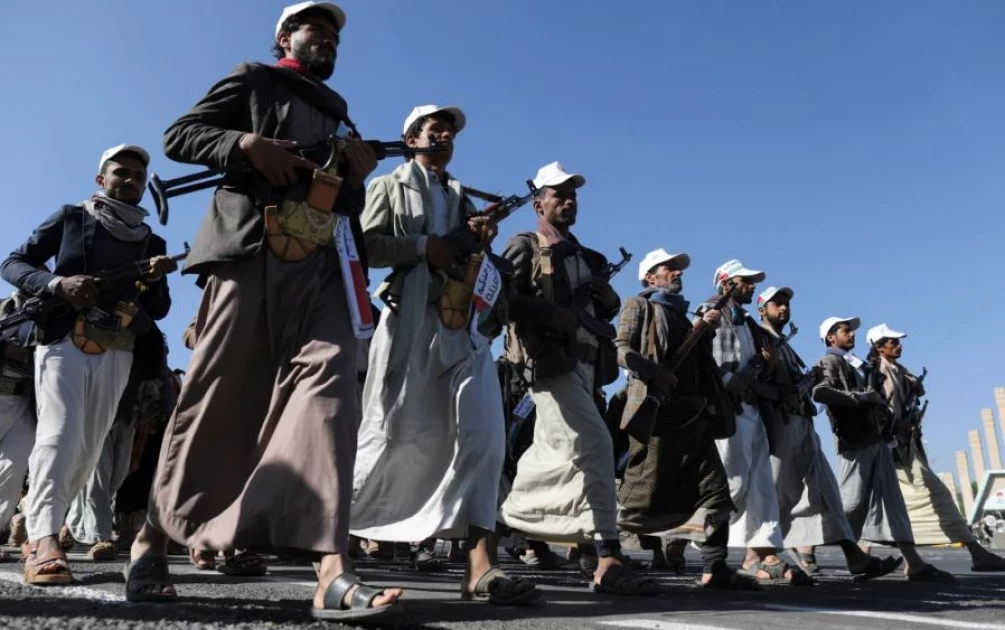
Newly recruited fighters who joined a Houthi force intended to be sent to fight in support of Palestinians in Gaza march in Sanaa, Yemen, December 2, 2023. PHOTO/COURTESY: CNN

Audio By Vocalize
Yemen’s Iran-backed Houthi rebels are stepping up their strikes on ships in the Red Sea, which they say are revenge against Israel for its military campaign in Gaza.
The
attacks have forced some of the world’s biggest shipping and oil companies to
suspend transit through one of the world’s most important maritime trade
routes, which could potentially cause a shock to the global economy.
The
Houthis are believed to have been armed and trained by Iran, and there are
fears that their attacks could escalate Israel’s war against Hamas into a wider
regional conflict.
Here’s
what we know about the Houthis and why they are getting involved in the war.
The Houthi movement, also known as Ansarallah (Supporters of God), is one side of the Yemeni civil war that has raged for nearly a decade.
It emerged in the
1990s, when its leader, Hussein al-Houthi, launched “Believing Youth,” a
religious revival movement for a centuries-old subsect of Shia Islam called
Zaidism.
The
Zaidis ruled Yemen for centuries but were marginalized under the Sunni regime
that came to power after the 1962 civil war.
Al-Houthi’s
movement was founded to represent Zaidis and resist radical Sunnism,
particularly Wahhabi ideas from Saudi Arabia. His closest followers became
known as Houthis.
Ali
Abdullah Saleh, the first president of Yemen after the 1990 unification of
North and South Yemen, initially supported the Believing Youth.
But as the movement’s popularity grew and anti-government rhetoric sharpened, it became a threat to Saleh.
Things came to a head in 2003, when Saleh supported
the United States invasion of Iraq, which many Yemenis opposed.
For
al-Houthi, the rift was an opportunity. Seizing on the public outrage, he
organized mass demonstrations. After months of disorder, Saleh issued a warrant
for his arrest.
Al-Houthi
was killed in September 2004 by Yemeni forces, but his movement lived on. The
Houthi military wing grew as more fighters joined the cause.
Emboldened
by the early Arab Spring protests in 2011, they took control of the northern
province of Saada and called for the end of the Saleh regime.
Saleh
agreed in 2011 to hand power to his Vice President Abd-Rabbu Mansour Hadi, but
this government was no more popular.
The
Houthis struck again in 2014, taking control of parts of Sanaa, Yemen’s
capital, before eventually storming the presidential palace early the next
year.
Hadi
fled to Saudi Arabia, which launched a war against the Houthis at his request
in March 2015. What was expected to be a swift campaign lasted years: A
ceasefire was finally signed in 2022. It lapsed after six months but the
warring parties haven’t returned to full-scale conflict.
The
United Nations has said that the war in Yemen has turned into the world’s worst
humanitarian crisis. Nearly a quarter of a million people have been killed
during the conflict, according to UN statistics.
Since
the ceasefire, the Houthis have consolidated their control over most of
northern Yemen.
They
have also sought a deal with the Saudis that would bring the war to a permanent
end and cement their role as the country’s rulers.
The
Houthis are backed by Iran, which began increasing its aid to the group in 2014
as the civil war escalated and as its rivalry with Saudi Arabia intensified.
Iran has provided the group with weapons and technology for, among other
things, sea mines, ballistic and cruise missiles, and unmanned aerial vehicles
(UAVs, or drones), according to a 2021 report from the Center for Strategic and
International Studies.
The
Houthis form part of Iran’s so-called “Axis of Resistance” - an Iran-led
anti-Israel and anti-Western alliance of regional militias backed by the
Islamic Republic.
Along
with Hamas in Gaza and Hezbollah in Lebanon, the Houthis are one of three
prominent Iran-backed militias that have launched attacks on Israel in recent
weeks.
American
officials have been tracking iterative improvements in the range, accuracy and
lethality of the Houthis’ domestically produced missiles.
Initially,
home-grown Houthi weapons were largely assembled with Iranian components
smuggled into Yemen in pieces, an official familiar with US intelligence told
CNN previously.
But
they have made progressive modifications that have added up to big overall
improvements, the official said.
In
a novel development, the Houthis have used medium-range ballistic missiles
against Israel, firing a salvo of projectiles at Israel’s southern region of
Eilat in early December, which Israel said it intercepted.
While
the Houthis may not be able to pose a serious threat to Israel, their
technology can wreak havoc in the Red Sea.
They
have used drones and anti-ship missiles to target commercial ships – some of
which aren’t believed to be linked to Israel – prompting the USS Carney, a
warship in the Red Sea, to respond to distress calls.
Why are the Houthis attacking ships in
the Red Sea?
While,
through a combination of geography and technology, the Houthis may lack the
capabilities of Hamas and Hezbollah, their strikes on commercial vessels in the
Red Sea may inflict a different sort of pain on Israel and its allies.
The
global economy has been served a series of painful reminders of the importance
of this narrow stretch of sea, which runs from the Bab-el-Mandeb straits off
the coast of Yemen to the Suez Canal in northern Egypt – and through which 12%
of global trade flows, including 30% of global container traffic.
In
2021, a ship called the Ever Given ran aground in the Suez Canal, blocking the
vital trade artery for nearly a week – holding up as much as $10 billion in
cargo each day – and causing disruptions to global supply chains that lasted
far longer.
There
are fears that the Houthi drone and missile attacks against commercial vessels,
which have occurred almost daily since December 9, could cause an even greater
shock to the world economy.
Four
of the world’s five major shipping firms – Maersk, Hapag-Lloyd, CMA CGM Group
and Evergreen – have announced they would pause shipping through the Red Sea
amid fears of Houthi attacks.
The
oil giant BP said on Monday it would do the same – a move that caused oil and
gas prices to surge.
The
attacks could force ships to take a far longer route around Africa and cause
insurance costs to rocket.
Companies
could pass on the increased cost of moving their goods to consumers, raising
prices again at a time when governments around the world have struggled to tame
post-pandemic inflation.
The
Houthis say they will only relent when Israel allows the entry of food and
medicine into Gaza; its strikes could be intended to inflict economic pain on
Israel’s allies in the hope they will pressure it to cease its bombardment of
the enclave.
Championing
the Palestinian cause could also be an attempt to gain legitimacy at home and
in the region as they seek to control northern Yemen.
It
could also give them an upper hand against their Arab adversaries, Saudi Arabia
and the United Arab Emirates, who they accuse of being lackeys of the US and
Israel.
The attacks could be intended to drag more countries into the conflict. Israel has warned that it is ready to act against the Houthis if the international community does not.
National Security Adviser Tzachi Hanegbi said this month
that there needs to be a “global arrangement” to address the threat “because it
is a global issue,” referring to the Houthi attacks as a “naval siege.”
A
senior US military official said at least 12 commercial and merchant vessels in
the Red Sea had been targeted over the last month, adding the attacks were at a
scale not seen in “two generations.”
The
official said the attacks had affected at least 44 countries with connections
to those vessels, but the international impact was likely greater due to the
far-reaching ramifications of global trade.
The
US on Monday announced a new multinational naval task force comprising the
United Kingdom, Bahrain, Canada, France, Norway and others, to “tackle the
challenge posed by this non-state actor” that “threatens the free flow of
commerce, endangers innocent mariners, and violates international law.”
Mohammed
al-Bukhaiti, a Houthi spokesperson, told Al Jazeera on Monday that the group
would confront any US-led coalition in the Red Sea.
Just
as the Biden administration is beginning to yield to pressure for it to push
Israel to wind down its campaign in Gaza, the US may find itself being pulled
more deeply into the Middle East by the ragtag – but effective – Houthi rebels
who have made themselves impossible to ignore.
Leave a Comment