
Who is Saleh Al-Arouri, senior Hamas leader killed in Beirut blast?
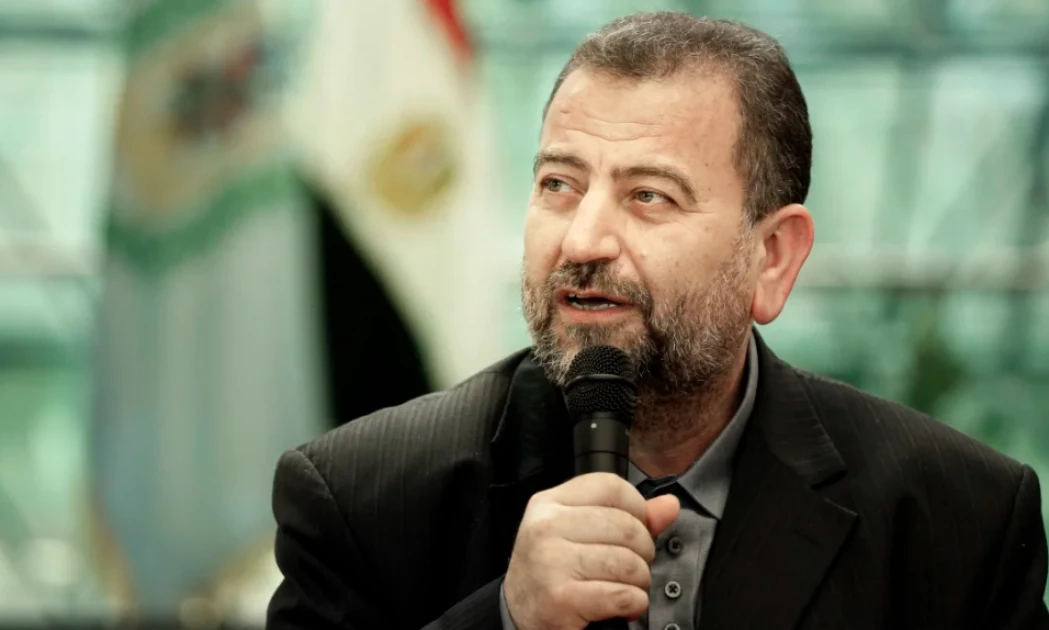
Saleh Al-Arouri, pictured here in 2017, was killed in an attack in Beirut on January 2, Hamas said.

Audio By Vocalize
Hamas
said Tuesday that one of its senior leaders has been killed in an attack in the
south of the Lebanese capital Beirut, raising
fears of a potential escalation in fighting in the region.
Hamas media outlet Al Aqsa TV said Saleh Al-Arouri, deputy head
of the political bureau of Hamas, was “martyred in a treacherous Zionist
airstrike in Beirut.”
Arouri was considered one of the founding members of the group’s
military wing, the Izz ad-Din al-Qassam Brigades, and was based in Beirut. Two
other leaders from Hamas’ military wing, Samir Findi Abu Amer and
Azzam Al-Aqraa Abu Ammar, were also among those killed in the strike, according
to Hamas officials.
At
least four people were killed in the attack that targeted an office belonging
to Hamas in the southern Beirut suburb of Dahieh, Lebanese news agency NNA
reported. The area is also a stronghold of Iran-backed Hezbollah.
The Israel Defense Forces (IDF) declined to comment when asked
about the announcement and its
spokesperson Daniel Hagari skirted a question from a reporter on
Tuesday about the matter saying “we are focused on fighting against Hamas.”
But in a seemingly veiled reference to the killing, Israel’s far
right Finance Minister Bezalel Smotrich wrote on his official social media
platforms that all of Israel’s enemies will “perish.”
Meanwhile,
a former Israeli ambassador to the United Nations, Danny Danon, praised the
Israeli security and intelligence agencies for what he said was the
“assassination” of Arouri on Tuesday. “Anyone who was involved in the 7/10
massacre should know that we will reach out to them and close an account with
them,” Danon said on X.
If true, Arouri would be the most senior Hamas official killed by
Israeli forces since the start of the war sparked by the October 7 Hamas attack
on Israel.
In addition to dealing a blow to Hamas’ leadership, the apparent
attack also risks further broadening the arena of the Israel-Hamas conflict. It
would mark the biggest Israeli strike on the Lebanese capital since the 2006
war between the two countries.
Lebanese Prime Minister Najib Mikati condemned the attack and said
the “explosion is a new Israeli crime” aimed at drawing Lebanon into a new
phase of confrontation, referring to the months-long tit-for-tat conflict
between Hezbollah and Israeli forces in the Lebanon-Israel border region.
“We
call on the concerned countries to put pressure on Israel to stop its
targeting. We also warn against the Israeli political level resorting to
exporting its failures in Gaza to the southern [Lebanese] border,” Mikati wrote
on X.
“It has become clear to everyone near and far that the decision to
go to war is in the hands of Israel, and what is required is to deter it and
stop its aggression,” he added.
Israel vowed to annihilate Hamas after its
militants killed hundreds of people in Israel on October 7. Israel’s
Prime Minister Benjamin Netanyahu in November told a press conference that he
had instructed the Mossad spy agency to act against “the heads of Hamas
wherever they are.”
Israeli
government spokesperson Mark Regev noted in an interview with MSNBC
that Israel had “not taken responsibility” for the attack in
Beirut. Regev, who is a senior adviser to Netanyahu, said “whoever did it
must be clear that this was not an attack on the Lebanese state. It was
not an attack even on Hezbollah,” Regev said.
Regev said that although individuals who kill Israelis “can expect
the Israeli state and the Israeli armed forces to ultimately reach them,” this
rather is a “general statement” of Israel’s policy.
Ismail Haniyeh, Hamas’ political leader, called Arouri’s killing
a “cowardly assassination” and blamed Israel for the deadly strike,
as did the Iran-backed Houthi rebels in Yemen, who have launched more than 100 attacks against about a
dozen commercial and merchant ships transiting the Red Sea over the past few
weeks.
For nearly three months, tit-for-tat fighting between Israel’s
military and Hezbollah has largely stayed within a roughly four-kilometer range
of the border region, with Hezbollah striking Israel while Israel struck
Lebanon.
The fighting has raised fears among the United States and other
Western countries that a full-scale war could break out between Israel and the
Middle East’s most powerful paramilitary, Hezbollah.
Those fears have so far failed to materialize, but the blast in
Beirut on Tuesday afternoon is likely to fuel concerns about the potential for
escalation.
Nasrallah also said in the August 2023 speech that the group would
try to prevent Lebanon from becoming an “arena for assassinations,” invoking
the country’s tumultuous past.
On Tuesday, Iran – which backs Hezbollah – condemned Arouri’s
assassination and blamed the attack on Israel.
Arouri’s death comes as Israel’s military begins to draw down the number of soldiers on the
ground in Gaza as it looks to move to a new phase of its war on Hamas
amid a spiraling civilian death toll in the besieged enclave.
The prominent Hamas political and military leader was born in 1966
in the village of Aroura in the Ramallah district of the West Bank. He went on
to play a role in founding the Al-Qassam Brigades, the military wing of Hamas
in the West Bank, and is considered to be the mastermind behind arming the
group.
He was a member of Hamas since 1987 and considered its leader in
the West Bank prior to his death, according to the European Council on Foreign
Relations (ECFR). He has been a member of Hamas Politburo since 2010 and
was elected its deputy head in 2017, ECFR added.
Israel considers him one of the key founders of the Al-Qassam
Brigades in the occupied West Bank and accused him of being behind the
kidnapping of three settlers in Hebron, which led to the demolition of his
house. He began establishing and organizing a military apparatus for the
movement in the West Bank in 1991-1992, which contributed to the actual launch
of the Al-Qassam Brigades in the West Bank in 1992.
He
helped negotiate the release of captured Israeli soldier Gilad Shalit, in 2011,
in exchange for 1,027 Palestinian prisoners held in Israeli jails.
He had been repeatedly detained by Israel, including for long
periods between 1985-1992, and 1992-2007, according to ECHR. In 2010, he
was deported by Israel to Syria, living there for three years before moving to
Turkey and traveling to several countries, including Qatar and Malaysia. He
finally settled in the southern suburbs of Lebanon.
The Israeli army demolished Arouri’s house in Aroura in October.
The IDF said at the time that forces “operated in the town” to “demolish the
residence of Saleh Al-Arouri, deputy head of the Hamas terrorist organization’s
political bureau and in charge of Hamas’ activities in Judea and Samaria.”
In 2015, the US Department of the Treasury designated
Arouri as a Specially Designated Global Terrorist and offered a reward of
up to $5 million for information on him. CNN has reached out to the US State
Department to see if the reward will be paid and to whom.
He was married with two daughters and lived in Lebanon at the time
of his death.
Join the Discussion
Share your perspective with the Citizen Digital community.
No comments yet
This discussion is waiting for your voice. Be the first to share your thoughts!