

Wote Technical Training Institute switches to LPG cooking to cut deforestation, emissions

Audio By Vocalize
The switch has eliminated smoke that previously filled the kitchen and nearby classrooms, exposing cooks and students to respiratory risks. The institution is among major consumers of fuelwood in the semi-arid county, where pressure on forests remains high.
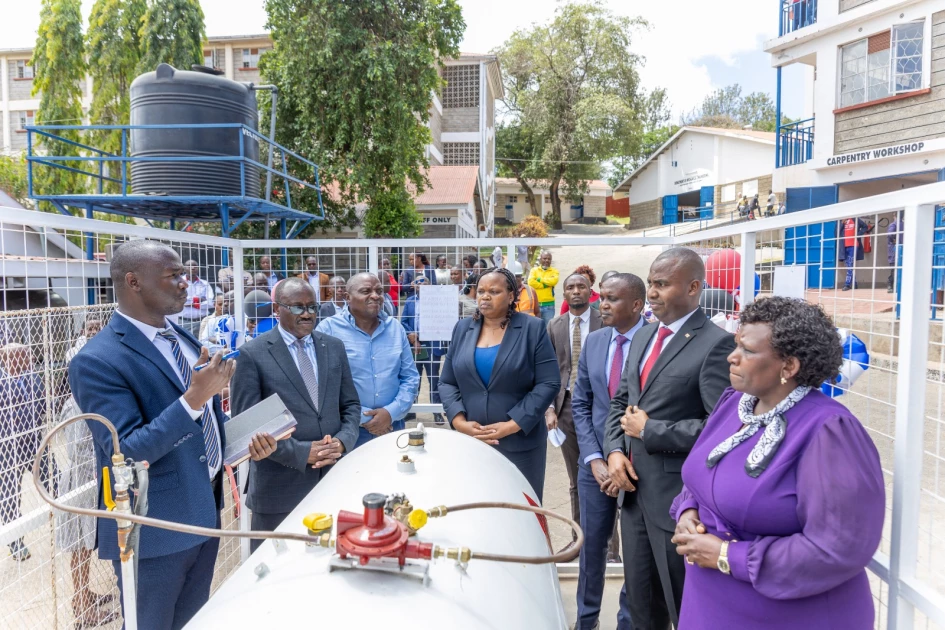
The clean cooking system, comprising a one-tonne LPG bulk cylinder and related infrastructure, was installed at a cost of KSh 3.5 million, financed by Equity Bank through Equity Group Foundation in partnership with Heatmax Energy. The facility serves more than 3,300 trainees and staff.
Speaking during the commissioning, the Principal Secretary for Technical and Vocational Education and Training (TVET), Esther Muoria, said continued reliance on fuelwood in learning institutions undermines national climate objectives by accelerating deforestation and increasing emissions. Her remarks were delivered by Anne Kamonjo, Director of Greening TVETs at the State Department.
Muoria noted that although awareness of clean energy is growing, adoption remains slow, partly because institutions do not adequately communicate the reasons for change. She added that introducing cleaner cooking technologies in schools offers an opportunity to align climate education with practice.
Kenya has more than 23,000 secondary schools, 45,000 primary schools and about 250 TVET institutions. According to the State Department, learning institutions consume an estimated 10 million trees annually for cooking fuel, even as the country pursues a national target of planting 15 billion trees.
Makueni Governor Mutula Kilonzo Jnr said the project positions Wote TTI as an example for other institutions in the county, noting that reduced demand for firewood could help improve local forest cover.
Equity Associate Director for Energy, Environment and Climate Change, Dr Julius Kamau, said the project is part of a broader programme to promote clean cooking in learning institutions, adding that over 200 institutions have already transitioned while more have expressed interest.
Wote TTI Board of Governors chair Prof. Joseph Mwinzi said exposure to modern energy systems could also support skills development in emerging clean energy fields.
College Principal Joshua Munyoki said the shift ends decades of dependence on firewood, with the institution previously using about two lorryloads per month. He added that the change is expected to improve efficiency and reduce long-term operational costs.
Leave a Comment