
COP30: Why Kenya’s street boys may be the real environmentalists
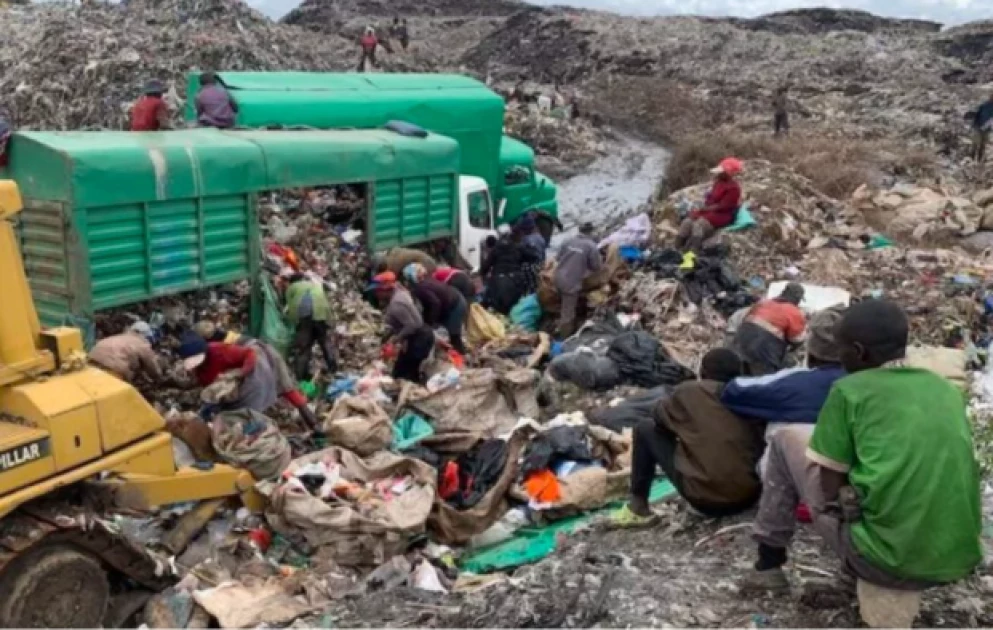
Image capturing a section of the Dandora dumpsite in Nairobi. PHOTO| COURTESY

Audio By Vocalize

Every day across Kenyan cities, a quiet, invisible system of recycling
unfolds. It doesn’t involve tech startups, glossy ESG reports, or government
policy. It’s powered by barefoot boys with sacks on their backs - chokoraa -
scavenging the streets for plastic.
These boys are the foot soldiers of Kenya’s urban waste economy. While
corporate executives sit in panel discussions on circular economies, and while
counties promise greener cities, it is these children who are literally picking
up the pieces. They collect our plastic, our bottles, our carelessly discarded
packaging, and sell it to middlemen, often for less than Ksh.30 per kilo.
According to the Kenya Association of Waste Recyclers, over 60% of
plastic waste collected for recycling in urban centres comes from informal
actors, including street children and waste pickers. Nairobi alone generates
approximately 500 tonnes of plastic waste daily, and only 9% is formally
recycled. The rest? It is these boys, not policies or PR campaigns, who keep it
from clogging rivers and choking landfills
Without uniforms, budgets, or even homes, these boys are doing what most
of us won’t: cleaning up our mess.
And yet, sustainability in Kenya continues to be narrated from polished
stages. It has become a language of privilege, filled with buzzwords like
“carbon offset,” “net-zero,” and “climate-smart innovation,” none of which
apply to the boys breathing in smoke at Dandora or trudging barefoot through
Ngara’s trash heaps.
This is the problem: we’ve professionalized sustainability to the point
of exclusion.
If sustainability is truly about people, planet, and profit, then where
are the people? Not the panelists, the real people. The children who reduce
plastic pollution every day, not for the planet’s glory, but for survival.
Where are they in our conversations? Where is their share in the value chain?
What’s worse? The system exploits them twice. First, by forcing them to
survive in the margins. Then, by profiting from their labor with no
recognition. The plastic they collect enters formal recycling streams that feed
industries, create jobs, and boost green credentials. But not theirs.
It’s time we stopped romanticizing recycling and started confronting
who’s really doing the work.
As the world heads to COP30 in Brazil later this year, with global
leaders expected to ramp up commitments on climate finance, adaptation, and
just transitions, Kenya must bring a grounded message to the table: real
sustainability starts with real people. If the informal recyclers in Nairobi
and Kisumu are not part of our green transformation, then we risk building
climate solutions that look good on paper, but collapse in practice. COP30
should not only be about carbon, it must also be about justice.
If Kenya is serious about environmental sustainability and
building an equitable circular economy, then we must do more than just promote
recycling. We must formalize and protect the informal actors who enable it.
Kenya’s sustainability movement cannot afford to be performative. We
must expand its definition to include informal actors such as the boys under
the bridge, the women sifting through dumpsites, and the unseen hands that make
our cities livable.
We need policies that protect them. Supply chains that pay them fairly.
And narratives that honor their contribution.
Until then, every ESG report that omits them is incomplete. Every clean
city is, in truth, a stage built on invisible backs.
Sustainability must stop being a boardroom performance. It must descend into the streets, where the real environmentalists live.
Mr Enock Bii is the founder and CEO of ClimaVox Consult, a Nairobi-based
Pan-African sustainability and strategic communications firm.
Join the Discussion
Share your perspective with the Citizen Digital community.
No comments yet
This discussion is waiting for your voice. Be the first to share your thoughts!