
Empowering Precision: Kenya adopts Three-Test Algorithm to enhance HIV/AIDS diagnosis

Audio By Vocalize
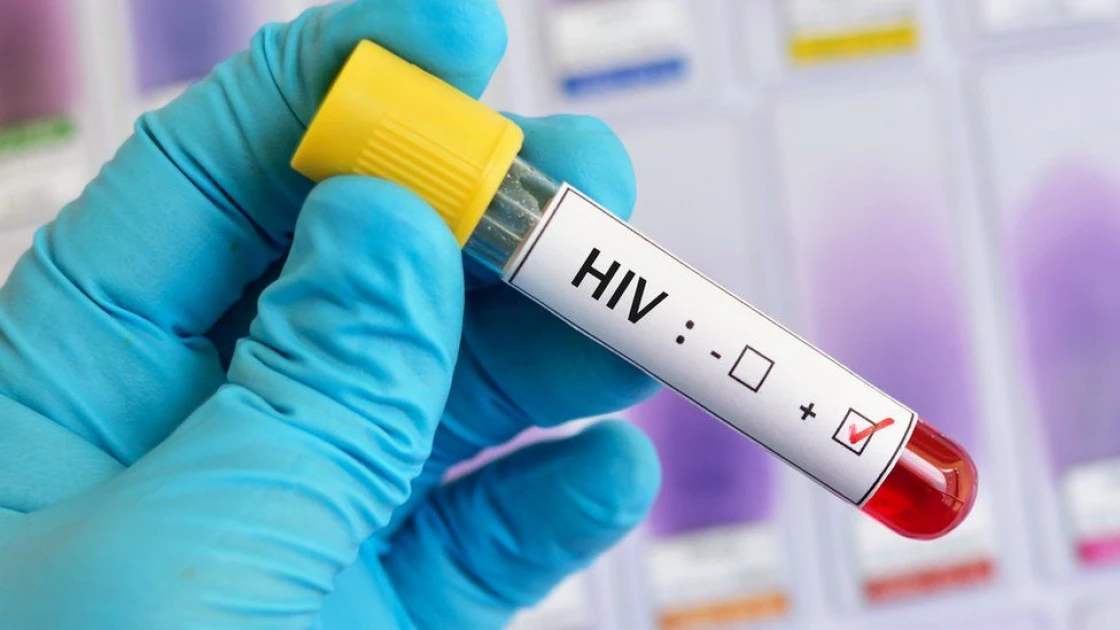
In the recent past, Kenya’s approach to combating HIV/AIDS has taken the direction of having more people tested, making the tests foolproof and directing the two pathways that emanate from testing accordingly.
After testing an individual, either one turns out reactive (which means they have the virus) or non-reactive meaning they are free from the virus.
The reactive cases are directed to commence anti-retroviral therapy to achieve a suppressed viral load that restores health and prevents transmission; while the non-reactive cases are advised on ways to protect themselves further depending on their risks.
Last week, the Ministry of Health through the National Aids and STI Control Programme (NASCOP) invited media professionals for a workshop in Naivasha where a major milestone was revealed to the journalists.
The Three-Test Algorithm for HIV screening is a massive game-changer in the diagnosis and spread of the virus that has remained a quagmire for decades across the world.
The test algorithm commences with a test kit known as Trinscreen which is considered as the first test due to its high sensitivity, short result time, ease of use and cost. From the first test, two outcomes are expected: one is the reactive result which shows the virus has been detected and the other is the non-reactive result which points to the absence of the virus.
For the non-reactive, trinscreen results are upheld and the client is informed of their negative status. For purposes of clarification in the event of a reactive result, the specimen is subjected to a second test referred to as One Step.
At one step, one of two scenarios may arise, thus the sample may display non-reactive or affirm the reactive status in the Trinscreen. If a non-reactive result emerges here, the sample goes back to Trinscreen testing and the result there if non-reactive will be declared negative while reactive will be declared inconclusive, hence another test to be done after 14 days.
For a confirmed reactive result, the sample is taken to the third test referred to as First Response. The result at First Response may still be reactive or non-reactive where the former is upheld and HIV Positive status is confirmed in the client; while in the event of the latter, the sample result is declared inconclusive and the client is requested to test again after 14 days; a non-reactive test after this will be declared HIV negative.
Both One Step and First Response tests carry the premium of high clinical specificity, are easy to use and are cost-effective.
The three-test algorithm as envisioned by WHO ensures accuracy and transparency in testing which makes it easy to supply the appropriate intervention.
The Head of NASCOP, Dr. Rose Wafula, at the media workshop noted that, “the most recent WHO recommendation for countries is to move from two-test diagnosis to three-test diagnosis. Recent evidence shows using the two-test algorithm has a limitation at the population level where there could be some cases that are not correctly classified for appropriate intervention.”
Christabel Awuor from the Ministry of Health, while taking journalists through the three-test algorithm and its application, emphasized the effectiveness of the kits and the attendant scrutiny of their performance: “Before the kit is used in the country, we also have our own regulatory body Pharmacy and Poisons Board that checks on its performance characteristics; so in as much as WHO does its bit, we also have mechanisms in the country to check on the quality of the kits.”
10 countries in Africa including Ethiopia have so far adopted the three-test algorithm as recommended by WHO. Kenya is set to roll the algorithm out in the month of July beginning with ASAL counties following affirmation of its effectiveness by the technical task force for the adoption of the three-test algorithm that comprised of among others Prof. Omu Anzala, Director Kenya AIDS Vaccine Initiative(KAVI).
Kenya has made remarkable progress in ensuring testing and treating is working. Dr. Wafula revealed that out of the 1.4M HIV-positive cases in the country, about 1.3M are on treatment and the prevalence rate now stands at 3.7%.
WHO envisions by 2025, 95% of all people living with HIV (PLHIV) should have a diagnosis, 95% of those should be taking lifesaving antiretroviral treatment (ART) and 95% of PLHIV on treatment should achieve a suppressed viral load for the benefit of the person’s health and for reducing onward HIV transmission.
Adherence to the three-test algorithm will possibly move Kenya to achieve these statistics as a country, perhaps even earlier.
Join the Discussion
Share your perspective with the Citizen Digital community.
No comments yet
This discussion is waiting for your voice. Be the first to share your thoughts!